
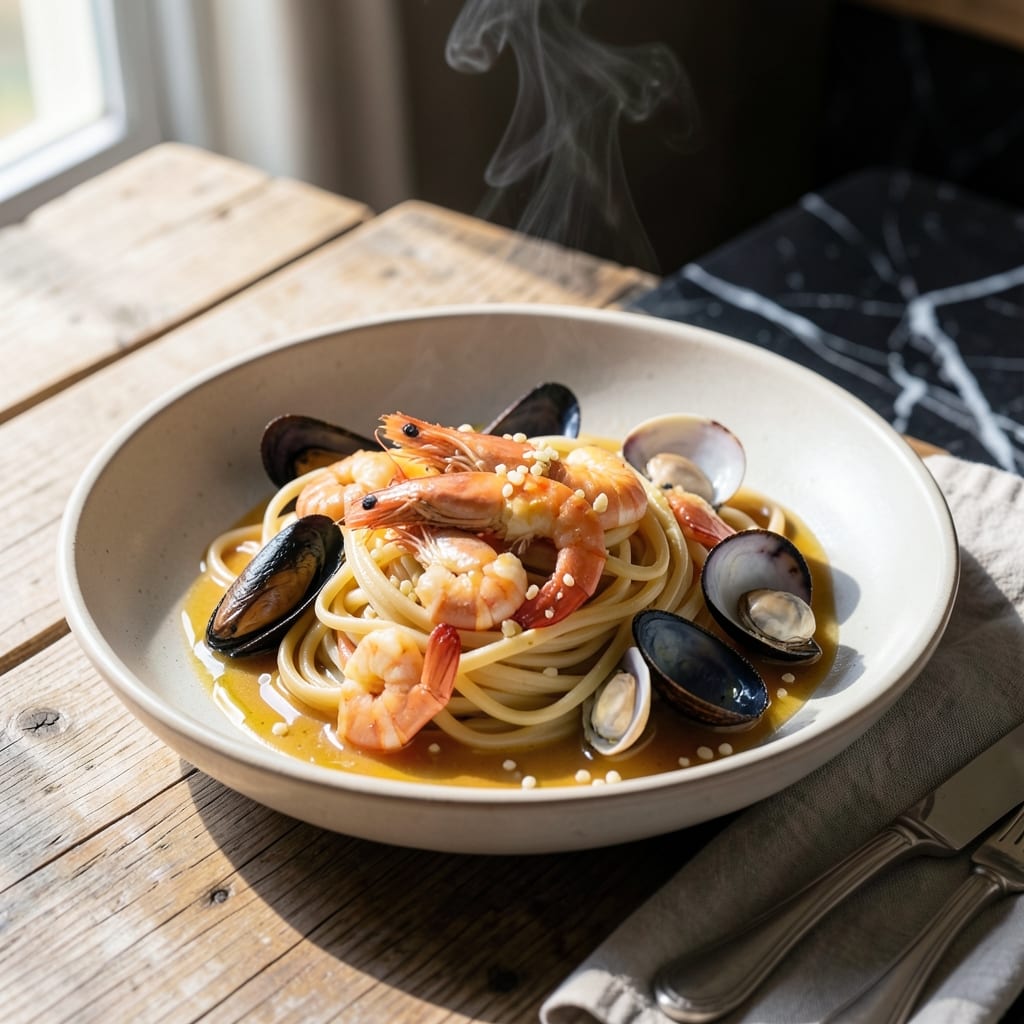
This Italian seafood pasta brings the Mediterranean to your table with a garlic-infused sauce that clings to every strand. I developed this recipe after years of trying to capture the flavors of my grandmother’s coastal cooking.
The secret lies in the balance of fresh seafood, al dente pasta, and a sauce built from white wine, garlic, and a touch of chili flakes. It’s a dish that feels special but comes together in 30 minutes.
You’ll love how the seafood cooks gently in the sauce, absorbing the aromatic flavors while maintaining its natural sweetness. The result is a plate that’s both elegant and deeply satisfying.
Perfect for a weeknight dinner or a celebratory meal with friends. Here’s how to make it right.
Ingredients for Pasta with Seafood Recipe Italian
Pantry staples meet fresh seafood for a taste of coastal Italy in your kitchen.
| Ingredient | Amount | Notes |
|---|---|---|
| Linguine Pasta 🍝 | 12 oz | Dried, al dente preferred |
| Shrimp 🦐 | 1 lb | Large, peeled and deveined |
| Mussels 🦪 | 1 lb | Fresh, debearded and cleaned |
| White Wine 🍷 | 1 cup | Dry variety like Pinot Grigio |
| Garlic Cloves 🧄 | 6 cloves | Minced for sauce |
| Extra-Virgin Olive Oil 🫒 | ½ cup | For sautéing and finishing |
| Crushed Red Pepper Flakes 🌶️ | ½ tsp | Adjust for heat preference |
| Fresh Parsley 🌿 | ½ cup | Chopped, for garnish |
| Lemon 🍋 | 1 whole | Zested and juiced |
| Salt 🧂 | 1 tsp | Sea salt preferred |
| Black Pepper 🌶️ | ½ tsp | Freshly ground |
| Cherry Tomatoes 🍅 | 1 cup | Halved for freshness |
| Clams 🦪 | ½ lb | Fresh, scrubbed clean |
The seafood is make-or-break here. Whole Foods or local fishmongers are your best bet for mussels and clams—look for ones that smell like the ocean (not fishy) and close when tapped. Shrimp should be firm and translucent. If buying frozen, thaw overnight in the fridge (never at room temp). For the wine, any dry white works—Pinot Grigio or Sauv Blanc are safe choices.
Swap mussels for scallops or calamari if that’s what you’ve got. No white wine? Seafood or vegetable stock with a splash of lemon juice gets you close. Shrimp still frozen? Rinse under cold water in a colander. The pasta can be spaghetti or fettuccine if you don’t have linguine. Fresh herbs like basil or dill work if parsley isn’t handy.
Leftovers keep 2-3 days in the fridge—seafood doesn’t love long storage. Reheat gently on the stove (microwave makes shrimp rubbery). Freezing isn’t ideal, but if you must, undercook the pasta by half and freeze without the seafood. Add cooked shrimp fresh when reheating.
Why You’ll Love This Recipe
- One Pan Magic: I toss everything—the shrimp, mussels, garlic—in with the linguine, and white wine does the heavy lifting for flavor.
- Garlic & Wine Symphony: Honestly, the aroma of garlic sizzling in white wine with fresh seafood makes my kitchen smell like a Roman trattoria.
- Date Night Ready: I’ve served this for both casual weeknights and anniversary dinners—it feels fancy without the fuss.
- Next-Day Luxury: Leftovers taste even better the next day. The pasta soaks up the briny, garlicky sauce overnight.
Step-by-Step Instructions for Pasta With Seafood
Here’s how I bring this coastal classic to life in my own kitchen.
Step 1: Prepare the Seafood and Aromatics
Rinse the 1 lb Shrimp, 1 lb Mussels, and 0.5 lb Clams under cold water, scrubbing the mussels and clams to remove any grit. Pat the shrimp dry with paper towels. Mince the 6 cloves Garlic Cloves finely—this ensures even distribution in the sauce.
Halve the 1 cup Cherry Tomatoes and chop the 0.5 cup Fresh Parsley. Zest the 1 whole Lemon and set the zest aside, then juice it. This prep work makes the cooking process smooth and stress-free.
Step 2: Sauté the Base and Toast the Seafood
Heat 0.5 cup Extra-Virgin Olive Oil in a large, deep skillet over medium heat. Add the minced garlic and 0.5 tsp Crushed Red Pepper Flakes, sautéing for 1-2 minutes until the garlic turns light golden and becomes fragrant. Be careful not to let it brown too much—it can turn bitter.
Add the shrimp and cook for 2 minutes until they turn pink and opaque. Remove them with a slotted spoon and set aside. In the same oil, add the mussels and clams, cooking for 3-4 minutes until they begin to open. Discard any that don’t open during cooking.
Step 3: Deglaze and Simmer the Sauce
Pour in the 1 cup White Wine and bring to a gentle simmer. Use a wooden spoon to scrape up any browned bits from the bottom of the pan—this adds depth to the sauce. Let it reduce by half, which should take about 5 minutes.
Return the shrimp to the pan and add the halved cherry tomatoes. Season with 1 tsp Salt and 0.5 tsp Black Pepper. Stir everything together and let it simmer for another 2-3 minutes to meld the flavors.
Step 4: Cook the Pasta and Combine
While the sauce simmers, cook the 12 oz Linguine Pasta in a large pot of salted boiling water until al dente, about 1 minute less than the package instructions. Reserve ½ cup of pasta water before draining.
Add the drained pasta directly to the skillet with the seafood and sauce. Toss everything together, adding a splash of pasta water if needed to loosen the sauce. The starch from the pasta water helps the sauce cling beautifully to the noodles.
Step 5: Finish and Serve
Sprinkle the lemon zest over the pasta and drizzle with the lemon juice. Toss once more to distribute the brightness evenly. Garnish with the chopped parsley, giving it a final stir to incorporate the fresh herbal note.
Serve immediately in warm bowls, ensuring each portion has a generous mix of seafood and pasta. The shrimp should be tender, the mussels and clams briny and plump, and the sauce rich with garlic and wine. Enjoy with crusty bread to soak up every last bit.
Pro Tips For Making Pasta With Seafood Recipe Italian
- Cook Mussels First: Start the mussels 5 minutes before the shrimp—they take longer to open and release flavor into the wine sauce. I learned this the hard way after pulling undercooked mussels from the pot.
- Salt the Pasta Water: Use at least 1 tablespoon of salt per gallon—more than you think. Sounds weird, but it works: the linguine absorbs just enough to complement the seafood without tasting flat.
- Skip the Overcrowding: Cook the shrimp and mussels in batches if needed. After burning three batches, I finally figured out that steaming them in a single layer prevents soggy seafood and uneven cooking.
- Use Dry White Wine: Pick a crisp, dry white like Pinot Grigio—sweet wines make the sauce cloying. My grandmother swore by this, and she was right: the acidity cuts through the richness of the seafood.
Regional Styles of This pasta with seafood recipe italian
Venetian Style
In Venice, they make spaghetti alle vongole with tiny clams, garlic, white wine, and parsley—no tomatoes. The clams release their briny liquor, creating a light but flavorful sauce. I like to add a pinch of saffron for that golden Venetian touch. 💛
Sicilian Tradition
Sicily’s version often includes bottarga (cured fish roe) grated over the top. They use local seafood like swordfish or sardines and sometimes add raisins and pine nuts for a sweet-savory contrast. The island’s Arab influence shines through in these bold combinations.
Roman Classic
Rome’s take is simpler: spaghetti ai frutti di mare with shrimp, mussels, clams, and squid. The sauce is light, often just garlic, olive oil, and chili flakes. I love how the seafood’s natural flavors take center stage without heavy sauces.
Ligurian Approach
In Liguria, they use trofie pasta (short, twisted shapes) with pesto and seafood. The basil pesto adds a vibrant green color and herbaceous flavor that pairs beautifully with shrimp or scallops. It’s a dish that tastes like summer on the Italian Riviera. ✨
Neapolitan Flavor
Naples often adds San Marzano tomatoes to their seafood pasta, creating a rich, slightly sweet sauce. They’ll include mussels, clams, and sometimes even octopus for a heartier dish. The tomatoes balance the seafood’s brininess perfectly.
Calabrian Heat
Down in Calabria, they kick up the heat with Calabrian chili paste in their seafood pasta. The spicy, slightly smoky flavor pairs wonderfully with local swordfish or shrimp. I always keep a jar of this fiery condiment in my pantry for that authentic Southern Italian kick.
Nutrition Facts
Frequently Asked Questions
What pasta shape works best for seafood?
Long, thin shapes like linguine or spaghetti are ideal. Their shape helps trap the seafood and sauce. 12 oz serves 4 people perfectly.
Can I use frozen seafood for this dish?
Yes, but thaw it overnight in the fridge first. Pat it dry to prevent excess moisture in your sauce. Avoid refreezing after thawing.
How do I prevent the pasta from getting mushy?
Cook it 1 minute less than package instructions. Finish cooking in the sauce with a splash of pasta water. This keeps it perfectly al dente.
What wine pairs well with this dish?
The same dry white you cook with works beautifully. Try a crisp Pinot Grigio or Vermentino to complement the seafood flavors.

- Pina Colada Dip Recipe Red Lobster: Tropical Creaminess With Toasted Coconut - October 12, 2026
- Pickled Sweet Cherry Peppers Recipe Canning: Tangy Heat for Pantry Staples - October 12, 2026
- Peppercorn Sauce Recipe Vegan: Rich Umami Depth Without Cream - October 12, 2026