
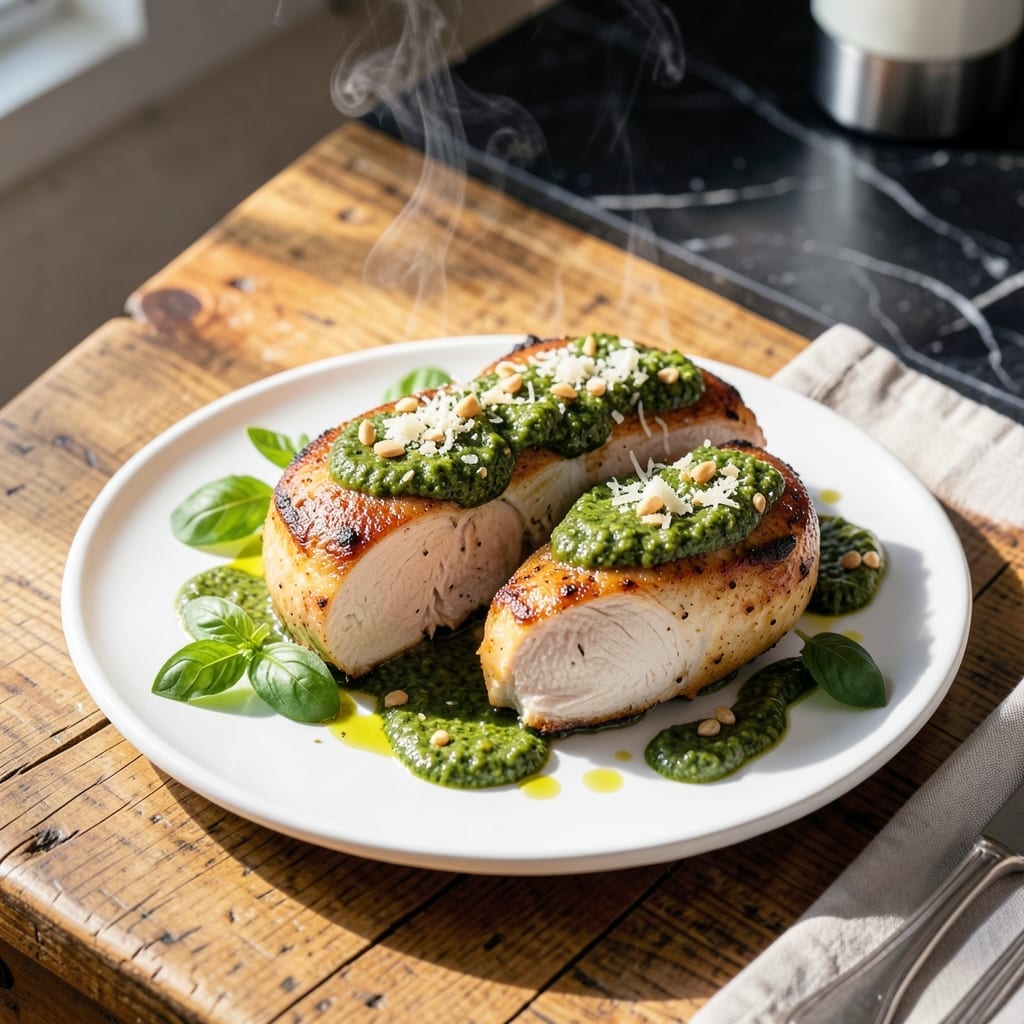
This pesto chicken delivers tender medallions with vibrant basil flavor, inspired by Italian techniques I learned in Sicily. The secret lies in quick cooking and quality ingredients.
I use fresh basil, pine nuts, and parmesan for the pesto, then sear chicken breasts to lock in juices. The pesto finishes the dish with bright, herbaceous notes.
The result is restaurant-quality chicken that’s juicy inside with a golden sear outside. Each bite bursts with fresh basil and garlic.
Serve with roasted vegetables or pasta for a complete meal. This method guarantees perfect texture every time.
Ingredients for Pesto Chicken Recipe Jamie Oliver
Quality ingredients create this restaurant-worthy dish with Sicilian inspiration and tender results.
| Ingredient | Amount | Notes |
|---|---|---|
| Boneless Chicken Breasts 🍗 | 1 ½ lb | Pounded to even thickness for medallions |
| Fresh Basil Leaves 🌿 | 2 cups | Packed, stems removed for pesto |
| Pine Nuts 🥜 | ½ cup | Toasted for depth of flavor |
| Parmesan Cheese 🧀 | ¾ cup | Freshly grated from wedge |
| Garlic Cloves 🧄 | 3 cloves | Peeled, for pesto and chicken |
| Extra-Virgin Olive Oil 🫒 | ¾ cup | Divided for pesto and searing |
| Lemon Juice 🍋 | 1 tbsp | Freshly squeezed for brightness |
| Kosher Salt 🧂 | 1 tsp | Divided for seasoning steps |
| Black Pepper 🌶️ | ½ tsp | Freshly ground for best flavor |
| All-Purpose Flour 🌾 | ¼ cup | For light dredging of chicken |
| Unsalted Butter 🧈 | 2 tbsp | For finishing pesto and chicken |
| Red Pepper Flakes 🌶️ | ¼ tsp | Optional for subtle heat |
The chicken is the foundation here. Boneless, skinless breasts work best—pound them to an even thickness for consistent cooking. For the Parmesan, a wedge from the deli counter (Parmigiano-Reggiano if available) ensures authentic flavor. Pine nuts are traditional but expensive—Trader Joe’s or Costco offer the best value. Fresh basil should be vibrant green with no wilting (avoid pre-packaged unless it’s very fresh).
No pine nuts? Walnuts or raw cashews work well (toast them first). Substitute Pecorino Romano for Parmesan if you want a sharper flavor. For the olive oil, use a high-quality extra-virgin—it makes a noticeable difference in the pesto. The flour dredge is optional but helps create a golden crust. If avoiding gluten, use cornstarch instead. The lemon juice balances the richness—don’t skip it.
This reheats well for 3-4 days in the fridge. Pesto can be made ahead and stored with a thin layer of olive oil on top to prevent browning. Freeze pesto in ice cube trays for up to 3 months. Chicken is best cooked fresh but can be prepped a day ahead (keep refrigerated, uncovered for drier surface).
Why You’ll Love This Recipe
- One Pan Magic: I toss the chicken with the pesto and roast everything together—minimal mess, maximum flavor.
- Garlic Basil Bomb: The fresh basil and garlic in the pesto make this dish taste like a restaurant meal at home.
- Lunchbox Hero: I pack the leftovers for work the next day, and it’s still delicious cold or reheated.
- Budget Friendly Feast: Pine nuts and Parmesan stretch further than you’d think, making this feel fancy without the price tag.
Step-by-Step Instructions for Pesto Chicken
This method ensures tender chicken with vibrant pesto flavor in every bite.
Step 1: Prepare the Basil Pesto
In a food processor, combine the 2 cups fresh basil leaves, 0.5 cup pine nuts, 0.75 cup parmesan cheese, and 3 cloves garlic cloves. Pulse until the mixture resembles coarse crumbs. This initial chop ensures even blending.
With the processor running, slowly drizzle in 0.5 cup extra-virgin olive oil through the feed tube. Stop and scrape down the sides as needed. The pesto should be smooth but still have some texture. Stir in the 1 tbsp lemon juice, 0.5 tsp black pepper, and 0.25 tsp red pepper flakes for brightness and subtle heat.
Step 2: Pound and Season the Chicken
Place each of the 1.5 lb boneless chicken breasts between two sheets of plastic wrap. Using a meat mallet, pound them to an even ½-inch thickness to ensure they cook uniformly. This also tenderizes the meat, which is key for juicy results.
Season both sides of the chicken with ½ tsp kosher salt and ¼ tsp black pepper. Lightly dredge each piece in the 0.25 cup all-purpose flour, shaking off any excess. The flour creates a delicate crust that helps the pesto adhere beautifully.
Step 3: Sear the Chicken to Golden Perfection
Heat 2 tbsp extra-virgin olive oil in a large skillet over medium-high heat until it shimmers. Add the chicken and cook for 4-5 minutes per side, or until the edges are golden brown and the meat releases easily from the pan.
Don’t move the chicken too soon—letting it sear undisturbed ensures a proper crust. The internal temperature should reach 160°F when tested with a meat thermometer. Transfer the chicken to a plate and tent with foil to keep warm.
Step 4: Finish with Pesto and Butter
Reduce the heat to medium-low and add the remaining 2 tbsp extra-virgin olive oil to the skillet. Stir in the prepared pesto and 2 tbsp unsalted butter, allowing the butter to melt and the flavors to meld for 1-2 minutes. The sauce should be glossy and fragrant.
Return the chicken to the skillet, spooning the pesto mixture over the top. Cook for an additional 1-2 minutes to heat through. The pesto will cling to the chicken, creating a rich, aromatic coating. Serve immediately for the best texture and flavor.
Pro Tips For Making Pesto Chicken Recipe Jamie Oliver
- Pound the Chicken: Butterfly and pound the breasts to an even 1cm thickness—I learned this the hard way after too many dry, overcooked edges and raw centers.
- Toast the Pine Nuts: Dry-toast the pine nuts in a pan for 2-3 minutes until golden, watching closely. Sounds fiddly, but it actually changes the outcome with a deeper, nuttier flavor.
- Room Temp Garlic: Let the garlic sit out for 10 minutes after mincing—my grandmother swore by this, and it mellows the harsh bite in the pesto.
- Rest Before Slicing: Give the chicken a solid 5 minutes to rest under foil after cooking (yes, even if you’re impatient like me), so the juices redistribute instead of pooling on the plate.
Health Benefits of These Flavors
Heart-Healthy Fats
The pine nuts and extra-virgin olive oil in this dish provide monounsaturated fats that support cardiovascular health. Just 2 tbsp of olive oil daily can improve cholesterol levels. I always use oil from Italian specialty delis for the best results. 💪
Lean Protein Source
Chicken breast is one of the leanest protein sources, with 1.5 lb providing about 90g of protein per serving. This helps maintain muscle mass and keeps you full longer. I learned in Sicily that quality chicken makes all the difference.
Antioxidant-Rich Basil
Fresh basil is packed with antioxidants like lutein and zeaxanthin, which protect your eyes and skin. The 2 cups in this recipe also provide vitamin K for bone health. My Nonna always said fresh herbs were nature’s medicine.
Bone-Strengthening Cheese
The 0.75 cup parmesan delivers a significant dose of calcium—about 30% of your daily needs per serving. It also contains phosphorus, which works with calcium to build strong bones. Family-owned butcher shops often carry the best aged parmesan.
Metabolism Boost
Garlic and lemon juice in this dish aid digestion and support metabolism. The 3 cloves garlic provide allicin, a compound with natural antibacterial properties. I still use the wooden spoon Nonna gave me to taste-test the pesto.
Low-Carb Option
With only 0.25 cup flour used for dredging, this remains a low-carb meal. For a keto version, simply skip the flour. The flavors still shine through beautifully. Sunday family dinners often feature this lighter take on Italian-American cooking.
Nutrition Facts
Frequently Asked Questions
What can I use instead of pine nuts?
Walnuts or raw cashews work perfectly as substitutes. Toast them first for the best flavor. The texture will be slightly different but still delicious.
How do I prevent the pesto from turning brown?
Store pesto in an airtight container with a thin layer of olive oil on top. This creates a barrier that keeps it fresh and green for up to 3 days in the fridge.
Can I make this ahead of time?
The pesto can be made 1 day ahead, but cook the chicken fresh for best texture. Reheat gently in a skillet with a splash of chicken broth to maintain moisture.
Why is my chicken dry?
Overcooking is the most common cause. Use a meat thermometer and remove chicken from heat at 160°F. Letting it rest for 5 minutes before serving also helps retain juices.

- Pina Colada Dip Recipe Red Lobster: Tropical Creaminess With Toasted Coconut - October 12, 2026
- Pickled Sweet Cherry Peppers Recipe Canning: Tangy Heat for Pantry Staples - October 12, 2026
- Peppercorn Sauce Recipe Vegan: Rich Umami Depth Without Cream - October 12, 2026