
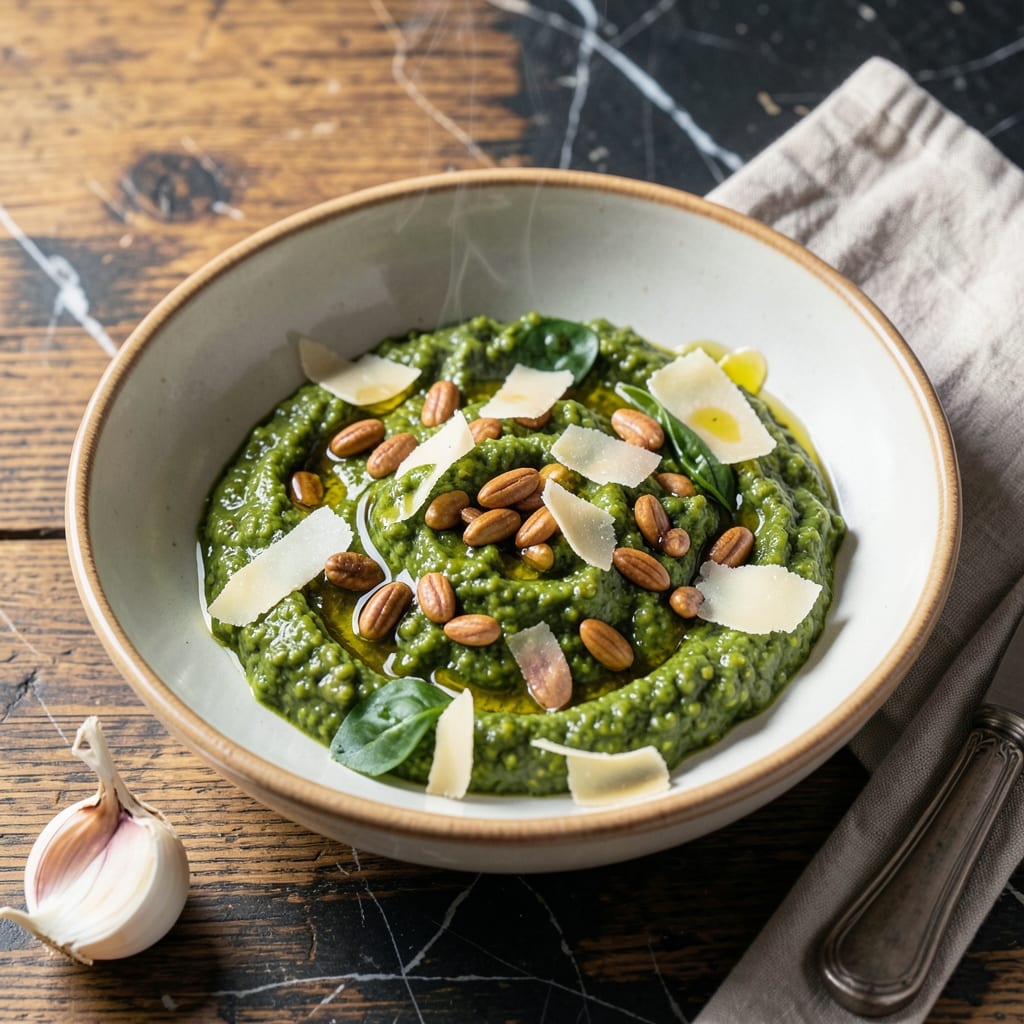
Fresh basil pesto is one of the most versatile sauces you can master, transforming simple dishes into restaurant-quality meals with minimal effort.
This recipe delivers a bright, herbaceous paste that works beautifully as a pasta sauce, sandwich spread, or marinade. The key is using fresh, high-quality ingredients and processing them just enough to maintain texture without turning it into a smooth puree.
With only 5 ingredients and 10 minutes of prep, you’ll have a vibrant green sauce that’s packed with flavor. It keeps well in the fridge for up to a week, making it perfect for meal prep.
Try it on eggs, pizza, or as a dip for crusty bread to experience its full potential.
Ingredients for Pesto Recipe Ideas
Eight premium ingredients blend into a vibrant, versatile sauce ready for any dish.
| Ingredient | Amount | Notes |
|---|---|---|
| Fresh Basil Leaves 🌿 | 2 cups | Packed, stems removed |
| Pine Nuts 🥜 | ½ cup | Toasted for depth |
| Garlic Cloves 🧄 | 3 cloves | Peeled, roughly chopped |
| Parmesan Cheese 🧀 | ¾ cup | Freshly grated Parmigiano-Reggiano |
| Extra-Virgin Olive Oil 🫒 | ¾ cup | High-quality, fruity |
| Sea Salt 🧂 | ½ tsp | Fine grain preferred |
| Freshly Ground Black Pepper 🌶️ | ¼ tsp | To taste |
| Lemon Juice 🍋 | 1 tbsp | Freshly squeezed |
The basil must be pristine—farmers market finds offer superior aroma over grocery store clamshells, which often wilt prematurely. Pine nuts from Trader Joe’s or Costco provide the best value; their buttery richness is unmatched. For the Parmesan, insist on Parmigiano-Reggiano; pre-grated varieties contain anti-caking agents that dull flavor. The olive oil should be robust—California Olive Ranch or Colavita are reliable choices.
Pine nuts too dear? Walnuts or raw cashews offer comparable texture with minimal flavor shift. If avoiding dairy, nutritional yeast at one-third the amount mimics Parmesan’s umami. Short on basil? Supplement with fresh spinach (up to half) for volume without overpowering. The garlic can be adjusted—two cloves for milder pesto, four for a punchier bite. Always use fresh lemon; bottled lacks brightness.
Pesto oxidizes quickly. Press plastic wrap directly onto the surface to limit air exposure. Refrigerates for 1 week or freezes in ice cube trays for 6 months. Portion into small containers for easy access—no thawing required for cooked applications.
Why You’ll Love This Recipe
- 5-Minute Blend: I toss everything in the food processor and it’s done before the pasta finishes boiling. Honestly, the pine nuts toast themselves in the friction.
- Bright & Herby: That first hit of fresh basil with the nutty Parmesan and garlic is dangerously addictive. My daughter licks the spoon every time.
- Endless Upgrades: I stir it into soups, slather it on sandwiches, or freeze in ice-cube trays for instant flavor bombs later.
- Pantry Stretch: A single batch turns a cheap box of spaghetti into a restaurant-worthy dish. I’ll be real: it’s saved me on more than one payday-eve dinner.
Step-by-Step Instructions for Homemade Pesto
Master this classic technique for vibrant, aromatic pesto with professional precision and consistency.
Step 1: Toast the Pine Nuts to Perfection
Begin by toasting the 0.5 cup Pine Nuts in a dry skillet over medium-low heat for 3-5 minutes. Stir frequently to prevent burning—you’ll notice they turn a light golden brown and release a nutty aroma when ready.
This step intensifies their natural oils and adds depth to your pesto. Immediately transfer the toasted pine nuts to a plate to cool. Resist the urge to skip this; raw pine nuts lack the roasted complexity that defines authentic pesto.
Step 2: Pulse Aromatics and Greens
In a food processor, combine the 2 cups Fresh Basil Leaves, 3 cloves Garlic Cloves, and cooled pine nuts. Pulse in 1-second bursts for 10-15 seconds total until finely chopped but not puréed. You want visible texture, not a smooth paste.
The garlic should be minced but not liquefied, and the basil should retain some flecks of green. Stop occasionally to scrape down the sides of the bowl with a spatula, ensuring even processing. This controlled approach prevents the pesto from becoming bitter.
Step 3: Emulsify with Cheese and Oil
Add the 0.75 cup Parmesan Cheese, 0.5 tsp Sea Salt, and 0.25 tsp Freshly Ground Black Pepper to the processor. Pulse briefly to combine. With the processor running, slowly drizzle in the 0.75 cup Extra-Virgin Olive Oil through the feed tube.
This gradual incorporation creates a stable emulsion, giving your pesto its signature creamy consistency. Process for 20-30 seconds until smooth but still slightly textured. The mixture should cling to a spoon but remain fluid enough to drizzle.
Step 4: Finish with Acid and Adjust
Transfer the pesto to a bowl and stir in the 1 tbsp Lemon Juice. This final addition brightens the flavors and balances the richness of the oil and cheese. Taste and adjust seasoning if needed, though the measured 0.5 tsp Sea Salt should suffice.
Let the pesto rest for 10 minutes before serving to allow the flavors to meld. The color will deepen slightly, and the texture will thicken as the cheese absorbs some of the oil.
Pro Tips For Making Pesto Recipe Ideas
- Toast the Pine Nuts: Lightly toasting pine nuts in a dry pan for 2-3 minutes until golden brings out their richness—I learned this the hard way after making bland pesto for years.
- Blanch the Basil: Dip basil leaves in boiling water for 10 seconds then into ice water to lock in that bright green color and prevent browning in your pesto.
- Skip the Pre-Grated: Grate the Parmesan fresh yourself—pre-grated cheese has anti-caking agents that make the pesto texture grainy instead of smooth.
- Pulse, Don’t Purée: Use short pulses in the food processor to keep some texture—over-blending turns pesto into a sad, one-dimensional paste.
Flavor Customization for This pesto recipe ideas
Herb Swaps
Swap half the basil for baby spinach or arugula to reduce cost without sacrificing flavor. I often use 1 cup spinach + 1 cup basil for a milder, more affordable version. The spinach adds earthiness while keeping the vibrant green color. 🌿
Nut Variations
Walnuts or cashews work beautifully in place of pine nuts. Use the same ½ cup measurement but toast them first for depth. Walnuts add a slightly bitter note that pairs well with aged Parmesan.
Spice It Up
Add ¼ tsp red pepper flakes or ½ tsp Calabrian chili paste for heat. I love the subtle warmth this brings to pasta dishes. The heat builds slowly, so start small and adjust to taste.
Dairy-Free Option
Replace Parmesan with ⅓ cup nutritional yeast or cashew cheese for a vegan version. Nutritional yeast provides a cheesy, umami flavor that works surprisingly well. The texture will be slightly thicker.
Citrus Twist
Swap the lemon juice for lime or orange zest—about 1 tbsp works perfectly. This brightens the pesto and pairs beautifully with seafood dishes. I especially love it with grilled shrimp. 🍋
Extra Garlicky
Double the garlic to 6 cloves for a bold, punchy flavor. Roast the garlic first for a sweeter, more mellow taste. This works particularly well when using the pesto as a marinade for meats.
Nutrition Facts
Frequently Asked Questions
Can I make pesto without a food processor?
Yes! Use a mortar and pestle for a traditional texture. It takes 10-15 minutes of steady crushing but yields a chunkier, more rustic result.
How long does homemade pesto last in the fridge?
It stays fresh for 1 week when stored in an airtight container with plastic wrap pressed directly on the surface. Freeze in ice cube trays for 6 months.
What can I use instead of pine nuts?
Substitute with walnuts, cashews, or almonds at the same ratio. Toast them first to enhance their flavor.
Why did my pesto turn brown?
This happens when exposed to air. Prevent it by covering the surface with a thin layer of olive oil before sealing.

- Pina Colada Dip Recipe Red Lobster: Tropical Creaminess With Toasted Coconut - October 12, 2026
- Pickled Sweet Cherry Peppers Recipe Canning: Tangy Heat for Pantry Staples - October 12, 2026
- Peppercorn Sauce Recipe Vegan: Rich Umami Depth Without Cream - October 12, 2026