
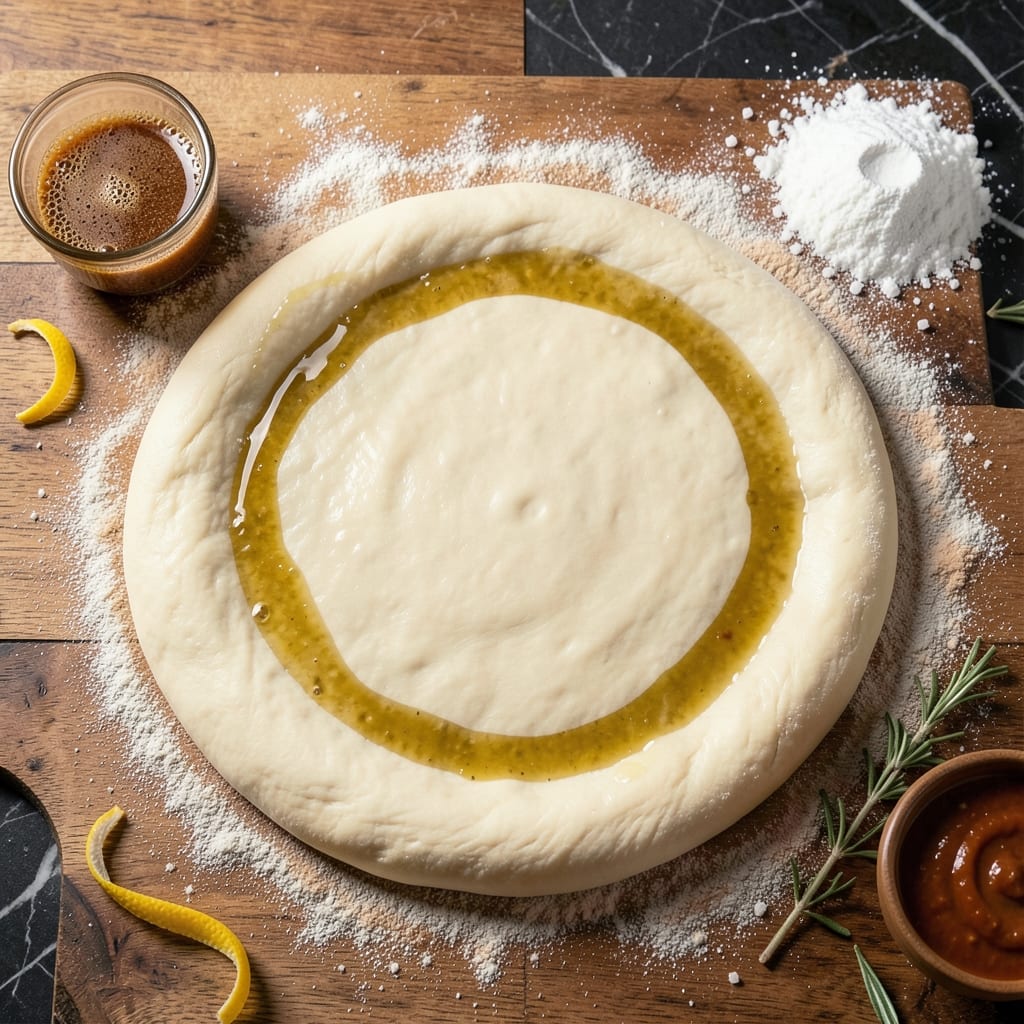
This overnight pizza dough recipe transforms simple ingredients into a light, airy crust with minimal effort. I developed this method after years of testing, and the long fermentation is the key to exceptional flavor and texture.
Using 00 flour creates a delicate, crisp base that’s perfect for Neapolitan-style pies. The dough rests in the refrigerator for 12-24 hours, allowing the gluten to relax and the flavors to develop deeply.
The result is a crust that’s crisp on the outside, chewy inside, and packed with complex, slightly tangy notes. It stretches easily without tearing, making it ideal for both beginners and seasoned bakers.
Top with your favorite sauce, cheese, and toppings for a pizza that rivals your favorite pizzeria. This method delivers consistent, professional-quality results every time.
Ingredients for Pizza Dough Recipe 00 Flour Overnight
Simple ingredients for a crisp, chewy crust with deep flavor development.
| Ingredient | Amount | Notes |
|---|---|---|
| 00 Flour 🌾 | 3 ½ cups | Italian-style, fine grind preferred |
| Warm Water 💧 | 1 ½ cups | 110-115°F for yeast activation |
| Active Dry Yeast 🍞 | 2 ¼ tsp | One 0.25 oz package |
| Salt 🧂 | 2 tsp | Fine sea salt or kosher salt |
| Extra-Virgin Olive Oil 🫒 | 2 tbsp | For dough elasticity and flavor |
| Sugar 🍚 | 1 tsp | Granulated, feeds the yeast |
| Semolina Flour 🌾 | ½ cup | For dusting work surface |
| All-Purpose Flour 🌾 | ½ cup | Backup for dusting if needed |
The 00 flour is non-negotiable here—Caputo brand is the gold standard, but Antimo works too if your local store carries it (I grab mine at Eataly or Whole Foods). Look for the fine, silky texture; coarser grinds won’t give you that delicate Neapolitan-style base. Yeast freshness matters—check the expiration date (those little packets go stale fast). Warm water should feel like bathwater, not hot (kill the yeast) or cold (won’t activate it).
No 00 flour? Bread flour at a 1:1 ratio gets you 80% there—higher protein means chewier crust. Out of semolina? Cornmeal works for dusting, though it’s slightly gritty. Sugar can be swapped for honey at half the amount if that’s what you’ve got. The olive oil is flexible—any neutral oil works, but extra-virgin adds complexity. Skip the sugar entirely if you’re in a pinch (yeast will still rise, just slower).
Dough keeps in the fridge for up to 3 days—flavor improves the longer it rests. Freeze portions for 1 month wrapped tightly in plastic (thaw overnight in the fridge). Bring to room temperature before shaping for best stretch. Leftovers? Reball and refrigerate—good for 2 more days.
Why You’ll Love This Recipe
- Set and Forget: I mix it the night before and let the 00 flour work its magic while I sleep—no last-minute stress.
- Crisp Yet Chewy: That overnight ferment gives the crust a depth of flavor and the perfect texture, crisp outside with a tender bite.
- Endless Toppings: I’ve used this dough for everything from classic margherita to a loaded veggie feast, and it never fails.
- Budget Stretch: A few cents worth of flour, yeast, and olive oil makes enough for two pizzas—honestly, it’s my cheapest crowd-pleaser.
Step-by-Step Instructions for Pizza Dough with 00 Flour Overnight
Here’s the method I use for a perfect, airy crust with that slow-fermented depth of flavor.
Step 1: Activate the Yeast and Mix the Dough
In a small bowl, combine the 1.5 cups Warm Water, 1 tsp Sugar, and 2.25 tsp Active Dry Yeast. Let it sit for 5-7 minutes until the mixture becomes foamy—that’s your visual cue the yeast is alive and active.
In a large mixing bowl, add the 3.5 cups 00 Flour and 2 tsp Salt. Make a well in the center and pour in the activated yeast mixture along with the 2 tbsp Extra-Virgin Olive Oil. Use a wooden spoon to mix until a shaggy dough forms. This initial mixing develops the gluten structure that’ll give your crust its characteristic chew.
Real talk: if your yeast doesn’t foam, don’t proceed. Either your water was too hot (killed the yeast) or too cold (didn’t activate it). The ideal temperature range is 110-115°F.
Step 2: Knead Until Smooth and Elastic
Turn the dough out onto a surface dusted with 0.5 cup Semolina Flour. The semolina’s coarse texture prevents sticking while adding a subtle nuttiness to your dough. Knead for 8-10 minutes until the dough becomes smooth and elastic.
Here’s the thing—you’ll know it’s ready when you can stretch a small piece thin enough to see light through it without tearing (the windowpane test). If it’s too sticky, resist the urge to add more flour. Instead, dust your hands with 0.5 cup All-Purpose Flour as needed. Wet hands work better than dry ones for handling sticky dough.
This kneading process aligns the gluten strands, creating that perfect chewy texture we’re after. Don’t rush it—under-kneaded dough leads to a dense crust.
Step 3: First Rise at Room Temperature
Lightly oil a clean bowl with a bit of the Extra-Virgin Olive Oil and place the dough inside, turning to coat all sides. Cover with a damp towel and let it rise in a warm, draft-free spot for 1-2 hours or until doubled in size.
I like to place my bowl near the oven with the light turned on—it creates the perfect warm environment. The dough is ready for the next step when it’s puffy and an indent made with your finger springs back slowly. This first rise develops initial flavor and texture.
Step 4: Overnight Cold Fermentation
After the first rise, punch down the dough to deflate it. This redistributes the gases and relaxes the gluten. Cover the bowl tightly with plastic wrap and refrigerate for at least 8 hours, but 12-24 hours is ideal for maximum flavor development.
The cold, slow fermentation is what gives this dough its complex flavor and perfect texture. You’ll notice the dough develops small bubbles on the surface—that’s a good sign. This extended rest also makes the dough easier to shape, as the gluten relaxes completely.
Don’t skip this step (I learned the hard way). The overnight fermentation is what transforms this from good dough to exceptional dough with that perfect balance of chewiness and crispness.
Step 5: Shape and Prepare for Baking
Remove the dough from the refrigerator and let it come to room temperature for 1-2 hours. This makes it much easier to handle and shape. Divide the dough into 4 equal portions for individual pizzas.
On a surface dusted with Semolina Flour, gently shape each portion into a ball, then stretch or roll it out to your desired thickness. The semolina adds a nice texture to the crust’s bottom. Let the shaped dough rest for 10-15 minutes before adding toppings—this final rest prevents shrinking during baking.
Your dough is now ready for its date with the oven. The long fermentation process ensures a crisp exterior with an airy, open crumb structure inside—exactly what you want in a perfect pizza crust.
Pro Tips For Making Pizza Dough Recipe 00 Flour Overnight
- Proof Overnight: Let the dough rise in the fridge for 12-18 hours—this slow fermentation develops deeper flavor and a chewier texture.
- Use Ice-Cold Water: Swap warm water for ice-cold when mixing; it prevents the yeast from activating too quickly, giving you better control over the overnight proof.
- Skip the Over-Flouring: Resist the urge to dust too much flour when shaping—00 flour is fine and absorbs liquid slowly, so excess flour can make the crust dense.
- Oil the Bowl Well: Coat the mixing bowl with at least 1 tablespoon of olive oil before the first rise; it keeps the dough from sticking and makes cleanup a breeze.
Serving Suggestions for This pizza dough recipe 00 flour overnight
Classic Margherita
Keep it simple with the holy trinity: San Marzano tomato sauce, fresh mozzarella di bufala, and basil leaves. I add a drizzle of extra-virgin olive oil before baking for extra crispness. David always requests this when I test new dough batches. 🌟
White Pizza Elegance
Skip the sauce and go for ricotta, fontina, and Parmigiano-Reggiano with a touch of garlic. Add arugula and prosciutto after baking. The overnight fermented crust handles the richness beautifully.
Breakfast Pizza
Top with scrambled eggs, crispy bacon, and sharp cheddar. I like to add a sprinkle of green onions for color. This became a weekend tradition afterEmma and Jack begged for pizza for breakfast. 💛
Veggie Supreme
Load it with roasted bell peppers, zucchini, mushrooms, and red onions. The key is roasting the veggies first to remove moisture. I grab mine from the Austin farmers market for peak freshness.
Pro Presentation
Use semolina flour on your peel for that rustic look. Bake on a preheated pizza stone at 500°F for 10-12 minutes until the crust is golden. Finish with flaky salt and a drizzle of olive oil.
Nutrition Facts
Frequently Asked Questions
Why use 00 flour instead of regular flour?
00 flour is finely milled with lower protein, creating a lighter, crispier crust. Its delicate texture allows for better gluten development during overnight fermentation. Regular flour works but yields a chewier result.
Can I skip the overnight fermentation?
Not recommended! The long, cold rise develops complex flavors and improves texture. Without it, the dough lacks depth and may be harder to stretch. 12-24 hours is ideal.
How do I know when the dough is ready to shape?
After refrigeration, let it sit at room temperature for 1-2 hours. It should feel soft, slightly tacky, and spring back slowly when pressed. Cold dough tears easily!
What if my dough doesn’t rise overnight?
Check your yeast freshness first. If it’s active, ensure your fridge isn’t too cold (38-42°F is perfect). Too-cold temps slow fermentation dramatically.

- Potato Candy Recipe 1933: Vintage Peanut Butter Roll Delight - October 30, 2026
- Potato Chip Cookie Recipe With Pecans: Buttery Crunch Meets Nutty Richness - October 30, 2026
- Potato Patty Recipe No Egg: Crispy Edges Without the Binder - October 30, 2026