
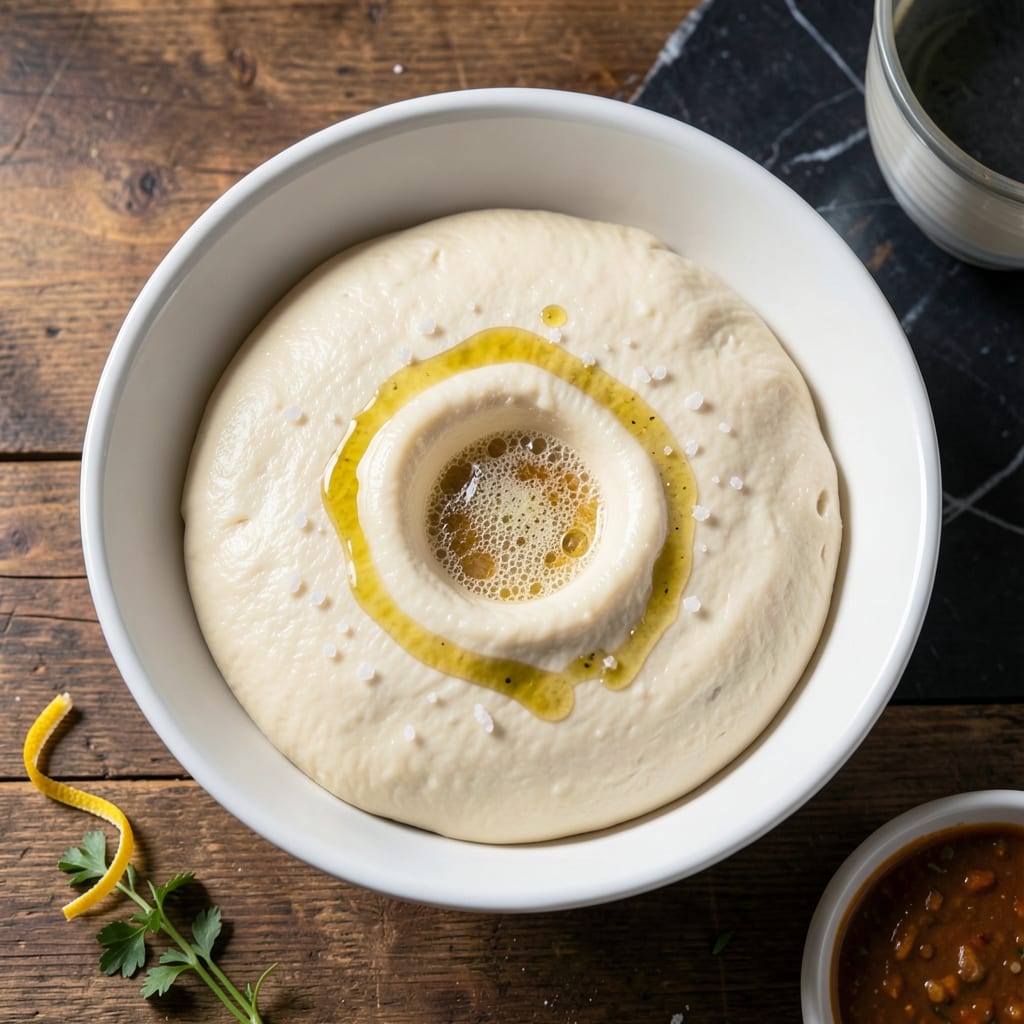
For consistent, professional results every time, this pizza dough recipe relies on precise weight measurements to eliminate guessing. The accuracy of a kitchen scale transforms home baking into a reliable process rather than a hopeful experiment.
What makes this method superior is the exact ratio of flour to water, which creates a perfectly elastic dough that stretches without tearing. A slow fermentation in the refrigerator develops complex flavors that elevate your final crust.
You’ll achieve a golden, chewy base with just the right amount of crispness on the bottom. The dough handles beautifully, whether you’re making thin-crust or thick, and bakes up with those coveted air pockets.
This approach takes the mystery out of pizza making, delivering bakery-quality results with simple, measurable steps.
Ingredients for Pizza Dough Recipe by Weight
Seven ingredients, one scale, zero guesswork. Perfect dough every single time.
| Ingredient | Amount | Notes |
|---|---|---|
| Bread Flour 🌾 | 20 oz | High-protein for chewiness |
| Water 💧 | 12 oz | Room temperature, filtered |
| Active Dry Yeast 🍞 | ¼ oz | Instant or rapid-rise works |
| Sea Salt 🧂 | ½ tsp | Fine grain for even distribution |
| Extra-Virgin Olive Oil 🫒 | 1 tbsp | For dough elasticity and flavor |
| Granulated Sugar 🍚 | 1 tsp | Feeds the yeast for activation |
| Semolina Flour 🌾 | ½ cup | For dusting work surface |
The flour is non-negotiable here—bread flour with its higher protein content (12-14%) gives you that chewy, elastic texture. King Arthur or Bob’s Red Mill are my go-tos. Weigh it out precisely; scooping from the bag packs it down and throws off your ratio. The yeast needs to be fresh (check the expiration date) or your dough won’t rise properly, even with perfect measurements.
No bread flour? All-purpose in a pinch (add 1 tbsp vital wheat gluten per cup as a boost). Out of semolina? Cornmeal or regular flour works for dusting. The olive oil can be swapped for any neutral oil if needed, but extra-virgin adds depth. Sugar is just for the yeast—honey or agave work too, but stick to the same weight.
The dough balls freeze beautifully for up to 3 months—wrap each tightly in plastic, then a zip-top bag. Thaw overnight in the fridge before using. Mixed dough keeps in the fridge for 3 days (it’ll develop more flavor) or at room temp for 2 hours max.
Why You’ll Love This Recipe
- No-Measure Mess: I just dump everything on the scale—no cups, no spoons, no extra bowls to wash.
- Chewy Crust: That high-protein bread flour plus olive oil gives it a texture that’s crisp outside, pillowy inside.
- Freezer Friend: I make a triple batch on Sunday and freeze the extra dough balls—fresh pizza any night.
- Penny-Wise Pie: Five basic pantry staples and I’m feeding four for the price of one takeout pie.
Step-by-Step Instructions for Pizza Dough by Weight
Here’s the method I’ve refined over years of making pizza at home.
Step 1: Activate the Yeast Properly
In a small bowl, combine the 12 oz water with the 1 tsp granulated sugar and 0.25 oz active dry yeast. I always use water at about 110°F—hot enough to activate the yeast but not so hot it kills it.
Let this mixture sit for 5-10 minutes until it becomes foamy and cloudy. This visual confirmation tells you the yeast is alive and ready to work. If you don’t see bubbles forming, your yeast might be expired, and you’ll want to start over with fresh yeast to ensure a proper rise.
Step 2: Mix and Knead the Dough
In a large mixing bowl, combine the 20 oz bread flour and 0.5 tsp sea salt. Create a well in the center and pour in the activated yeast mixture along with the 1 tbsp extra-virgin olive oil. I use a wooden spoon to mix until it comes together into a shaggy mass.
Turn the dough out onto a surface dusted with 0.5 cup semolina flour and knead for 8-10 minutes until smooth and elastic. The dough should spring back when you press it with your finger. The semolina prevents sticking while adding a nice texture to the finished crust.
Step 3: Let the Dough Rise to Double
Shape the dough into a ball and place it in a lightly oiled bowl. Cover with a clean kitchen towel and let it rise in a warm, draft-free place for 1-2 hours or until doubled in size. I like to turn on my oven light for a few minutes to create the perfect proofing environment.
You’ll know it’s ready when it’s puffy and an indent made with your finger doesn’t spring back immediately. This first rise develops the gluten structure, which is what gives your crust that perfect chewiness. Don’t rush this step—proper rising is key to flavor development.
Step 4: Divide and Shape the Dough
Gently deflate the risen dough and turn it out onto your work surface. Divide it into 4 equal portions (about 8.5 oz each) for individual pizzas. Shape each portion into a ball and let them rest, covered, for 15-20 minutes.
This resting period relaxes the gluten, making it easier to stretch the dough without it springing back. When you’re ready to shape, stretch each ball from the center outward, leaving a slightly thicker rim for the crust. The dough should be thin enough to see through in spots but not so thin it tears easily.
Pro Tips For Making Pizza Dough Recipe By Weight
- Use Room-Temp Water: I learned this the hard way—water straight from the tap can shock the yeast. Aim for 75-80°F, about the warmth of a baby bottle.
- Weigh Your Salt: Sounds weird, but it works: sea salt crystals vary wildly in size, so 5 grams on a scale beats eyeballing a teaspoon every time.
- Skip the Rush: After burning three batches, I finally figured out the dough needs a full 1-2 hour rise at room temp—no shortcuts, even if you’re hungry.
- Oil the Bowl: About 1 tablespoon of olive oil in the bowl before the first rise makes the dough easier to handle and adds a subtle richness.
Flavor Customization for These Flavors
Herb-Infused Crust
Mix 1 tbsp dried Italian herbs (oregano, basil, rosemary) into the flour before adding wet ingredients. The herbs distribute evenly throughout the dough, infusing every bite with aroma. I love how this creates a fragrant base that pairs perfectly with tomato sauce. 🌿
Spicy Kick
Add ½ tsp red pepper flakes or 1 tsp Calabrian chili paste to the water when activating the yeast. This gives the crust a subtle heat that builds with each bite. The spice complements rich toppings like sausage or pepperoni beautifully.
Garlic Lovers
Incorporate 2 tsp garlic powder into the dry ingredients for a consistent garlic flavor. For a stronger taste, sauté 3 minced garlic cloves in the olive oil before adding to the dough. This creates a golden, aromatic crust that’s irresistible.
Cheesy Crust
Work ¼ cup grated Parmesan into the dough during the final kneading stage. The cheese melts into the crust, creating little pockets of savory goodness. This works especially well for stuffed crust variations.
Whole Wheat Option
Replace 4 oz bread flour with whole wheat flour for a nuttier flavor and extra fiber. The dough may require 1-2 tsp additional water since whole wheat absorbs more liquid. The result is a heartier crust with more texture.
Sourdough Twist
Replace 2 oz water with active sourdough starter for a tangy depth. Reduce yeast to 0.15 oz and extend the first rise to 4-6 hours. This creates a complex, artisanal-style crust that sourdough enthusiasts will love. ✨
Nutrition Facts
Frequently Asked Questions
Why use weight instead of volume for pizza dough?
Weight measurements are far more precise than volume, especially for flour which can compact differently. 20 oz of flour by weight is consistent every time, while 4 cups by volume could vary by 20% or more.
Can I make this dough without a scale?
Technically yes, but you’ll sacrifice consistency. For best results, invest in a $10 kitchen scale. If you must use volume, 20 oz flour ≈ 4 cups, but weigh when possible.
How long can I refrigerate the dough?
Store tightly wrapped in the fridge for up to 3 days. The flavor actually improves with time! For longer storage, freeze for up to 3 months and thaw overnight in the fridge.
Why does my dough tear when stretching?
This usually means the gluten needs more rest. Let dough balls rest 15-20 minutes after dividing. Also ensure you’re stretching from the center outward, not pulling from the edges.

- Potato Candy Recipe 1933: Vintage Peanut Butter Roll Delight - October 30, 2026
- Potato Chip Cookie Recipe With Pecans: Buttery Crunch Meets Nutty Richness - October 30, 2026
- Potato Patty Recipe No Egg: Crispy Edges Without the Binder - October 30, 2026