
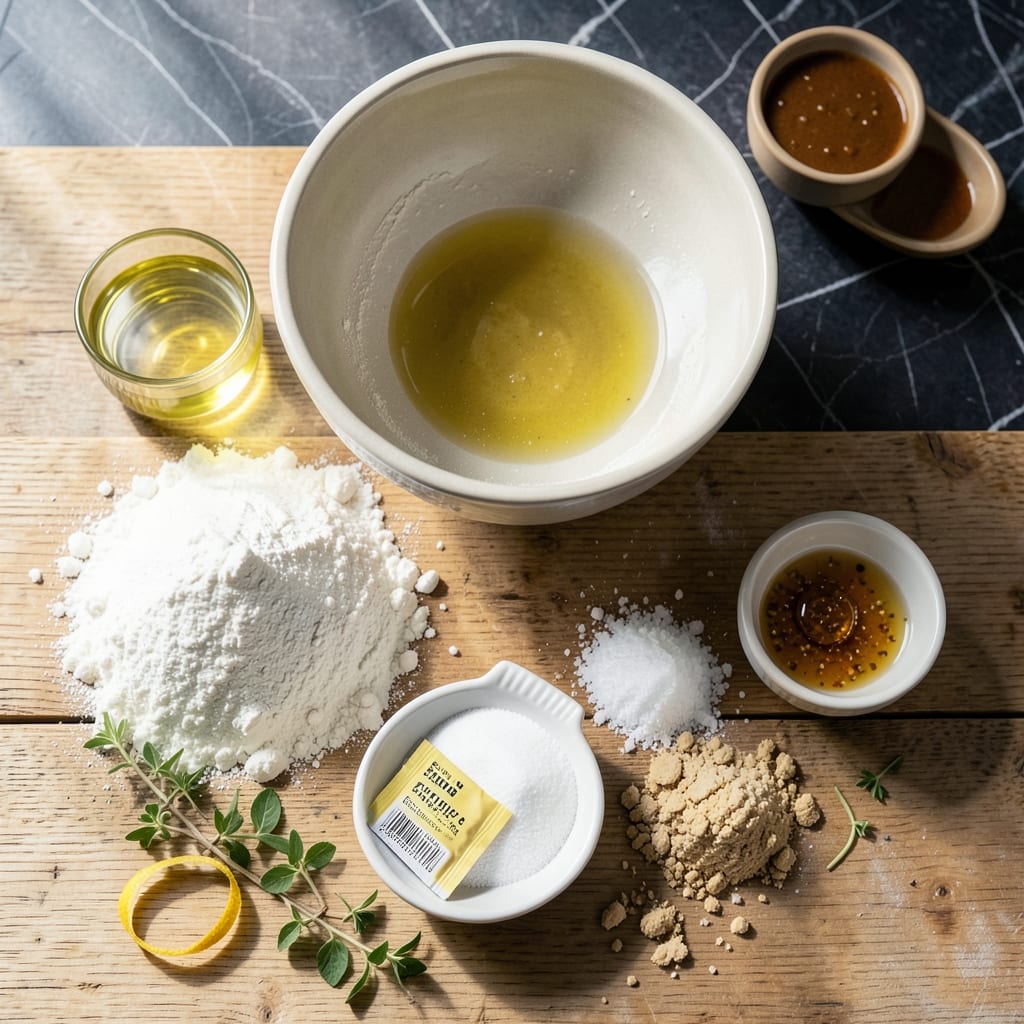
Creating the perfect pizza crust starts with precise ingredient ratios and a proven method. I developed this recipe through countless test batches to get the texture just right—crisp on the outside, chewy on the inside.
This approach uses simple ingredients but requires exact measurements to achieve consistent results. The dough comes together in 10 minutes of active prep, then rests to develop flavor and the ideal elastic texture.
What you get is a perfectly balanced crust that holds toppings beautifully without becoming soggy. The proof is in the bake: golden edges with airy pockets throughout.
Follow these ratios exactly for restaurant-quality pizza at home. The difference is in the details.
Ingredients for Pizza Dough Recipe Ingredients Quantity
Precise ratios of simple ingredients create restaurant-quality pizza dough at home with consistent results.
| Ingredient | Amount | Notes |
|---|---|---|
| Bread Flour 🌾 | 3 ½ cups | High-protein for chewy texture |
| Active Dry Yeast 🍞 | 2 ¼ tsp | Or one 0.25 oz packet |
| Kosher Salt 🧂 | 1 ½ tsp | Diamond Crystal preferred |
| Granulated Sugar 💧 | 2 tsp | Feeds the yeast |
| Extra-Virgin Olive Oil 🫒 | 2 tbsp | For dough elasticity |
| Warm Water 💧 | 1 ½ cups | 105-110°F for activation |
| Semolina Flour 🌾 | ¼ cup | For dusting work surface |
| Cornmeal 🌽 | ¼ cup | Prevents sticking to peel |
| Honey 🍯 | 1 tsp | Optional for sweetness |
| Garlic Powder 🧄 | ½ tsp | For flavor depth |
Bread flour is non-negotiable for authentic texture—King Arthur is the gold standard for home bakers. Diamond Crystal kosher salt dissolves evenly, unlike table salt. Active dry yeast from Fleischmann’s or Red Star brands guarantees reliable rise. The water temperature must be exact (105-110°F), as too hot kills yeast while too cold delays activation.
No bread flour? All-purpose works at a 1:1 ratio, though texture suffers slightly. Substitute maple syrup for honey if needed. Semolina can be replaced with more all-purpose flour for dusting. For yeast, instant yeast at 25% less quantity offers equivalent results. The olive oil must be extra-virgin—lower grades lack flavor depth.
Dough rests best at room temperature (70-75°F) for 1-2 hours. Refrigerate for up to 48 hours for developed flavor. Freeze shaped dough balls for 1 month (thaw overnight in fridge). Measured ingredients last indefinitely when stored properly in sealed containers.
Why You’ll Love This Recipe
- One Bowl Wonder: I just dump, mix, and let the yeast do its magic—no fancy tools, just five ingredients.
- Rich, Chewy Bite: That olive oil and bread flour combo gives it a golden crust and a satisfying chew every time.
- Endless Topping Playground: I’ve turned it into margherita, deep-dish, and even garlic knots—all from the same base.
- Penny-Pinching Winner: A bag of flour and a packet of yeast cost less than delivery, and I get four pizzas out of it.
Step-by-Step Instructions for Pizza Dough
Master the technique with these precise steps for achieving the ideal texture and flavor.
Step 1: Activate the Yeast Properly
In a small bowl, combine the 1.5 cups warm water, 2 tsp granulated sugar, and 1 tsp honey. The water should be between 105-110°F—use a thermometer for accuracy. Stir until the sugar and honey dissolve completely.
Sprinkle the 2.25 tsp active dry yeast over the water mixture and let it sit for 5-10 minutes until the surface becomes foamy and bubbly. This visual confirmation means the yeast is active and ready to work. If you don’t see foam, your water may have been too hot or the yeast may be expired—start over with fresh ingredients.
Step 2: Create the Dough Base
In a large mixing bowl or stand mixer fitted with a dough hook, combine the 3.5 cups bread flour, 1.5 tsp kosher salt, and 0.5 tsp garlic powder. The bread flour’s high protein content is essential for developing the chewy texture you want in pizza dough.
Make a well in the center and pour in the yeast mixture and 2 tbsp extra-virgin olive oil. The oil adds elasticity and richness to the dough. Mix on low speed until the ingredients come together into a shaggy mass, then increase to medium speed and knead for 6-8 minutes until smooth and elastic.
Step 3: Knead to Optimal Consistency
If mixing by hand, turn the dough out onto a surface dusted with 0.25 cup semolina flour. The semolina’s coarse texture prevents sticking while adding a subtle nutty flavor. Knead for 8-10 minutes until the dough is smooth, supple, and springs back when pressed with a finger.
You’ll know it’s ready when it passes the windowpane test: stretch a small piece thinly between your fingers—if it holds without tearing and light passes through, the gluten has developed properly. The dough should feel slightly tacky but not sticky. If it’s too sticky, add bread flour 1 tbsp at a time until it reaches the right consistency.
Step 4: First Rise for Flavor Development
Shape the dough into a ball and place it in a lightly oiled bowl, turning to coat all sides. Cover with a damp towel or plastic wrap and let rise in a warm, draft-free place for 1-2 hours or until doubled in volume. The ideal spot is 75-80°F—an oven with the light on works well.
This first rise allows the yeast to ferment the sugars, developing complex flavors in your dough. Don’t rush this step; proper fermentation is key to that authentic pizza taste. The dough is ready when it has visibly expanded and a finger pressed into it leaves a slight indentation that slowly springs back.
Step 5: Shape and Final Preparation
Punch down the risen dough to deflate it, then divide it into 4 equal portions for individual pizzas. On a surface dusted with 0.25 cup cornmeal, shape each portion into a ball, then let rest for 15-20 minutes before stretching. The cornmeal adds texture and prevents sticking when sliding the pizza onto a hot stone or peel.
After resting, stretch each ball into a 12-inch round, working from the center outward and leaving a slightly thicker rim for the crust. The dough should be thin enough to see through in spots but not so thin it tears. Use immediately or refrigerate for up to 24 hours for even more flavor development.
Pro Tips For Making Pizza Dough Recipe Ingredients Quantity
- Proof the Yeast: Always dissolve active dry yeast in warm water (110°F) with a pinch of sugar first—this 5-minute step guarantees your yeast is alive before committing to the full batch. I learned this the hard way after wasting good bread flour on dead yeast. —
- Weigh Your Flour: Skip the measuring cups and use a scale for bread flour—14 oz by weight is more accurate than 3 cups by volume, and it actually changes the outcome of your dough’s texture. —
- Salt the Flour: Mix the kosher salt into the flour before adding wet ingredients—this ensures even distribution, so you won’t end up with a bland bite or an overly salty one. —
- Oil the Bowl: Coat your rising bowl with about 1 tablespoon of that extra-virgin olive oil before adding the dough—it prevents sticking and makes the first punch-down way easier. Sounds weird, but it works.
Troubleshooting Great pizza dough recipe ingredients quantity
Dough Won’t Rise
First check your yeast—if it didn’t foam during activation, it may be expired. I always test with 105-110°F water and fresh yeast. If your kitchen is cold, place the bowl in an oven with the light on to maintain 75-80°F. 🌡️
Too Sticky Dough
Add bread flour 1 tbsp at a time until it reaches the right consistency. I use King Arthur bread flour for reliable results. Avoid adding too much or your crust will become dense.
Dense Crust
This usually means under-kneading or rushing the rise. Knead until the dough passes the windowpane test—stretch a small piece thinly between your fingers. If it tears, knead for 2-3 more minutes.
Yeast Smell
If your dough smells sharply of yeast, it may have over-proofed. Reduce the first rise to 1 hour and check at 45 minutes. The dough should be doubled, not tripled.
Tough Texture
Over-kneading develops too much gluten. Stop mixing as soon as the dough becomes smooth and elastic. I find 6-8 minutes in a stand mixer is perfect for this recipe.
Crust Too Thick
Stretch each ball into a 12-inch round before adding toppings. If it springs back, let it rest for 5 more minutes before trying again. The gluten needs time to relax.
Nutrition Facts
Frequently Asked Questions
Can I substitute all-purpose flour for bread flour?
Yes, but expect a slightly less chewy texture. Use the same 3.5 cups quantity. Bread flour’s higher protein creates better gluten structure for that perfect bite.
Why is warm water temperature so specific?
The 105-110°F range activates yeast without killing it. Too hot destroys the yeast, too cold slows activation. A kitchen thermometer ensures precision.
How do I adjust for high-altitude baking?
Reduce yeast by 25% and let dough rise 30 minutes less. Lower air pressure causes faster rising. Test with 1.75 tsp yeast first.
Can I make this ahead and refrigerate?
Refrigerate after kneading for up to 48 hours. Cold fermentation develops deeper flavor. Let it warm to room temp before shaping.

- Potato Candy Recipe 1933: Vintage Peanut Butter Roll Delight - October 30, 2026
- Potato Chip Cookie Recipe With Pecans: Buttery Crunch Meets Nutty Richness - October 30, 2026
- Potato Patty Recipe No Egg: Crispy Edges Without the Binder - October 30, 2026