
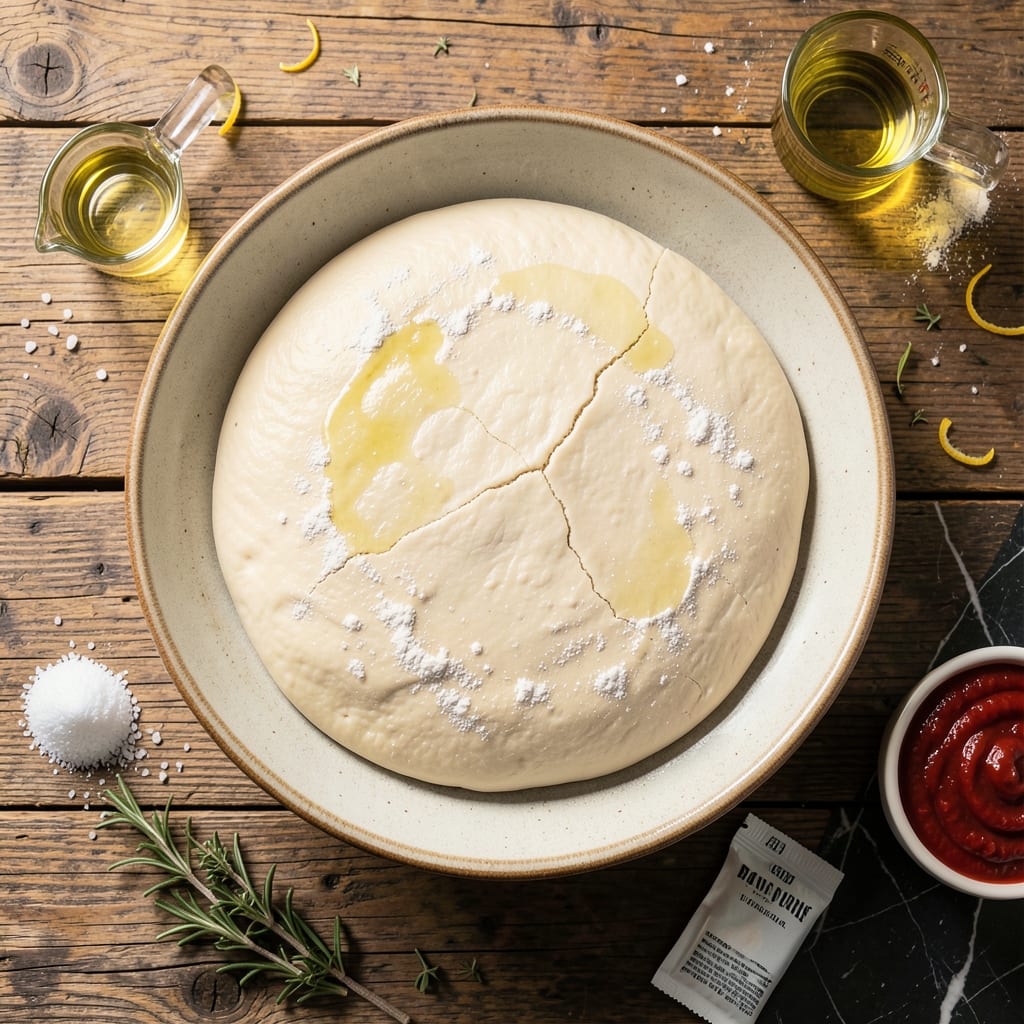
This no-knead pizza dough delivers artisan results with minimal effort, using olive oil for a tender, flavorful crust. I developed this method after years of testing to achieve professional quality at home.
The olive oil enriches the dough, creating a soft interior while maintaining a crisp exterior. A two-hour rise time allows the flavors to develop without requiring all-day preparation.
You’ll get a golden, chewy crust with those coveted air pockets that make homemade pizza special. The dough handles beautifully, stretching easily without tearing.
Perfect for classic Margherita or loaded with your favorite toppings. This recipe makes enough for two large pizzas.
Ingredients for Pizza Dough Recipe Olive Oil
Minimal ingredients, maximum flavor. This is what artisan pizza dough looks like.
| Ingredient | Amount | Notes |
|---|---|---|
| Bread Flour 🌾 | 4 cups | High-protein for chewiness |
| Warm Water 💧 | 1 ½ cups | 105-110°F for yeast activation |
| Active Dry Yeast 🍞 | 2 ¼ tsp | One packet or bulk |
| Extra-Virgin Olive Oil 🫒 | ¼ cup | For tender, flavorful crust |
| Kosher Salt 🧂 | 2 tsp | Diamond Crystal preferred |
| Granulated Sugar 🍚 | 1 tsp | Feeds the yeast |
| Semolina Flour 🌾 | ¼ cup | For dusting work surface |
| All-Purpose Flour 🌾 | ½ cup | For initial dusting |
The flour is everything here. King Arthur Bread Flour gives that perfect chew—14% protein is the sweet spot. I grab mine from Whole Foods or bulk bins at natural food stores. The olive oil needs to be extra-virgin—none of that light stuff. California Olive Ranch or Bertolli are solid grocery store picks. Warm water temp matters: too hot kills the yeast, too cold won’t wake it up (aim for bathwater warm).
No bread flour? All-purpose plus 1 tbsp vital wheat gluten per cup gets you close. Out of semolina? Cornmeal works for dusting. The sugar is just yeast food—honey or maple syrup at half the amount work too. If your yeast is old, test it first in warm water with sugar—if it doesn’t bubble within 5 minutes, it’s dead. The olive oil can be swapped for another neutral oil, but you’ll lose flavor.
Dough rises best in a warm spot (I use my turned-off oven with the light on). Keeps in the fridge for 3 days—let it come to room temp before shaping. Freezes beautifully for 1 month (thaw overnight in the fridge). Always use Diamond Crystal kosher salt—it’s less dense, so measurements stay accurate.
Why You’ll Love This Recipe
- No-Hassle Dough: Honestly, I mix it in one bowl and let the yeast do all the work while I prep toppings.
- Rich Olive Oil Crust: That golden, crispy edge comes from the extra-virgin olive oil—it’s buttery without being heavy.
- Endless Topping Canvas: I’ve used this dough for everything from margherita to flatbread, even garlic knots.
- Budget Stretch: Five ingredients, and bread flour plus olive oil make it taste like a pizzeria’s but for pennies.
Step-by-Step Instructions for Pizza Dough with Olive Oil
Here’s my no-knead method that delivers artisan results with minimal effort.
Step 1: Activate the Yeast and Proof
In a large mixing bowl, combine the 1.5 cups Warm Water, 1 tsp Granulated Sugar, and 2.25 tsp Active Dry Yeast. Let this sit for 5-7 minutes until the mixture becomes frothy and cloudy—this visual confirmation means the yeast is alive and active.
If you don’t see bubbles forming, your water might have been too hot or the yeast might be expired. I always check my water temperature with a thermometer to ensure it’s between 105-110°F—any hotter and you’ll kill the yeast.
Step 2: Mix the Dough and Develop Gluten
Add the 4 cups Bread Flour, 2 tsp Kosher Salt, and 0.25 cup Extra-Virgin Olive Oil to the yeast mixture. Use a wooden spoon or dough whisk to combine until no dry bits remain. The dough will be sticky and shaggy—that’s exactly what you want at this stage.
Don’t be tempted to add more flour. The high hydration level is what creates that open crumb structure characteristic of artisan pizza crusts. Cover the bowl with a damp towel and let it rest at room temperature for 10 minutes to begin gluten development.
Step 3: Perform Stretch-and-Folds
After the initial rest, you’ll perform a series of stretch-and-folds to build strength in the dough without traditional kneading. Wet your hands to prevent sticking, then grab one side of the dough and stretch it upward before folding it over itself. Rotate the bowl and repeat this process 4 times, working your way around the bowl.
Cover and let rest for another 10 minutes, then repeat the stretch-and-fold sequence 3 more times. You’ll notice the dough becoming smoother and more elastic with each set. This technique replaces kneading while creating a beautiful, open crumb structure.
Step 4: Bulk Ferment Until Doubled
After the final stretch-and-fold, cover the bowl tightly and let the dough ferment at room temperature for 1.5 to 2 hours, or until it has nearly doubled in volume. The ideal fermentation temperature is around 75°F—warmer temperatures will speed up the process, while cooler temperatures will slow it down.
You’ll know it’s ready when the dough is puffy and jiggly, with bubbles visible beneath the surface. If you poke it gently with your finger, the indentation should slowly spring back, but not completely disappear. This fermentation develops the flavor and texture that makes no-knead dough special.
Step 5: Shape and Prepare for Baking
Turn the dough out onto a surface dusted with 0.5 cup All-Purpose Flour and 0.25 cup Semolina Flour. The semolina adds a nice texture and prevents sticking while giving your crust that authentic pizzeria feel.
Divide the dough into 4 equal portions for individual pizzas. Gently shape each portion into a ball, being careful not to degas the dough too much. Let the balls rest for 15-20 minutes before stretching to allow the gluten to relax. Your dough is now ready to be stretched, topped, and baked into perfect artisan pizzas.
Pro Tips For Making Pizza Dough Recipe Olive Oil
- Test Your Yeast: I learned this the hard way—always bloom your active dry yeast in warm water with a pinch of sugar first. If it doesn’t foam within 5-10 minutes, your dough won’t rise, no matter how long you wait.
- Use Good Olive Oil: Sounds obvious, but a high-quality extra-virgin olive oil actually changes the outcome. The cheap stuff can leave your crust greasy instead of rich and fragrant.
- Skip Cold Water: After ruining a few batches, I finally figured out that warm water (around 110°F) is non-negotiable. Cold water slows down the yeast, and your dough won’t proof properly.
- Rest Overnight: I was skeptical until I tried it, but letting the dough rest in the fridge for 12-24 hours develops way more flavor. Plus, it’s easier to shape when cold—I know, I know, but trust the process.
Serving Suggestions for This Recipe
Fresh From the Oven
Serve immediately while hot for that perfect crispy-chewy texture. I place pizzas on a wooden cutting board to maintain heat without sogginess. Cut with a sharp pizza wheel for clean slices—OXO’s is my go-to from New Seasons Market.
Family-Style Feasts
For gatherings, I make individual pizzas so everyone can customize. Lily loves helping stretch dough (her tiny hands are great for this!). Arrange on large wooden boards with small bowls of olive oil for dipping crusts. 💛
Dipping Sauces
Offer garlic-infused olive oil for crust dipping—heat ½ cup oil with 3 crushed garlic cloves until fragrant. A simple balsamic glaze drizzle adds sweetness that pairs beautifully with the olive oil crust.
Salad Pairings
A light arugula salad with lemon vinaigrette cuts through richness. Toss 4 cups arugula with 2 tbsp olive oil, 1 tbsp lemon juice, and shaved Parmesan. The peppery greens complement any pizza toppings.
Beverage Partners
An Italian lager like Peroni cleanses your palate between bites. For non-alcoholic, try San Pellegrino Aranciata—the citrus notes enhance the olive oil’s fruitiness. I always keep both stocked from Portland farmers markets. 🍺
Leftovers Tip
Reheat slices on a cast iron skillet over medium heat for 2-3 minutes to restore crispness. Spritz with 1 tsp water and cover for the first minute to refresh toppings without drying the crust.
Nutrition Facts
Frequently Asked Questions
Can I use regular flour instead of bread flour?
Yes, but add 1 tbsp vital wheat gluten per cup to boost protein. Bread flour’s higher protein creates better chew, but all-purpose works in a pinch.
Why does the dough need olive oil?
The oil tenderizes the crumb and adds rich flavor. It also helps create a crispier exterior while keeping the inside soft and elastic.
What if my dough doesn’t rise?
Check your yeast freshness first—old yeast won’t activate. Also ensure water was 105-110°F and dough rested in a warm spot. Cold environments slow fermentation significantly.
How long can I store the dough?
Refrigerate for up to 3 days or freeze for 1 month. Thaw overnight in the fridge before using. Cold dough needs extra time to come to room temperature.

- Potato Candy Recipe 1933: Vintage Peanut Butter Roll Delight - October 30, 2026
- Potato Chip Cookie Recipe With Pecans: Buttery Crunch Meets Nutty Richness - October 30, 2026
- Potato Patty Recipe No Egg: Crispy Edges Without the Binder - October 30, 2026