
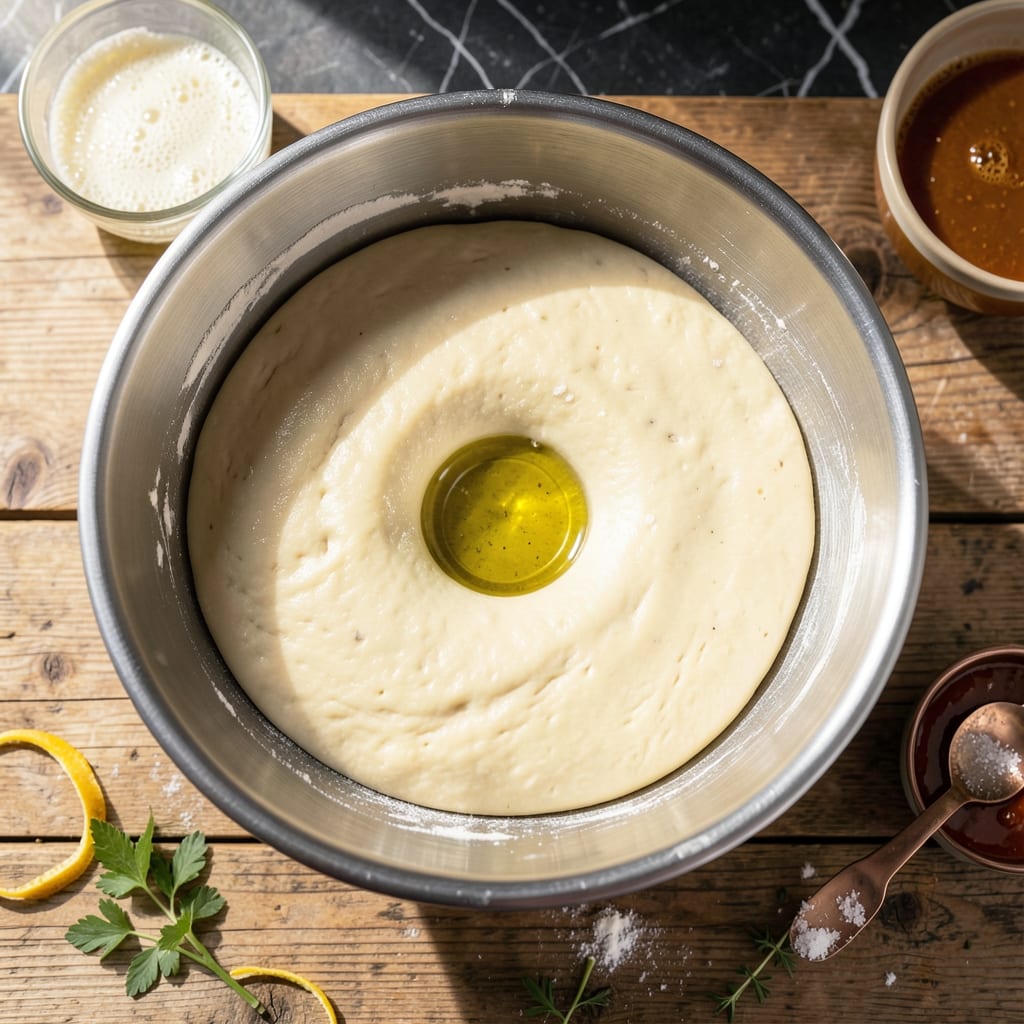
This pizza dough delivers a chewy, artisan-quality crust with minimal effort. The addition of egg enriches the flavor while yeast ensures a perfect rise every time.
What sets this recipe apart is the balance of simplicity and sophistication. With just a handful of pantry staples and 90 minutes of total time, you’ll achieve results that rival your favorite pizzeria.
The egg creates a tender, slightly richer dough, while the yeast develops complex flavors during the rise. The result is a crust with the ideal combination of chew and crisp.
Ready to elevate your homemade pizza game? This foundation makes it possible.
Ingredients for Pizza Dough Recipe with Egg and Yeast
Nine simple ingredients for an artisan crust that rivals your favorite pizzeria.
| Ingredient | Amount | Notes |
|---|---|---|
| Bread Flour 🌾 | 3 ½ cups | Plus extra for dusting |
| Active Dry Yeast 🍞 | 2 ¼ tsp | One packet, proofed in warm water |
| Granulated Sugar 🍚 | 1 tsp | Feeds the yeast for activation |
| Warm Water 💧 | 1 ¼ cups | 110-115°F for yeast proofing |
| Large Egg 🥚 | 1 whole | Room temperature for even mixing |
| Extra-Virgin Olive Oil 🫒 | 2 tbsp | For richness and elasticity |
| Kosher Salt 🧂 | 1 ½ tsp | Fine grain for even distribution |
| Cornmeal 🌽 | ½ cup | For dusting pizza peel |
| All-Purpose Flour 🌾 | ½ cup | Optional for softer texture |
The flour is everything here. King Arthur Bread Flour gives that chewy texture—all-purpose works but the crust won’t be as elastic. Yeast freshness matters (check the expiration date). I grab mine from Whole Foods bulk bins, but the packet stuff at any grocery store is fine too. Warm water should feel like bathwater, not hot (or you’ll kill the yeast).
No bread flour? Swap all-purpose plus 1 tbsp vital wheat gluten per cup. Out of yeast? Instant yeast works at the same ratio—just skip proofing. The egg is key for richness, but if you’re out, 1/4 cup plain yogurt gets close. For extra flavor, replace 1/4 cup water with milk (warm it first).
Dough keeps in the fridge for 48 hours—actually improves overnight. Freeze for 1 month in a sealed bag (thaw in fridge). Cornmeal prevents sticking, but semolina works too (or extra flour in a pinch).
Why You’ll Love This Recipe
- One Bowl Wonder: I mix everything right in the same bowl—no extra dishes, just flour, yeast, egg, and warm water coming together.
- Rich, Tender Bite: The egg adds a depth that makes the crust soft yet sturdy, with just a hint of sweetness from the sugar.
- Freezer Friendly: I double the batch and freeze half for spontaneous pizza nights. Honestly, it thaws like a dream.
- Budget Stretcher: Bread flour and yeast are cheap, and this makes enough dough for two large pizzas without breaking the bank.
Step-by-Step Instructions for Pizza Dough With Egg and Yeast
Here’s my tested method for achieving that perfect chewy texture with a golden, crisp crust.
Step 1: Proof the Yeast for a Strong Start
In a large mixing bowl, combine the 1.25 cups Warm Water, 2.25 tsp Active Dry Yeast, and 1 tsp Granulated Sugar. Stir gently and let it sit for 5-7 minutes until the mixture becomes frothy and slightly domed. The sugar feeds the yeast, and the froth tells you it’s active and ready to work its magic.
If the mixture doesn’t bubble, your yeast might be old or the water too hot. I always check the water temperature with a thermometer—it should be between 110-115°F. This ensures the yeast wakes up without being killed off.
Step 2: Mix Wet and Dry Ingredients
Once the yeast is proofed, add the 1 whole Large Egg and 2 tbsp Extra-Virgin Olive Oil. Whisk lightly to combine. In a separate bowl, mix the 3.5 cups Bread Flour and 1.5 tsp Kosher Salt. Gradually add the dry ingredients to the wet, stirring with a wooden spoon until a shaggy dough forms.
If the dough feels too sticky, add the 0.5 cup All-Purpose Flour a little at a time. This optional step gives a slightly softer texture. The dough should pull away from the sides of the bowl but still feel tacky to the touch.
Step 3: Knead Until Smooth and Elastic
Turn the dough out onto a lightly floured surface—use some of the Bread Flour reserved for dusting. Knead for 8-10 minutes until the dough is smooth, elastic, and springs back when pressed. This develops the gluten, which is what gives your crust that chewy quality.
I like to use the heel of my hand to push the dough away, then fold it back over itself. If it’s still sticky, resist the urge to add too much flour—just dust your hands and the surface lightly. Over-flouring can make the dough tough.
Step 4: Let It Rise to Double in Size
Lightly oil a clean bowl and place the dough inside, turning to coat all sides. Cover with a damp towel and let it rise in a warm, draft-free spot for 60-90 minutes, or until doubled in size. I preheat my oven to the lowest setting, turn it off, and place the bowl inside for a consistent rise.
The dough is ready when it holds an indent when gently pressed with a finger. If it springs back immediately, give it more time. This step is crucial for a light, airy texture in your finished crust.
Step 5: Shape and Prepare for Baking
Punch down the risen dough to release the air, then turn it out onto a surface dusted with 0.5 cup Cornmeal. The cornmeal adds a subtle crunch and prevents sticking when you transfer the dough to the oven. Divide the dough into 4 equal portions for individual pizzas.
Shape each portion into a ball, then roll or stretch it out to your desired thickness. Let the shaped dough rest for 10-15 minutes before adding toppings. This relaxes the gluten, making it easier to stretch and preventing it from shrinking back in the oven.
Pro Tips For Making Pizza Dough Recipe With Egg And Yeast
- Activate the Yeast: Bloom the yeast in warm water (110°F) with a pinch of sugar for 5-10 minutes until foamy—I learned this the hard way after killing a batch with water that was too hot.
- Use Room-Temp Egg: Take the egg out of the fridge 30 minutes before mixing, or it’ll shock the dough and slow down the rise.
- Skip Over-Kneading: Mix just until the dough comes together, then let the gluten develop during the first rise—overworking it makes the crust tough.
- Rest Before Shaping: After the first rise, let the dough sit on the counter for 15 minutes before stretching to relax the gluten and prevent tearing.
Pro Cooking Tips for Perfect Results
Yeast Activation
Always use a thermometer to verify your water is between 110-115°F. Anything hotter kills the yeast, while cooler water slows activation. I use a ThermoWorks ThermoPop for accuracy. The froth should appear within 5-7 minutes—if not, start fresh with new yeast.
Kneading Technique
Use the heel of your hand to push the dough away, then fold it back. This builds gluten without overworking the dough. After 8-10 minutes, it should pass the windowpane test: stretch a small piece thin enough to see light through it without tearing.
Rising Environment
For consistent results, create a warm, draft-free space. I preheat my oven to 170°F, turn it off, and place the bowl inside. The dough should double in 60-90 minutes. If your kitchen is cold, extend the time rather than increasing temperature. 🌡️
Dough Hydration
This recipe sits at about 65% hydration. If it feels too sticky, add flour 1 tbsp at a time. Remember, a slightly tacky dough produces a chewier crust. Over-flouring creates a dense, tough texture.
Shaping Pro Tips
Let shaped dough rest for 10-15 minutes before adding toppings. This relaxes the gluten, preventing shrinkage. Use cornmeal on your peel for easy transfer to the oven. For thin crust, roll it out; for thick, gently stretch by hand.
Baking Prep
Preheat your baking surface (stone, steel, or inverted sheet pan) at 475°F for at least 30 minutes. The high heat mimics professional pizza ovens. Dust your peel with cornmeal to prevent sticking during the launch. 🔥
Nutrition Facts
Frequently Asked Questions
Why add an egg to pizza dough?
The egg enriches the flavor and creates a tender, slightly richer texture. It also helps with browning and contributes to a chewier crust.
Can I use instant yeast instead of active dry?
Yes! Use the same amount of instant yeast but skip the proofing step. Just mix it directly with the dry ingredients.
How do I fix dough that didn’t rise?
Check your yeast freshness and water temperature first. If the environment was too cold, move it to a warm spot and give it more time—up to 2 hours.
What’s the best way to store leftover dough?
Wrap it tightly in plastic and refrigerate for up to 48 hours. For longer storage, freeze for 1 month and thaw in the fridge overnight.

- Potato Candy Recipe 1933: Vintage Peanut Butter Roll Delight - October 30, 2026
- Potato Chip Cookie Recipe With Pecans: Buttery Crunch Meets Nutty Richness - October 30, 2026
- Potato Patty Recipe No Egg: Crispy Edges Without the Binder - October 30, 2026