
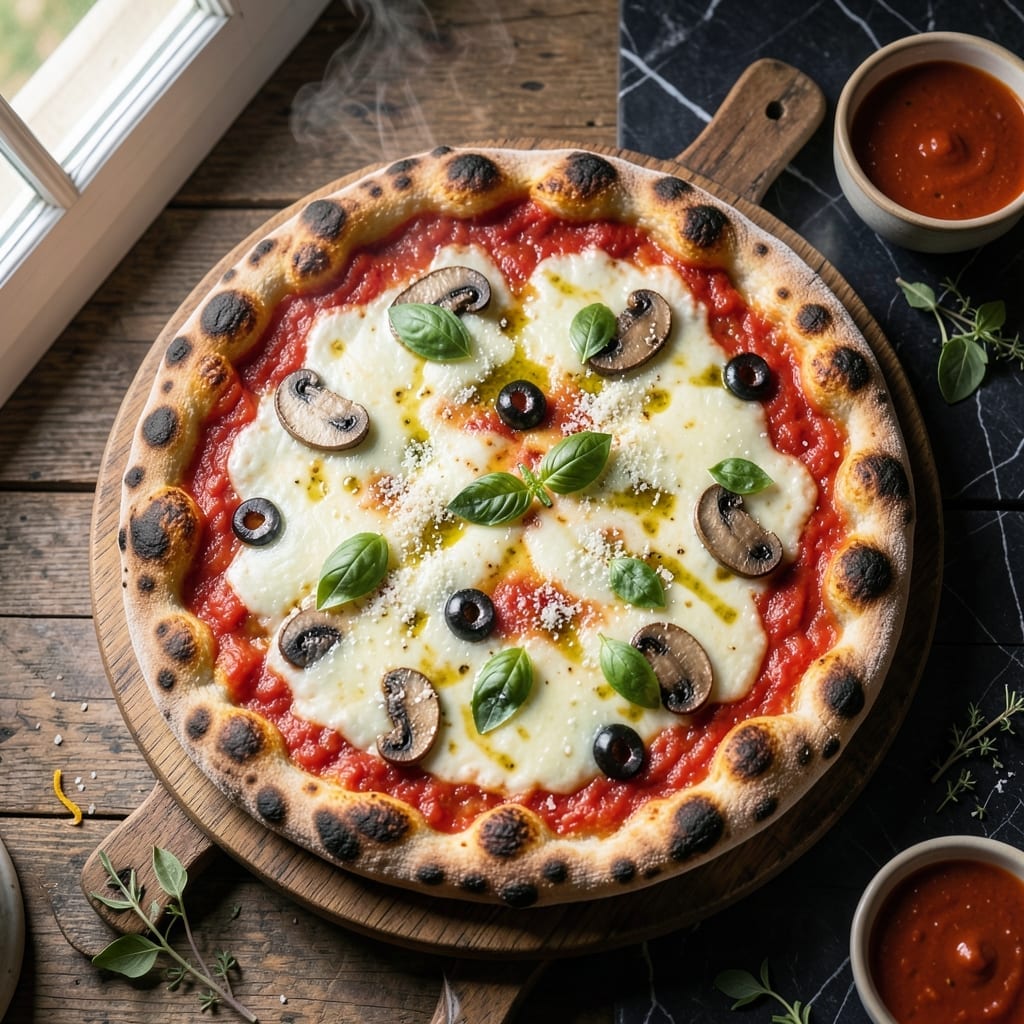
This recipe delivers the authentic Italian pizza experience you’ve been searching for right in your home kitchen. I’ve refined this method to capture the essence of traditional Neapolitan style without complicated techniques.
The crust achieves that perfect balance of crispy exterior and chewy interior, thanks to a simple dough recipe that requires just a handful of ingredients. A hot oven mimics the intense heat of a wood-fired pizza oven, ensuring professional results.
Top it with classic combinations like fresh mozzarella, basil, and san marzano tomatoes, or experiment with your favorite flavors. The foundation is versatile enough to handle any creative direction.
With attention to detail and quality ingredients, this pizza rivals what you’d find in Italy. The process is straightforward, and the reward is a slice of authentic perfection.
Ingredients for Pizza Recipe in English
A handful of quality ingredients for that wood-fired Neapolitan magic at home.
| Ingredient | Amount | Notes |
|---|---|---|
| Bread Flour 🌾 | 3 ½ cups | High protein for chewy crust |
| Active Dry Yeast 🍞 | 1 tsp | Or instant yeast same amount |
| Granulated Sugar 🍬 | 1 tsp | Feeds the yeast activation |
| Kosher Salt 🧂 | 2 tsp | Diamond Crystal preferred |
| Warm Water 💧 | 1 ½ cups | 110-115°F for yeast |
| Extra-Virgin Olive Oil 🫒 | 2 tbsp | Plus extra for greasing |
| San Marzano Whole Peeled Tomatoes 🍅 | 1 can | 28 oz can, crushed by hand |
| Fresh Mozzarella 🧀 | 8 oz | Low-moisture, sliced thin |
| Fresh Basil Leaves 🌿 | ¼ cup | Torn, not chopped |
| Parmesan Cheese 🧀 | ½ cup | Freshly grated from wedge |
| Garlic Cloves 🧄 | 3 cloves | Minced for sauce |
| Dried Oregano 🍃 | 1 tsp | Crushed between fingers |
| Red Pepper Flakes 🌶️ | ½ tsp | Optional for heat |
| Cornmeal 🌽 | ¼ cup | For dusting peel |
The flour is non-negotiable here. King Arthur Bread Flour has the perfect protein content for that chewy bite—all-purpose works in a pinch but won’t give you the same texture. For tomatoes, San Marzano are the gold standard (look for DOP on the label). I grab mine at Trader Joe’s or any Italian specialty store. Yeast freshness matters—check the expiration date and store it in the freezer if you won’t use it quickly.
No bread flour? All-purpose plus 1 tsp vital wheat gluten per cup gets you close. Fresh mozzarella can be the milky ball packed in water or the low-moisture block—both work, but pat the water-packed dry first (or your pizza will be soggy). No San Marzanos? Any good canned tomato works, but add a pinch of sugar to balance acidity. The Parmesan should be the real Parmigiano-Reggiano—skip the pre-grated stuff.
Dough keeps in the fridge for 2-3 days (it actually develops more flavor). Sauce can be made ahead and stored for 5 days. Fresh mozzarella? Use within 1 week of opening. Freeze dough balls for up to 3 months—thaw overnight in the fridge before using.
Why You’ll Love This Recipe
- No-Fuss Dough: I love that this comes together with just flour, yeast, sugar, salt, and warm water—no fancy ingredients or techniques needed.
- Crave-Worthy Crust: The yeast and sugar create that perfect golden, slightly chewy base that makes every bite satisfying.
- Weeknight Hero: Honestly, I can prep the dough in the morning and have pizza ready for dinner, or even freeze it for later.
- Budget Stretch: Between us, this costs pennies compared to takeout and feeds my whole family with leftovers for lunch.
Step-by-Step Instructions for Pizza
Here’s how I make authentic Italian pizza with a chewy crust and vibrant toppings.
Step 1: Prepare the Dough
In a large bowl, whisk together the 1.5 cups Warm Water (at 110-115°F), 1 tsp Granulated Sugar, and 1 tsp Active Dry Yeast. Let it sit for 5-10 minutes until the mixture becomes frothy—this confirms the yeast is active.
Add the 3.5 cups Bread Flour and 2 tsp Kosher Salt to the yeast mixture. Stir with a wooden spoon until a shaggy dough forms. Drizzle in the 2 tbsp Extra-Virgin Olive Oil and continue mixing until the dough pulls away from the sides of the bowl.
Turn the dough onto a lightly floured surface and knead for 8-10 minutes until smooth and elastic. The dough should spring back slowly when pressed with a finger.
Step 2: Let the Dough Rise
Lightly grease a clean bowl with extra-virgin olive oil and place the dough inside. Cover with a damp kitchen towel and let it rise in a warm, draft-free spot for 1.5-2 hours, or until doubled in size.
I like to check for doneness by pressing two fingers into the dough—if the indentations remain, it’s ready. Punch down the dough to release the air, then cover and let it rise for another 30 minutes for added flavor development.
Step 3: Shape the Dough and Prepare Toppings
Preheat your oven to 500°F with a pizza stone or inverted baking sheet inside. Divide the dough into two equal portions and roll each into a 12-inch circle on a surface dusted with 0.25 cup Cornmeal. The cornmeal adds texture and prevents sticking.
For the sauce, crush the 1 can San Marzano Whole Peeled Tomatoes by hand in a bowl. Stir in the minced 3 cloves Garlic Cloves, 1 tsp Dried Oregano, and 0.5 tsp Red Pepper Flakes. Slice the 8 oz Fresh Mozzarella thinly and tear the 0.25 cup Fresh Basil Leaves for freshness.
Step 4: Assemble and Bake the Pizza
Transfer one dough circle to a piece of parchment paper. Spread a thin layer of the tomato sauce over the dough, leaving a ½-inch border for the crust. Top with half the fresh mozzarella and sprinkle with 0.5 cup Parmesan Cheese.
Slide the pizza (with parchment) onto the preheated stone or baking sheet. Bake for 10-12 minutes until the crust is golden brown and the cheese is bubbly and slightly charred in spots. Repeat with the remaining dough and toppings.
Remove from the oven, top with fresh basil leaves, and let it cool for 2 minutes before slicing. The crust should be crisp on the outside and chewy inside, with a vibrant, flavorful sauce.
Pro Tips For Making Pizza Recipe In English
- Check Yeast First: Always proof your active dry yeast in the warm water with sugar for 5-10 minutes—if it doesn’t bubble, your dough won’t rise, no matter how long you wait. I learned this the hard way after wasting a whole batch of flour.
- Use Bread Flour: Skip the all-purpose and stick with bread flour for that chewy, elastic texture. The higher protein content actually changes the outcome, giving you a crust that holds up to toppings.
- Knead Long Enough: Don’t stop kneading until the dough is smooth and springs back when poked, usually 8-10 minutes by hand. Steer clear of underworked dough—it’ll tear when you stretch it.
- Rest the Dough: Let it rise in a warm spot for at least 1-2 hours, or until doubled. Sounds weird, but covering it with a damp towel speeds things up and keeps the surface from drying out.
Common Mistakes When Making Great pizza recipe in english
Overworking the Dough
Kneading too long develops excess gluten, making your crust tough instead of chewy. Stop once the dough is smooth and springs back slowly—usually after 8-10 minutes. I learned this the hard way with my first pizza disaster in France!
Using Cold Ingredients
Your warm water should be 110-115°F to activate yeast properly. Too cold and the yeast won’t wake up; too hot and you’ll kill it. I use a thermometer to be precise—worth the $5 investment. 🌡️
Skipping the Rise
Rushing the first rise means your dough won’t develop flavor. Let it double in size—this takes 1.5-2 hours in a warm spot. I often place mine near the oven with the light on for consistent warmth.
Overloading Toppings
More isn’t better here. Too many toppings make the pizza soggy and prevent even cooking. Stick to a thin layer of sauce and cheese, then add extras sparingly. This keeps the crust crisp.
Baking on a Cold Surface
Your pizza stone or baking sheet must be screaming hot before the dough hits it. Preheat for at least 30 minutes at 500°F. This mimics a wood-fired oven’s intense heat for that perfect char. 🔥
Slicing Too Soon
Let your pizza rest for 2 minutes after baking. This allows the cheese to set slightly and prevents all your toppings from sliding off when you cut into it. Patience pays off with cleaner slices.
Nutrition Facts
Frequently Asked Questions
What’s the best flour for a crispy crust?
Use bread flour for the chewiest texture. Its higher protein content develops more gluten, giving you that perfect crispy-chewy balance. All-purpose works in a pinch but won’t be as authentic.
How do I know when the dough is ready?
The dough should spring back slowly when pressed with a finger after 8-10 minutes of kneading. After rising, it should double in size and hold indentations when gently pressed.
Can I use a regular baking sheet?
Yes! Preheat an inverted baking sheet at 500°F for 30 minutes to mimic a pizza stone. It won’t be as perfect but will still give you good results.
How do I prevent a soggy crust?
Don’t overload toppings—use a thin layer of sauce and cheese. Also, pre-bake the crust for 2-3 minutes before adding toppings to create a barrier.

- Potato Candy Recipe 1933: Vintage Peanut Butter Roll Delight - October 30, 2026
- Potato Chip Cookie Recipe With Pecans: Buttery Crunch Meets Nutty Richness - October 30, 2026
- Potato Patty Recipe No Egg: Crispy Edges Without the Binder - October 30, 2026