
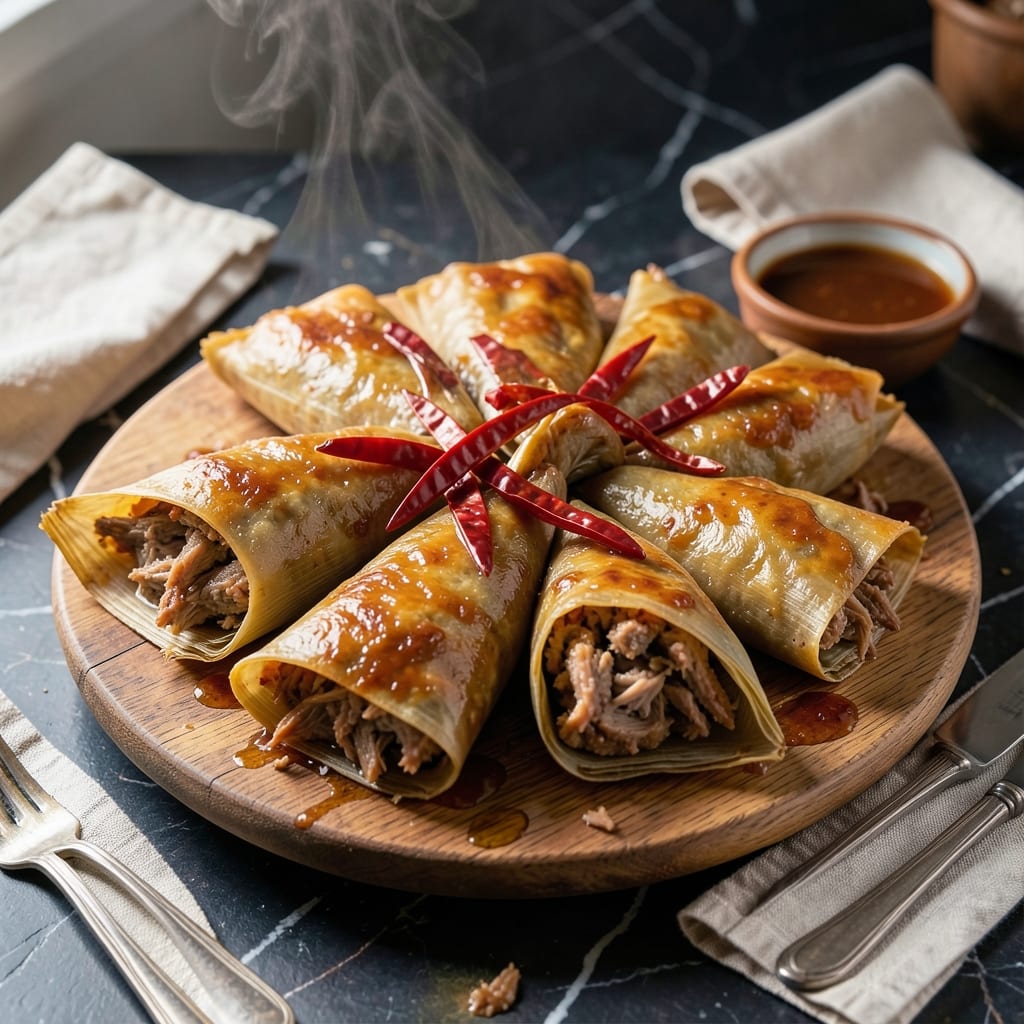
There’s a reason tamales remain a beloved tradition—they’re a labor of love that delivers unmatched flavor and texture. I learned the importance of patience from Mrs. Henderson, who taught me that good food can’t be rushed.
This method honors the classic process, from preparing the masa to steaming the tamales in corn husks. The pork filling is slow-cooked until tender, then wrapped in soft, fragrant dough that transforms as it steams.
The result is a dish that’s rich, savory, and deeply satisfying. Each bite reveals the perfect balance of tender pork and fluffy masa, a testament to the care put into every step.
Traditional techniques ensure authenticity, making this a recipe worth the effort. The aroma alone will transport you to a festive gathering.
Ingredients for Pork Tamales Recipe Video
Traditional ingredients for authentic tamales with tender pork and fluffy masa in corn husks.
| Ingredient | Amount | Notes |
|---|---|---|
| Dried Corn Husks 🌽 | 20 pieces | Soaked in warm water |
| Pork Shoulder 🥩 | 2 lb | Boneless, cut into chunks |
| Masa Harina 🌾 | 3 cups | For authentic masa dough |
| Pork Lard 🧈 | 1 ½ cups | Or vegetable shortening |
| Chicken Broth 🍲 | 3 cups | Warm, for masa dough |
| Dried Guajillo Chilies 🌶️ | 6 whole | Stems and seeds removed |
| Garlic Cloves 🧄 | 6 cloves | Peeled and minced |
| Ground Cumin 🌿 | 2 tsp | Toasted for depth |
| Dried Oregano 🍃 | 2 tsp | Mexican oregano preferred |
| Salt 🧂 | 2 tbsp | Divided for pork and masa |
| Black Pepper 🌶️ | 1 tsp | Freshly ground |
| Onion 🧅 | 1 whole | Medium, finely chopped |
| Baking Powder 🧂 | 1 tbsp | For masa fluffiness |
| Tomato Paste 🍅 | 2 tbsp | For filling richness |
| Bay Leaves 🌿 | 2 whole | For pork slow cooking |
The pork shoulder is non-negotiable here—bone-in or boneless, but it needs that slow cook to get fall-apart tender. I grab mine from Costco for bulk savings, or local butchers if I want that extra care (Mrs. Henderson’s rule). Dried corn husks are in the Latin aisle at Kroger or any Mexican market. Masa harina? Maseca is the gold standard, but any brand works if it’s labeled for tamales.
No lard? Vegetable shortening in a pinch, but lard gives that authentic flavor. Swap guajillo chilies for ancho or pasilla—just soak and blend same way. Chicken broth can be vegetable broth if you’re avoiding meat. The masa needs to be the texture of thick hummus—add broth slowly. And yes, the filling can be prepped a day ahead (flavor only gets better).
Husks dry out fast—soak them in warm water for 30 minutes before using. Leftovers freeze beautifully for 3 months (steam straight from frozen). I always make double batches because, trust me, they disappear fast. Store uncooked masa in the fridge for up to 2 days (don’t skip this part).
Why You’ll Love This Recipe
- One-Pot Wonder: I soak the corn husks while the pork simmers in one pot—minimal cleanup, maximum flavor.
- Feeds a Crowd: Honestly, I make a double batch and freeze half for lazy dinners later.
- Budget Stretcher: Pork shoulder is affordable, and a little goes a long way when wrapped in that rich masa.
Step-by-Step Instructions for Pork Tamales
This traditional process delivers authentic flavor and texture in every bite.
Step 1: Prepare the Pork Filling
In a large pot, combine the 2 lb Pork Shoulder chunks with the finely chopped onion, 6 cloves minced garlic, 2 tbsp tomato paste, 2 tsp ground cumin, 2 tsp dried oregano, 1 tsp black pepper, and 2 whole bay leaves. Add just enough water to cover the pork, about 1 inch above the meat.
Bring to a boil, then reduce heat to low and simmer for 2 to 2.5 hours until the pork is fork-tender and shreds easily. Skim off any excess fat during cooking. Once done, remove the pork, shred it, and reserve the cooking liquid. Season the pork with 1 tbsp salt from the divided amount.
Step 2: Soak and Prepare the Corn Husks
Place the 20 pieces dried corn husks in a large bowl and cover completely with warm water. Weigh them down with a plate or heavy object to ensure they stay submerged. Soak for at least 1 hour or until they’re pliable and soft.
After soaking, drain the husks and rinse under cool water to remove any debris. Pat them dry with a clean towel. If any husks are torn, set them aside for tying or layering. You want the husks to be flexible enough to fold without cracking.
Step 3: Make the Masa Dough
In a large mixing bowl, beat the 1.5 cups pork lard with a hand mixer or stand mixer until it’s light and fluffy, about 3 to 4 minutes. Gradually add the 3 cups masa harina, 1 tbsp baking powder, and the remaining 1 tbsp salt.
With the mixer on low, slowly pour in the 3 cups warm chicken broth, a little at a time, until the dough comes together. It should be the consistency of thick hummus. To test, drop a small ball into a glass of water—if it floats, it’s ready. If not, beat in a bit more broth.
Step 4: Assemble and Steam the Tamales
Lay a soaked corn husk flat, with the wide end at the bottom. Spread about ¼ cup of the masa dough in the center of the husk, leaving a 1-inch border at the top and sides. Add a spoonful of the shredded pork down the middle of the dough.
Fold the sides of the husk inward to enclose the filling, then fold the bottom up. Place the tamales upright in a steamer basket, open-end up. Steam for 1 to 1.5 hours over boiling water, adding more water as needed. They’re done when the husk peels away easily and the masa is firm and pulls away from the husk.
Pro Tips For Making Pork Tamales Recipe Video
- Soak Husks Overnight: Cover dried corn husks with very hot water and weigh them down with a plate for at least 4 hours—I learned this the hard way after my first batch tore while wrapping.
- Render Lard Slowly: Melt the pork lard on low heat, stirring often, until it’s just liquid and slightly foamy; rushing it can leave gritty bits in your masa.
- Check Masa Consistency: The dough should feel like thick hummus—if it’s too dry, add a spoonful of warm chicken broth, a little at a time.
- Steam Evenly: Arrange tamales upright in the steamer with the open ends up, then cover with extra husks or a damp towel to trap steam and cook them through, about 60-75 minutes.
Storing and Reheating This Dish
Refrigerator Storage
Let tamales cool completely before storing—this prevents condensation that can make husks soggy. I wrap mine individually in aluminum foil or plastic wrap, then place in a ziptop bag for up to 5 days. The masa stays moist and the pork flavor deepens overnight. ❄️
Freezer Storage
For longer storage, freeze tamales in their husks wrapped tightly in plastic wrap and then aluminum foil. Label with the date—they’ll keep for up to 3 months. I always make a double batch for Portland’s rainy days when comfort food is a must.
Steam Reheating
This is my preferred method because it restores that just-made texture. Steam frozen tamales directly from the freezer for 20-25 minutes. For refrigerated ones, 15 minutes over boiling water does the trick. The masa will be fluffy and the pork tender. 🔥
Microwave Reheating
Wrap a tamale in a damp paper towel and microwave on high for 2-3 minutes. Check and add 30-second intervals until heated through. The husk may dry slightly, but the filling stays juicy. I use this for quick lunches when Lily’s hungry.
Oven Reheating
Preheat to 350°F, wrap tamales in foil with a splash of water, and bake for 15-20 minutes. This method works great for larger batches. The aroma fills the kitchen, reminding me of Mrs. Henderson’s cozy Ohio kitchen.
Nutrition Facts
Frequently Asked Questions
Can I use chicken instead of pork?
Yes! Swap 2 lb boneless chicken thighs for pork. Cook for 45 minutes instead of 2 hours. Shred and use same seasoning.
Why did my masa turn out dense?
Usually means the dough wasn’t beaten enough or was too dry. Beat lard until fluffy, then add broth slowly until it reaches thick hummus consistency. Test by dropping a bit in water—it should float.
How do I know when tamales are done?
The husk will peel away easily and the masa will pull from the husk. Steam for 1 to 1.5 hours, checking water level occasionally.

- Potato Patty Recipe No Egg: Crispy Edges Without the Binder - October 30, 2026
- Paula Deen’s Potato Chip Cookies Recipe: Salty-Sweet Crunch in Every Bite - October 30, 2026
- Potato Gnocchi Recipe Ideas: Pillowy Soft Dumplings With Rustic Charm - October 30, 2026