
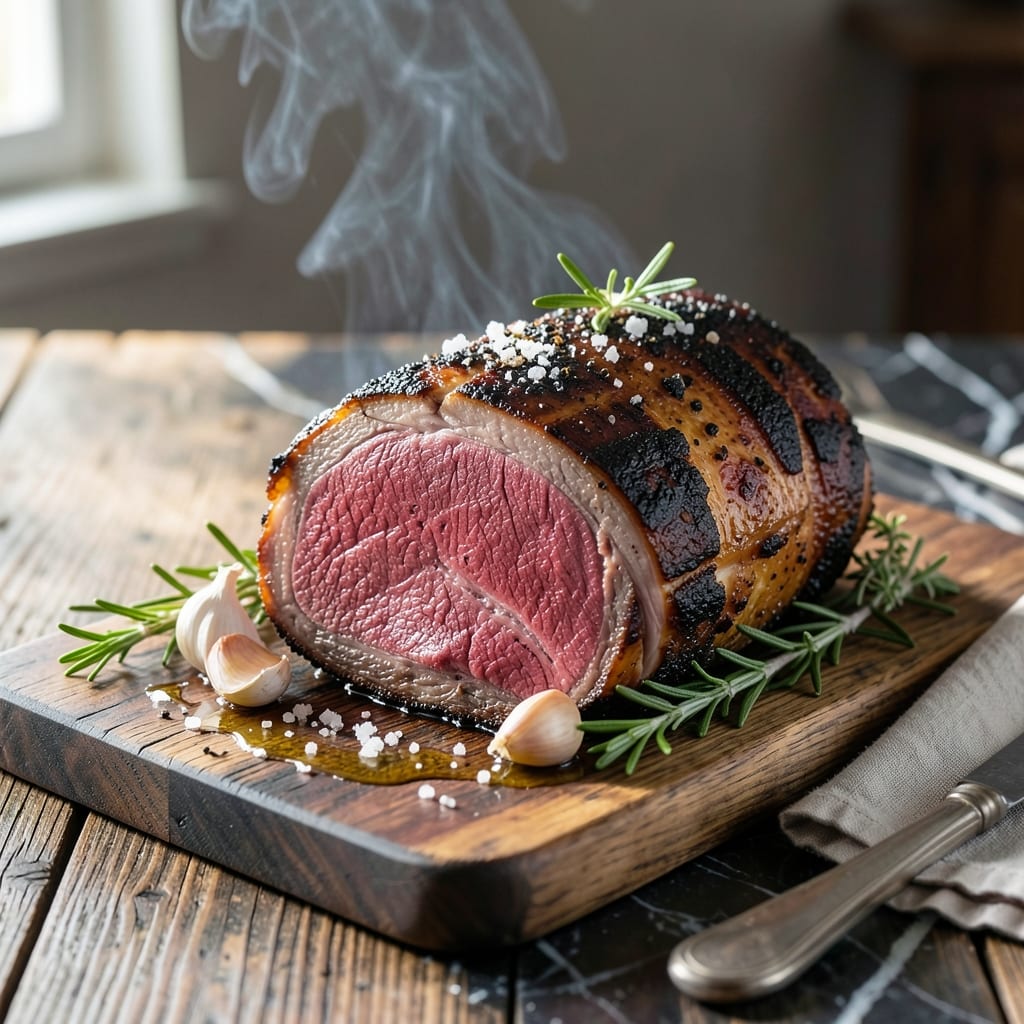
There’s a reason prime rib holds the crown of special-occasion meals—it transforms any dinner into a celebration. I’ve tested this method on my Traeger until the results were perfectly consistent, with a smoky crust and rosy center every time.
The wood-fired approach adds depth you can’t replicate in an oven, while the Traeger’s precise temperature control removes the guesswork. This isn’t just cooking; it’s crafting a centerpiece that earns quiet admiration at the table.
What emerges is beef so tender it nearly collapses at the touch of a fork, with a deep mahogany exterior and that signature wood-kissed aroma. The process is straightforward, but the outcome feels like a professional achievement.
Serve it with horseradish cream and roasted vegetables for a meal that lingers in memory long after the last bite.
Ingredients for Prime Rib Recipe on Traeger
A handful of quality ingredients transform this cut into a showstopping centerpiece worth celebrating.
| Ingredient | Amount | Notes |
|---|---|---|
| Prime Rib Roast 🥩 | 5 lb | Bone-in, first cut preferred |
| Coarse Kosher Salt 🧂 | 2 tbsp | Diamond Crystal preferred for texture |
| Freshly Ground Black Pepper 🌶️ | 2 tbsp | Coarse grind for crust |
| Garlic Cloves 🧄 | 6 cloves | Smashed, peeled, halved |
| Fresh Rosemary Sprigs 🌿 | 4 whole | Woodsy stems included |
| Fresh Thyme Sprigs 🍃 | 4 whole | Stems on for easy removal |
| Olive Oil 🫒 | ¼ cup | Extra-virgin for richness |
| Traeger Signature Blend Pellets 🪵 | 1 bag | Hickory or oak blend works |
| Beef Tallow 🧈 | ¼ cup | Renders down for basting |
| Horseradish Root 🌿 | 1 whole | For cream, peeled and grated |
| Heavy Cream 🥛 | ½ cup | Cold, for horseradish cream |
| Dijon Mustard 🟡 | 1 tbsp | For horseradish cream base |
| White Wine Vinegar 🍷 | 1 tsp | Balances cream sharpness |
The prime rib is everything here. First-cut (ribeye end) has better marbling than second-cut—ask your butcher for a bone-in roast with the fat cap intact. Costco or Whole Foods carry great options if you don’t have a local butcher. Look for bright red color with creamy fat, and aim for about 1.5 inches of fat cap for self-basting magic. Always take it out of the fridge 2 hours before cooking.
No fresh herbs? Dried at one-third the amount works in a pinch (rosemary and thyme both hold up well). Swap beef tallow for melted butter or olive oil if rendering isn’t your thing. For the horseradish cream, prepared horseradish from a jar (like Gold’s) saves time—use about 3 tbsp for this batch. The Dijon can be any good whole-grain mustard if that’s what’s in your pantry.
The roast can rest at room temp for up to 4 hours before cooking (or refrigerate overnight and bring to temp before smoking). Leftovers—if there are any—slice thin and store in the fridge for 5 days. The horseradish cream keeps for 1 week in an airtight container.
Why You’ll Love This Recipe
- Set It and Forget: The Traeger does all the work while I sip coffee and let the smoke work its magic.
- Herb-Crusted Heaven: That rosemary and garlic rub forms the most ridiculous crust on the prime rib—crispy, fragrant, and worth every bite.
- Holiday Hero: This is my go-to for Christmas dinner, but honestly, it’s so good I make it for Sunday supper too.
- Leftovers for Days: One roast feeds my family for two meals, and the cold slices make killer sandwiches the next day.
Step-by-Step Instructions for Prime Rib on Traeger
Here’s my tested method for achieving wood-fired perfection with your holiday centerpiece.
Step 1: Season and Rest the Prime Rib
Pat the 5 lb Prime Rib Roast thoroughly dry with paper towels. This removes surface moisture that would otherwise prevent a proper crust from forming. I’m aggressive with this step—every nook and cranny must be dry.
Rub the roast all over with the 2 tbsp Coarse Kosher Salt and 2 tbsp Freshly Ground Black Pepper. The coarse texture is key here; it creates a beautiful, crackly crust. Make small slits in the fat cap and insert the 6 cloves Garlic Cloves, 4 whole Fresh Rosemary Sprigs, and 4 whole Fresh Thyme Sprigs for aromatic depth.
Drizzle with the 0.25 cup Olive Oil, massaging it into every surface. Let the seasoned roast sit uncovered at room temperature for 2 hours before smoking—this allows the salt to penetrate and the meat to cook more evenly.
Step 2: Preheat and Prepare the Traeger
Fill the Traeger hopper with the 1 bag Traeger Signature Blend Pellets and set the temperature to 225°F using the “Super Smoke” setting. This lower temperature with enhanced smoke production is ideal for the first phase of cooking.
While the grill preheats, place the 0.25 cup Beef Tallow in a small heatproof dish on the grill grates to render. This liquid gold will be used for basting later. You’ll know the Traeger is ready when it maintains 225°F consistently and you see a steady stream of thin blue smoke.
Step 3: Smoke to Perfection
Place the prime rib directly on the grill grates, fat cap up. Insert a meat probe into the thickest part of the roast, avoiding the bone. Smoke undisturbed for 3-4 hours or until the internal temperature reaches 120-125°F for medium-rare.
Every 45 minutes, baste the roast with the rendered beef tallow. This step adds incredible flavor and helps develop a rich, mahogany crust. The smoke should be consistent but not overpowering—thin blue smoke is ideal, while thick white smoke can impart bitter flavors.
Step 4: Sear and Rest
Once the prime rib reaches 120°F internally, increase the Traeger temperature to 450°F to create a beautiful sear. This final high-heat blast takes about 15-20 minutes and develops a deep, flavorful crust.
Remove the roast when it hits 128-130°F internal temperature—the meat will continue to rise 5-10°F during resting. Transfer to a cutting board, tent loosely with foil, and let it rest for 30 minutes. This resting period allows the juices to redistribute throughout the meat.
Step 5: Prepare the Horseradish Cream
While the prime rib rests, grate the 1 whole Horseradish Root and combine it with the 0.5 cup Heavy Cream, 1 tbsp Dijon Mustard, and 1 tsp White Wine Vinegar in a small bowl. The vinegar brightens the cream and balances the horseradish’s sharpness.
Whisk until smooth and adjust seasoning if needed. This creamy, pungent sauce cuts through the richness of the prime rib beautifully. Serve the sliced prime rib with the horseradish cream on the side for guests to add as desired.
Pro Tips For Making Prime Rib Recipe On Traeger
- Dry the Roast: Pat the prime rib thoroughly dry before seasoning—any moisture steams the meat instead of letting the Traeger smoke work its magic. I learned this the hard way after my first few attempts had a sad, pale crust.
- Salt Overnight: Coat the roast with coarse kosher salt at least 12 hours before cooking. Sounds weird, but it actually changes the outcome, pulling moisture to the surface then reabsorbing it for a juicier finish.
- Skip the Overcrowding: Leave space between the roast and any other food on the Traeger. After burning one batch from uneven heat, I finally figured out that airflow is non-negotiable for consistent doneness.
- Use a Probe Thermometer: Pull the prime rib at 125°F for medium-rare—don’t guess. My grandmother swore by this, and she was right: guessing leads to dry, overcooked meat every time.
Make-Ahead Tips for prime rib recipe on traeger
Overnight Dry Brine
For the most stress-free holiday prep, I dry brine this roast the night before. Pat the 5 lb Prime Rib Roast dry, then rub with 2 tbsp Coarse Kosher Salt and 2 tbsp Freshly Ground Black Pepper. Place it uncovered on a wire rack in your fridge for 12-24 hours. This builds flavor and improves texture. 💡
Herb Prep Ahead
Smash and peel the 6 cloves Garlic Cloves the day before, then store in a small container with the 4 whole Fresh Rosemary Sprigs and 4 whole Fresh Thyme Sprigs. Keep them in the fridge with a damp paper towel to maintain freshness until cooking time.
Horseradish Cream
This can be made 2-3 days ahead. Grate the 1 whole Horseradish Root and mix with 0.5 cup Heavy Cream, 1 tbsp Dijon Mustard, and 1 tsp White Wine Vinegar. Store in an airtight container—the flavors meld beautifully over time.
Pellet Check
Fill your Traeger with the 1 bag Traeger Signature Blend Pellets the evening before. This ensures you won’t run out during the long cook. I always keep an extra bag on hand just in case—better safe than sorry with a prime rib this size.
Room Temp Start
Take the roast out of the fridge 2 hours before cooking to bring it to room temperature. This is non-negotiable for even cooking. I set mine on the counter while I prep the Traeger and other sides. ⏰
Resting Strategy
After cooking, tent the roast with foil and rest for 30 minutes before slicing. This works perfectly while you finish sides or set the table. The internal temperature will rise 5-10°F during this time, so plan accordingly.
Nutrition Facts
Frequently Asked Questions
What’s the ideal internal temperature for medium-rare?
Remove the roast at 128-130°F internal temperature. It will rise to 133-135°F during the 30-minute rest, giving you perfect medium-rare throughout.
How often should I baste the roast?
Baste with rendered beef tallow every 45 minutes during the smoking phase. This builds a rich crust and adds depth of flavor. Don’t skip this step!
Can I use a different wood pellet flavor?
Yes! Hickory or oak work beautifully, but cherry or pecan add a sweeter, milder smoke. Avoid mesquite—it can overpower the beef.
What if my Traeger runs out of pellets?
Always keep an extra bag nearby. A 5 lb roast at 225°F for 3-4 hours uses about 1-1.5 lbs of pellets. Better safe than sorry!

- Pudding Recipe With Egg Yolks: Silky Smooth Custard in Minutes - November 3, 2026
- Pudding Pops Recipe Cook and Serve: Silky Frozen Treats Without the Machine - November 3, 2026
- Protein Ice Cream Recipe Blender Xanthan Gum: Ultra Creamy Texture Without the Guilt - November 3, 2026