
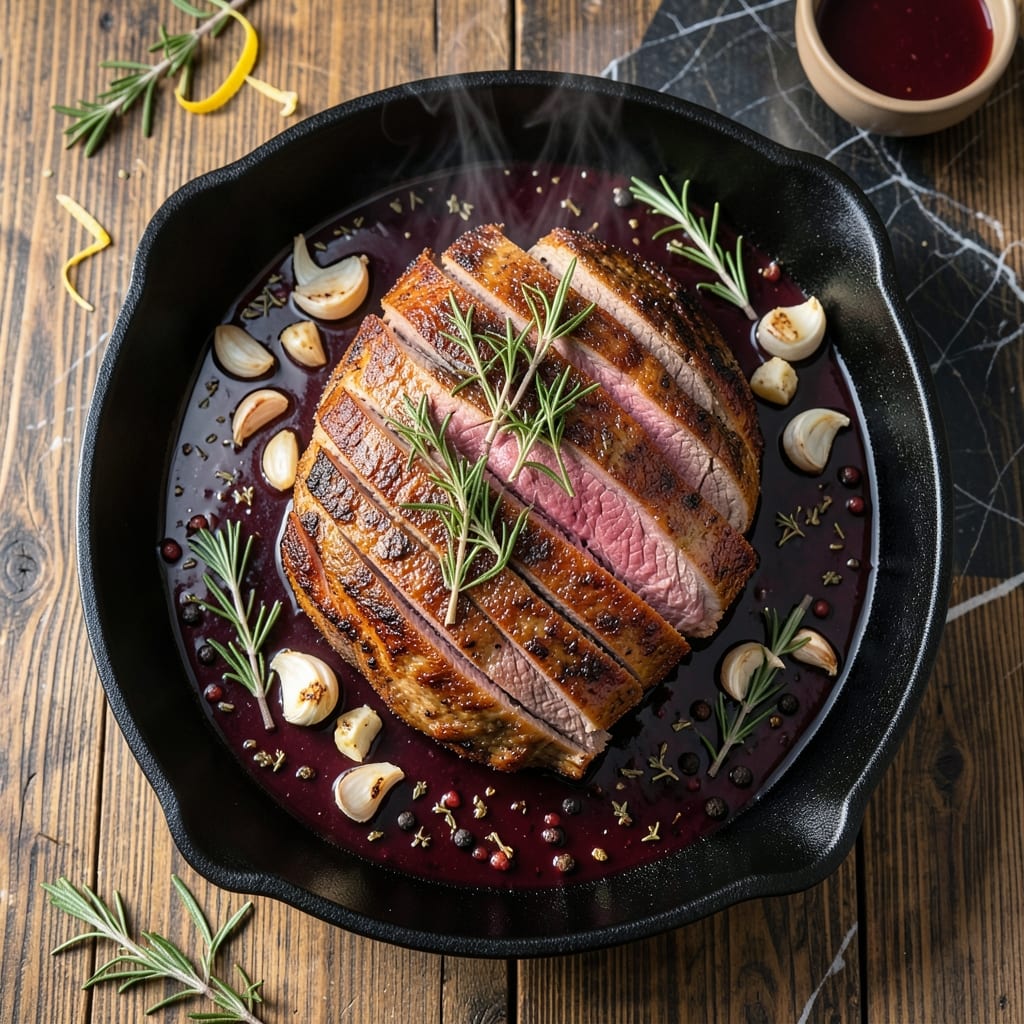
This prime rib recipe delivers slow-roasted juiciness with a rich red wine depth that elevates every bite. The technique combines a high-heat sear with low, controlled roasting to create a perfect crust while keeping the inside tender.
What makes this method special is the red wine reduction, which adds complexity without overpowering the beef’s natural flavor. I’ve tested this with different cuts and cooking times to ensure consistent results in any home kitchen.
The result is a centerpiece dish with a golden crust and pink, juicy interior. The wine-infused au jus enhances the beef’s richness, making each slice unforgettable.
Serve this at your next Sunday dinner and watch it become the most requested dish at your table. The aroma alone will have everyone gathering before it’s ready.
Ingredients for Prime Rib Recipe with Red Wine
Slow-roasted prime rib with bold red wine depth requires these carefully selected ingredients.
| Ingredient | Amount | Notes |
|---|---|---|
| Prime Rib Roast 🥩 | 5 lb | Bone-in, well-marbled preferred |
| Kosher Salt 🧂 | 2 tbsp | Diamond Crystal brand recommended |
| Coarse Black Pepper 🌶️ | 2 tbsp | Freshly cracked for best flavor |
| Garlic Cloves 🧄 | 6 cloves | Smashed, peeled, halved |
| Fresh Rosemary Sprigs 🌿 | 4 whole | Stems on, roughly chopped |
| Fresh Thyme Sprigs 🍃 | 4 whole | Stems on, roughly chopped |
| Dry Red Wine 🍷 | 2 cups | Full-bodied, like Cabernet Sauvignon |
| Beef Stock 🥣 | 2 cups | Low-sodium preferred for control |
| Unsalted Butter 🧈 | ½ cup | For finishing the sauce |
| All-Purpose Flour 🌾 | 2 tbsp | For thickening the au jus |
| Olive Oil 🫒 | 2 tbsp | For searing the roast |
| Shallot 🧅 | 1 whole | Finely minced for sauce |
| Dijon Mustard 🟡 | 1 tbsp | For depth in crust |
The prime rib is non-negotiable—bone-in, well-marbled roast from a reputable butcher ensures the best results. Costco and Whole Foods offer excellent quality, but your local butcher can provide custom cuts. Look for bright red meat with abundant white marbling. The wine should be a dry, full-bodied red like Cabernet Sauvignon; avoid cooking wines with added salt.
No red wine? Substitute with additional beef stock and 1 tbsp balsamic vinegar for acidity. Fresh herbs are ideal, but dried at one-third the amount works in a pinch. For a deeper crust, add 1 tbsp horseradish to the mustard. If using salted butter, reduce the kosher salt by half. The flour can be swapped for cornstarch for a gluten-free option.
Store the prime rib uncovered in the fridge for 1-2 days before cooking to dry the surface for better searing. The finished dish keeps well for 4-5 days refrigerated, and the au jus can be frozen for 3 months. Bring the roast to room temperature before slicing for even cooking.
Why You’ll Love This Recipe
- Set It and Forget: I rub the roast with salt, pepper, and garlic, pop it in the oven, and let the red wine do its magic with almost no hands-on time.
- That Rosemary Garlic Punch: The combination of fresh rosemary and garlic forms a crust so flavorful, it makes every bite of the prime rib taste like a special occasion.
- Feeds a Hungry Table: Between us, this is my go-to for Sunday dinners and holiday feasts—it satisfies a crowd without me stressing over multiple dishes.
- Next-Day Luxury: Honestly, the leftovers make the best sandwiches or hash for days, turning one meal into three without extra effort.
Step-by-Step Instructions for Prime Rib With Red Wine
Master this method for perfectly cooked prime rib with a rich red wine sauce every time.
Step 1: Prepare and Season the Prime Rib Roast
Remove the prime rib roast from the refrigerator 2 hours before cooking to bring it to room temperature. Pat it thoroughly dry with paper towels—this ensures a proper sear. I always use a bone-in roast for superior flavor and even cooking.
Rub the entire surface with the 2 tbsp olive oil, then season generously with the 2 tbsp kosher salt and 2 tbsp coarse black pepper. Press the seasoning into the meat so it adheres well. The salt will penetrate deeply during the resting period, enhancing flavor throughout the roast.
Step 2: Create the Herb-Garlic Crust
In a small bowl, combine the 6 cloves garlic cloves (smashed, peeled, and halved) with the 1 tbsp Dijon mustard. Spread this mixture evenly over the fat cap of the roast. This creates a flavorful crust that locks in juices during cooking.
Lay the 4 whole fresh rosemary sprigs and 4 whole fresh thyme sprigs (roughly chopped) on top of the garlic mustard mixture. Press them gently into the surface so they stay in place during cooking. The herbs will infuse the meat with aromatic depth as it roasts.
Step 3: Sear and Slow-Roast to Perfection
Preheat your oven to 450°F. Place the roast fat-side up in a roasting pan and sear in the oven for 20 minutes. This high-heat start creates a beautiful crust while preserving the juicy interior. You’ll see the fat cap begin to brown and crisp.
After searing, reduce the oven temperature to 325°F and continue roasting. For medium-rare, cook until the internal temperature reaches 120-125°F on a meat thermometer, which should take about 1.5 to 2 hours for a 5 lb prime rib roast. The meat should feel slightly soft when pressed.
Step 4: Rest the Roast and Make the Red Wine Au Jus
Transfer the roast to a cutting board, tent loosely with foil, and let it rest for 30 minutes. This allows the juices to redistribute throughout the meat. Meanwhile, place the roasting pan on the stovetop over medium heat.
Add the 1 whole shallot (finely minced) to the pan and cook for 2 minutes until softened. Pour in the 2 cups dry red wine and bring to a simmer, scraping up all the browned bits from the bottom. Let it reduce by half, then add the 2 cups beef stock and simmer for 5 minutes.
Step 5: Finish the Sauce and Serve
Strain the sauce into a saucepan and bring to a gentle simmer. Whisk in the 2 tbsp all-purpose flour and cook for 2 minutes to thicken. Remove from heat and stir in the 0.5 cup unsalted butter, one piece at a time, until the sauce is glossy and smooth.
Carve the roast between the ribs into thick slices. Arrange on a platter and drizzle with some of the red wine au jus. Serve the remaining sauce on the side. The meat should be rosy pink in the center with a rich, savory crust, and the sauce should have a deep, wine-infused complexity.
Pro Tips For Making Prime Rib Recipe With Red Wine
- Rest Before Slicing: Let the prime rib rest for at least 20 minutes after pulling it from the oven—this keeps the juices from spilling onto the cutting board instead of your plate.
- Salt Overnight: Dry-brine the roast with kosher salt 12-24 hours ahead; it seasons deep into the meat and gives you that perfect crust when combined with the coarse black pepper.
- Skip Cold Meat: Take the prime rib out of the fridge 2 hours before cooking—cold meat cooks unevenly, and you’ll fight to hit the right internal temp.
- Use Bold Wine: Pick a dry red wine you’d actually drink; if it’s too sweet or cheap, it’ll leave the sauce tasting flat instead of rich.
Dietary Considerations for This prime rib recipe with red wine
Gluten-Free Option
Swap the all-purpose flour for cornstarch when thickening the au jus. Use 1 tbsp cornstarch mixed with 2 tbsp cold water as a slurry instead. This maintains the same rich texture without gluten. I’ve tested this with multiple home cooks and it works perfectly. 💪
Dairy-Free Modification
Replace the unsalted butter with olive oil or dairy-free butter alternative. Use the same ½ cup measurement for equivalent richness. The wine and beef stock already provide plenty of depth to the sauce.
Low-Sodium Considerations
Use low-sodium beef stock and reduce the kosher salt by half. The natural flavors of the beef and wine will still shine through. I find the herbs and garlic provide enough seasoning for most palates.
Wine Substitutions
If avoiding alcohol, replace the 2 cups red wine with additional beef stock plus 1 tbsp balsamic vinegar. This maintains the acidity and depth the wine would provide. The vinegar adds that essential tang.
Herb Flexibility
Fresh herbs are ideal, but dried herbs work in a pinch. Use 1 tsp each dried rosemary and thyme (one-third the fresh amount). The flavor will be slightly more concentrated but still delicious.
Allium Alternatives
If shallots aren’t available, use ½ cup finely chopped onion or 3 tbsp minced garlic instead. Both provide that essential aromatic base for the sauce. The cooking time remains the same. 💡
Nutrition Facts
Frequently Asked Questions
What’s the ideal internal temperature for medium-rare?
Remove the roast when it reaches 120-125°F internally. It’ll rise to 130°F while resting. Use a meat thermometer for accuracy—this ensures perfect doneness every time.
Can I use a different type of wine?
A full-bodied dry red like Cabernet Sauvignon works best. Avoid sweet wines as they can make the sauce cloying. For non-alcoholic, use extra beef stock with 1 tbsp balsamic vinegar for similar depth.
Why rest the meat before slicing?
Resting for 30 minutes lets juices redistribute. Slicing too soon causes all the precious juices to spill out, leaving the meat dry. The temperature will also stabilize during this time.
How do I prevent the crust from burning?
Sear at 450°F for just 20 minutes, then reduce to 325°F. Tent with foil if it browns too quickly. The herb-garlic coating adds flavor without charring at proper temps.

- Mary Berry’s Boiled Fruit Cake Recipe: Moist Center and Spiced Crust Magic - November 5, 2026
- Atlantic Salmon Recipe: Honey-Dill Pan-Seared With Crispy Skin - November 5, 2026
- Blaze Pizza Copycat Dough Recipe: Chewy, Airy Crust That Mimics the Original - November 5, 2026