
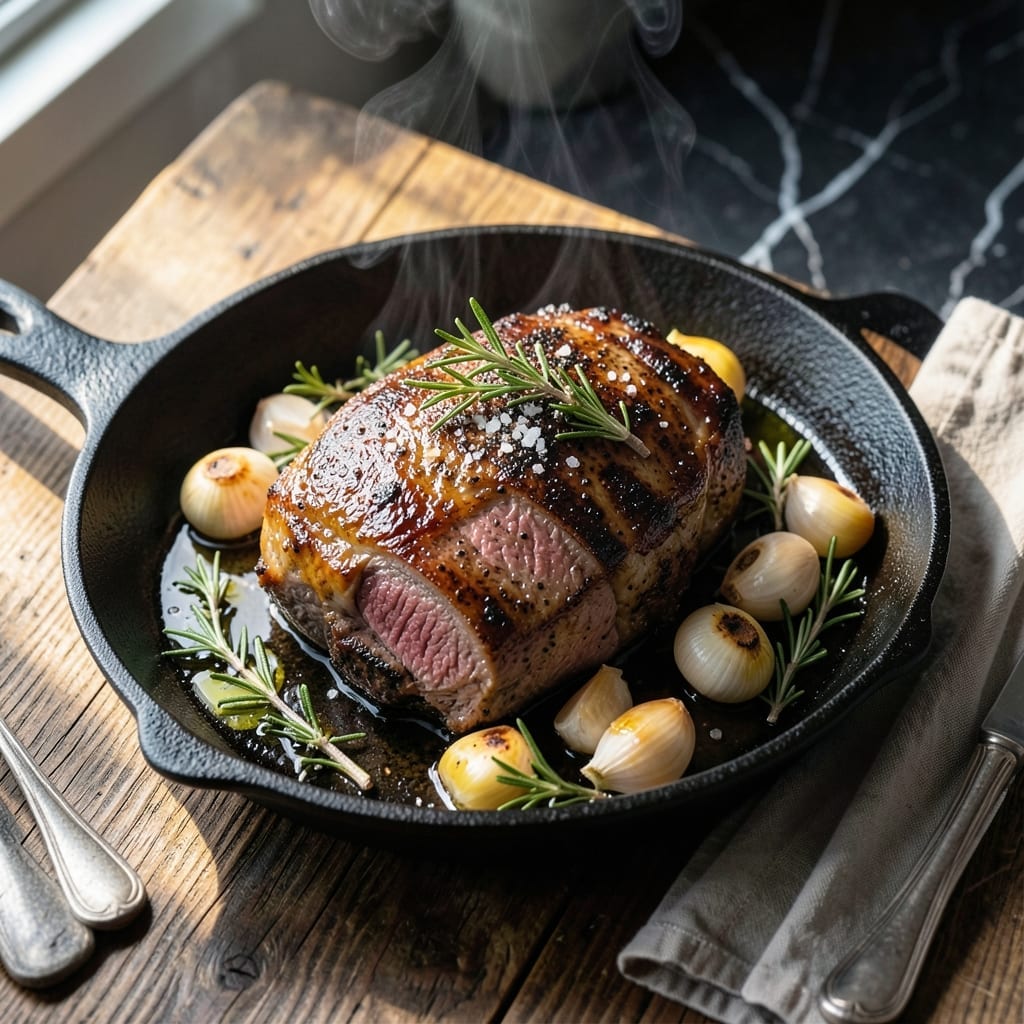
Achieving perfect prime rib at home is about precision, not luck. The reverse-sear method in cast iron delivers even doneness from edge to edge, with a beautifully crispy crust that rivals any steakhouse.
This approach starts low and slow in the oven, then finishes with a high-heat sear in your cast iron skillet. The result is a roast with tender, juicy meat throughout, never overcooked at the edges.
I developed this technique to remove the guesswork from cooking prime rib. With just a few simple steps and a meat thermometer, you’ll achieve restaurant-quality results every time.
No special equipment required—just your oven, a cast iron pan, and about 3 hours of mostly hands-off cooking time.
Ingredients for Prime Rib Roast Recipe Cast Iron
A few quality ingredients transform into an impressive centerpiece with this method.
| Ingredient | Amount | Notes |
|---|---|---|
| Prime Rib Roast 🥩 | 4 lb | Bone-in, well-marbled preferred |
| Kosher Salt 🧂 | 2 tbsp | Diamond Crystal preferred for even coating |
| Coarse Black Pepper 🌶️ | 1 tbsp | Freshly cracked for best texture |
| Garlic Cloves 🧄 | 6 cloves | Smashed, peel on for roasting |
| Fresh Rosemary Sprigs 🌿 | 4 whole | Woody stems removed if desired |
| Fresh Thyme Sprigs 🌿 | 4 whole | Leaves stripped or whole |
| Olive Oil 🫒 | 2 tbsp | High-smoke point for searing |
| Unsalted Butter 🧈 | 2 tbsp | For basting during sear |
| Beef Stock 💧 | ½ cup | Low-sodium preferred for reduction |
| Red Wine 🍷 | ¼ cup | Dry variety for deglazing |
| Dijon Mustard 🟡 | 1 tbsp | Optional for crust enhancement |
The prime rib is the star here. Look for USDA Choice or Prime grade with abundant marbling—Costco and Whole Foods are reliable sources. Bone-in adds flavor and helps with even cooking, but boneless works if that’s what’s available. Ask the butcher to trim excess fat if you’re unsure. Always let the roast sit at room temperature for 2 hours before cooking for even doneness.
No red wine? Substitute with additional beef stock plus a splash of balsamic vinegar. Fresh herbs are ideal, but dried at one-third the amount works in a pinch. If rosemary isn’t your thing, fresh sage offers a nice alternative. For the sear, avocado oil can replace olive oil if you’re concerned about smoke point. The butter is optional but adds incredible richness to the crust.
Leftovers keep beautifully—slice and store in the fridge for up to 5 days or freeze for 3 months. The rendered fat from the roast makes incredible potatoes, so save it. Always carve against the grain for the most tender slices, even if it means the pieces aren’t perfectly uniform.
Why You’ll Love This Recipe
- One Pan Wonder: I just sear the prime rib in my cast iron, then straight into the oven—no extra dishes, no fuss.
- That Garlic-Rosemary Crust: The salt, pepper, fresh rosemary, and garlic form this insane crust that’s crispy outside, tender inside. Honestly, it’s the best part.
- Holiday or Tuesday: I’ve served this for Christmas dinner and also just because it’s Wednesday. Works every time.
- Leftovers for Days: One roast means sandwiches, tacos, or just cold slices from the fridge for me all week.
Step-by-Step Instructions for Prime Rib Roast in Cast Iron
Here’s the method that guarantees perfect edge-to-edge doneness with a cast iron sear.
Step 1: Season and Slow-Roast the Prime Rib
Pat the 4 lb Prime Rib Roast dry with paper towels, then rub it all over with the 2 tbsp Kosher Salt and 1 tbsp Coarse Black Pepper. I press the seasoning in firmly to create a good crust. Place the roast on a wire rack set in a baking sheet.
Roast in a 250°F oven until the internal temperature reaches 110-115°F for medium-rare, about 1.5-2 hours. This low-and-slow start ensures even cooking throughout the thick cut. The meat should still feel slightly soft when pressed, not firm.
Step 2: Sear in Cast Iron with Aromatics
Heat the 2 tbsp Olive Oil in a large cast iron skillet over high heat until shimmering. Add the 6 cloves Garlic Cloves, 4 whole Fresh Rosemary Sprigs, and 4 whole Fresh Thyme Sprigs, then place the roast in the pan. The herbs should sizzle immediately.
Sear for 2-3 minutes per side until deeply browned. I like to hold the roast with tongs to sear the fat cap—this renders some of the fat and creates an incredible crust. The aromatics will infuse into the meat as it sears.
Step 3: Baste with Butter and Finish in Oven
Reduce heat to medium and add the 2 tbsp Unsalted Butter to the skillet. Tilt the pan slightly and baste the roast with the melted butter for 1-2 minutes, spooning it continuously over the top. The butter should foam and turn golden brown.
Transfer the skillet to the 250°F oven and cook until the internal temperature reaches 125-130°F for medium-rare, about 15-20 minutes. The butter and herb mixture will create a fragrant, flavorful crust as it finishes.
Step 4: Rest and Make Pan Sauce
Transfer the roast to a cutting board and tent loosely with foil. Let it rest for 15-20 minutes—this is non-negotiable for juicy results. The internal temperature will rise 5-10°F during this time.
Place the skillet over medium heat and add the 0.25 cup Red Wine. Scrape up all the browned bits with a wooden spoon, then stir in the 0.5 cup Beef Stock and 1 tbsp Dijon Mustard. Simmer for 3-4 minutes until reduced by half into a glossy sauce.
Pro Tips For Making Prime Rib Roast Recipe Cast Iron
- Dry the Roast: Pat the prime rib completely dry with paper towels before seasoning—this guarantees a deep, crispy crust in the cast iron.
- Salt Overnight: Season the roast with kosher salt at least 12 hours ahead and leave it uncovered in the fridge; it draws out moisture for a better sear and more even cooking.
- Start Hot, Finish Low: Sear the roast in a screaming-hot cast iron pan for 2-3 minutes per side, then transfer to a 250°F oven to cook low and slow to perfect medium-rare.
- Rest Under Foil: After pulling it from the oven, tent the roast loosely with foil and let it rest for 20-30 minutes—skipping this makes the juices run all over the cutting board.
Health Benefits of This Recipe
Rich in Protein
This dish delivers 48 grams of protein per 4-oz serving, supporting muscle repair and growth. The high-quality amino acids in beef make it a complete protein source, essential for tissue maintenance. I love that it keeps me full for hours. 💪
Iron and Zinc Boost
Prime rib is packed with heme iron, the most easily absorbed form, providing about 20% of your daily iron needs per serving. It’s also rich in zinc, which supports immune function and wound healing.
B Vitamin Powerhouse
You’ll get a significant dose of B vitamins, particularly B12 and B6, from this recipe. These nutrients are vital for energy production and nervous system health. A 4-oz portion covers about 60% of your daily B12 needs.
Healthy Fats
The marbling in prime rib provides monounsaturated fats and some omega-3s, which support heart health. While it’s higher in saturated fat, the reverse-sear method helps render excess fat during cooking.
Selenium Source
Beef is a natural source of selenium, an important antioxidant that protects cells from damage. A serving of this dish provides about 40% of your daily selenium requirements. I notice my skin looks better when I include it in my diet.
Low-Carb Friendly
With 0 grams of carbs per serving, this is perfect for low-carb or keto diets. The protein and fat content make it an ideal choice for maintaining ketosis while providing sustained energy. 🔥
Nutrition Facts
Frequently Asked Questions
Why use cast iron for this method?
Cast iron retains and distributes heat perfectly for searing, creating an unbeatable crust. Its ability to go from stovetop to oven makes it ideal for reverse-searing. The pan’s weight helps maintain consistent high heat for even browning.
How do I know when it’s done?
Use a meat thermometer! Pull the roast at 125-130°F for medium-rare. The temperature will rise 5-10°F while resting. Avoid cutting into the meat to check—this releases precious juices.
Can I skip the resting step?
No! Resting for 15-20 minutes lets juices redistribute. Slicing too soon will leave your cutting board swimming in flavor. This step guarantees moist, tender meat every time.
What if my roast isn’t browning?
Pat it dry before searing and ensure your pan is smoking hot. Don’t crowd the pan—cook in batches if needed. A little more olive oil can help if the surface looks dry.

- White Jello Shot Recipe: Creamy Vodka Magic in 30 Seconds - November 5, 2026
- Mary Berry’s Boiled Fruit Cake Recipe: Moist Center and Spiced Crust Magic - November 5, 2026
- Atlantic Salmon Recipe: Honey-Dill Pan-Seared With Crispy Skin - November 5, 2026