
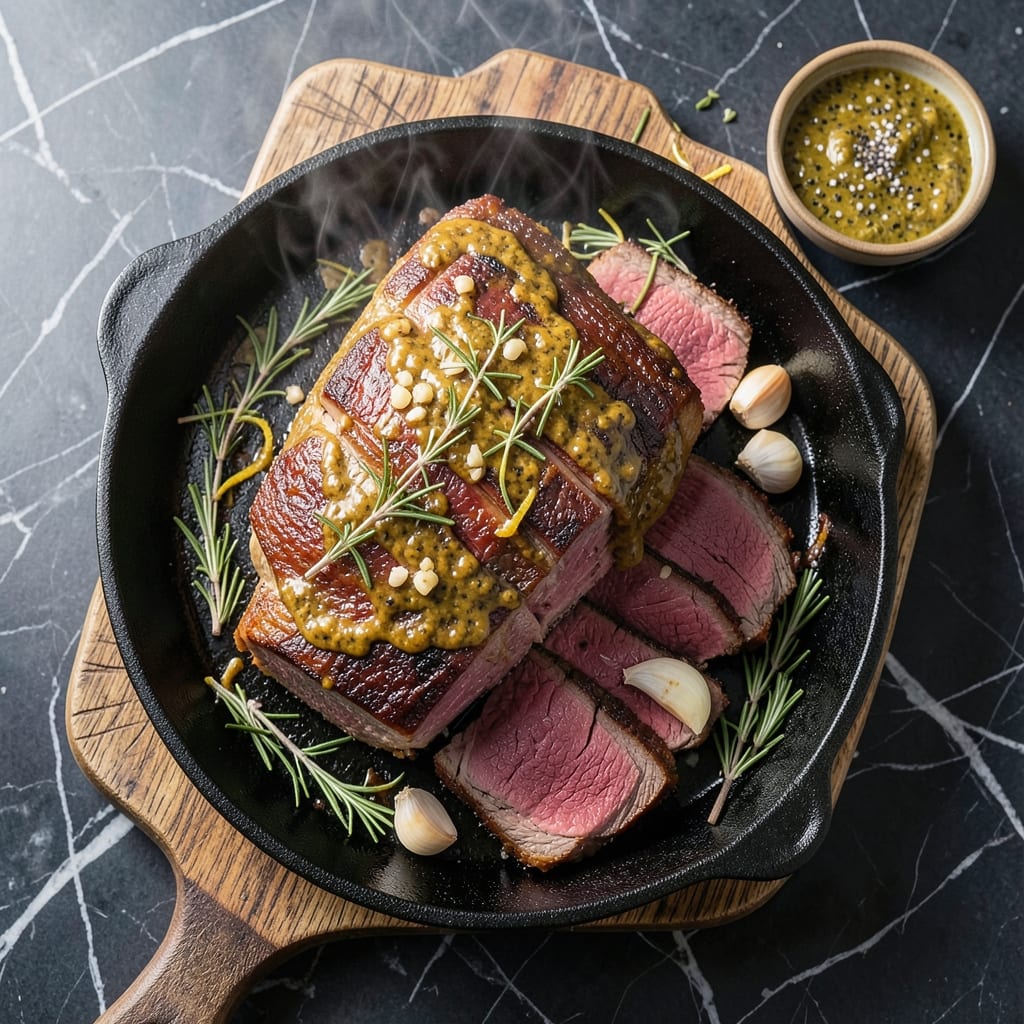
This prime rib recipe delivers herb-crusted perfection with a rosy pink center every time. A simple dry rub and precise roasting technique transform this cut into a centerpiece worthy of special occasions.
I developed this method after years of testing, focusing on even cooking and maximum flavor. The herb crust forms a flavorful seal while allowing the natural beef taste to shine through.
The result is tender, juicy meat with a beautifully crisp exterior. The aroma as it roasts is enough to gather everyone around the table.
Perfect for holiday dinners or Sunday suppers, this dish will become your go-to for impressive meals.
Ingredients for Prime Rib Roast Recipe Tasty
Transform a prime rib roast into herb-crusted elegance with these carefully selected ingredients for perfect results.
| Ingredient | Amount | Notes |
|---|---|---|
| Prime Rib Roast 🥩 | 4 lb | Bone-in, well-marbled preferred |
| Kosher Salt 🧂 | 2 tbsp | Diamond Crystal preferred for even coating |
| Freshly Ground Black Pepper 🌶️ | 1 tbsp | Coarsely ground for texture |
| Fresh Rosemary 🌿 | 3 tbsp | Finely chopped, stems discarded |
| Fresh Thyme Leaves 🍃 | 2 tbsp | Stripped from stems |
| Garlic Cloves 🧄 | 6 cloves | Minced to a paste consistency |
| Dijon Mustard 🟡 | 2 tbsp | For herb crust adhesion |
| Extra-Virgin Olive Oil 🫒 | ¼ cup | High-quality, fruity notes preferred |
| Unsalted Butter 🧈 | 4 tbsp | Softened at room temperature |
| Red Wine 🍷 | ½ cup | Dry variety like Cabernet Sauvignon |
| Beef Stock 🥣 | 1 cup | Low-sodium preferred for reduction |
| All-Purpose Flour 🌾 | 2 tbsp | For optional pan sauce thickening |
The prime rib quality is non-negotiable here. USDA Prime or Choice grades from a reputable butcher like Whole Foods or Local specialty meat markets ensure optimal marbling. Bone-in roasts provide better flavor and even cooking—request a 3-4 rib section for this quantity. The herbs must be fresh; dried simply won’t deliver the vibrant aromatic profile needed for the crust.
No red wine? Substitute beef broth with 1 tbsp balsamic vinegar. Fresh herbs can be replaced with dried at one-third the quantity, though flavor will be less pronounced. For a non-alcoholic option, beef consommé works well. If using salted butter, reduce the kosher salt by half. The Dijon mustard is essential for crust adhesion—don’t skip it.
The roast can be dry-brined overnight for enhanced flavor penetration. Store uncooked meat in its original packaging on the coldest shelf for up to 4 days. Leftovers keep beautifully for 5-6 days and make exceptional sandwiches. For longer storage, vacuum-seal and freeze for up to 12 months.
Why You’ll Love This Recipe
- Set and Forget: I rub the roast with salt, pepper, and herbs, pop it in the oven, and let it do its thing—no babysitting required.
- Herb-Crusted Bliss: The rosemary and thyme form this ridiculous crust that makes every bite taste like a fancy steakhouse meal.
- Holiday Star: This is the dish that wows at Christmas dinner but honestly works just as well for a lazy Sunday with friends.
- Leftovers for Days: That hunk of prime rib turns into killer sandwiches, tacos, or beef hash for the entire week.
Step-by-Step Instructions for Herb-Crusted Prime Rib Roast
This method ensures a perfectly cooked roast with a flavorful crust and tender pink center.
Step 1: Prepare the Herb Crust and Season the Roast
In a small bowl, combine the 2 tbsp Dijon mustard, 3 tbsp fresh rosemary, 2 tbsp fresh thyme leaves, 6 cloves garlic cloves, 2 tbsp kosher salt, and 1 tbsp freshly ground black pepper with the 0.25 cup extra-virgin olive oil. Stir until the mixture forms a thick paste.
Pat the 4 lb prime rib roast completely dry with paper towels. This step is crucial for achieving a proper sear and crust. Rub the herb mixture evenly over the entire surface of the roast, pressing gently to ensure it adheres. Let the seasoned roast sit at room temperature for 1 hour before cooking.
Step 2: Sear the Roast for a Flavorful Crust
Preheat your oven to 450°F. Heat a large oven-safe roasting pan over medium-high heat on the stovetop. Add 2 tbsp unsalted butter and let it melt and foam. Place the roast fat-side down in the hot pan and sear for 2-3 minutes until deeply browned.
Turn the roast and sear the remaining sides for another 2-3 minutes each. You’re looking for a rich, golden-brown crust to form on all surfaces. This initial sear locks in juices and creates a flavorful foundation for the herb crust.
Step 3: Roast to Perfection
Transfer the seared roast, still in the pan, to the preheated oven. Roast for 15 minutes at 450°F, then reduce the oven temperature to 325°F and continue roasting. For medium-rare, cook until the internal temperature reaches 125-130°F on a meat thermometer, approximately 1 to 1.5 hours total.
Baste the roast with the pan juices every 20-30 minutes to keep the crust moist and enhance the flavor. The roast is ready when the internal temperature hits your desired doneness. For the pink center promised, aim for 125°F and remove it from the oven.
Step 4: Rest and Prepare the Pan Sauce
Transfer the roast to a cutting board, tent loosely with foil, and let it rest for 15-20 minutes. This resting period allows the juices to redistribute, ensuring a tender, moist result. While the roast rests, place the roasting pan on the stovetop over medium heat.
Add the 0.5 cup red wine to the pan and deglaze, scraping up any browned bits with a wooden spoon. Simmer for 2-3 minutes until the wine reduces by half. Stir in the 1 cup beef stock and bring to a gentle simmer. For a thicker sauce, whisk in the 2 tbsp all-purpose flour mixed with the remaining 2 tbsp unsalted butter to form a slurry. Simmer until the sauce coats the back of a spoon.
Strain the sauce if desired, then serve it alongside the carved prime rib.
Pro Tips For Making Prime Rib Roast Recipe Tasty
- Dry the Roast: Pat the prime rib completely dry with paper towels before seasoning—this guarantees a crisp, golden crust instead of a steamed exterior.
- Salt Generously: Use more kosher salt than you think, pressing it into the meat the night before if possible. I learned this the hard way after my first few roasts tasted bland.
- Rest Before Carving: Let the roast rest under foil for at least 20-30 minutes after pulling it from the oven—this keeps all those juices inside where they belong.
- Herb It Right: Crush the fresh rosemary and thyme between your fingers before sprinkling them on to release their oils for maximum flavor. Sounds weird, but it works.
Pro Cooking Tips for Perfect Results
Thermometer is Non-Negotiable
I cannot stress this enough—use a meat thermometer for perfect results. I swear by my ThermoWorks MK4 from Portland’s New Seasons Market. Aim for 125°F internal temp for that promised pink center. Guessing leads to overcooking. 🌡️
Room Temp Matters
Always let your roast sit at room temperature for 1 full hour before cooking. This ensures even cooking from edge to center. I pull mine from the fridge right after morning coffee and let it rest on the counter.
Sear All Sides
Don’t just sear the fat cap—brown every surface. Use medium-high heat and 2 tbsp butter for 2-3 minutes per side. This creates a flavorful crust that locks in juices. My cast iron pan is my secret weapon here.
Baste Regularly
Every 20-30 minutes, spoon those pan juices over the roast. This keeps the herb crust moist and adds layers of flavor. I use a long-handled basting spoon to avoid opening the oven too much.
Rest Like Your Dinner Depends On It
That 15-20 minute rest is crucial. Tent with foil and resist cutting. The juices redistribute, making every slice tender. I set a timer—no peeking! 💪
Use the Drippings
That pan sauce is liquid gold. Deglaze with ½ cup red wine, then add 1 cup beef stock. Simmer until it coats a spoon. I strain mine for a smoother finish, but that’s optional.
Nutrition Facts
Frequently Asked Questions
What temperature should I cook it to for medium-rare?
Remove from oven at 125°F internal temperature. It will rise to 130°F while resting, giving you perfect medium-rare with a pink center.
Do I need to cover it while cooking?
No, leave it uncovered to develop that beautiful herb crust. Only tent with foil during the 15-20 minute resting period after cooking.
Can I use dried herbs instead of fresh?
Yes, but use one-third the amount. Fresh herbs provide superior flavor, but 1 tbsp dried rosemary and 2 tsp dried thyme will work in a pinch.
How long should it rest before slicing?
Let it rest for 15-20 minutes after removing from oven. This allows juices to redistribute, ensuring each slice stays moist and tender.

- White Jello Shot Recipe: Creamy Vodka Magic in 30 Seconds - November 5, 2026
- Mary Berry’s Boiled Fruit Cake Recipe: Moist Center and Spiced Crust Magic - November 5, 2026
- Atlantic Salmon Recipe: Honey-Dill Pan-Seared With Crispy Skin - November 5, 2026