
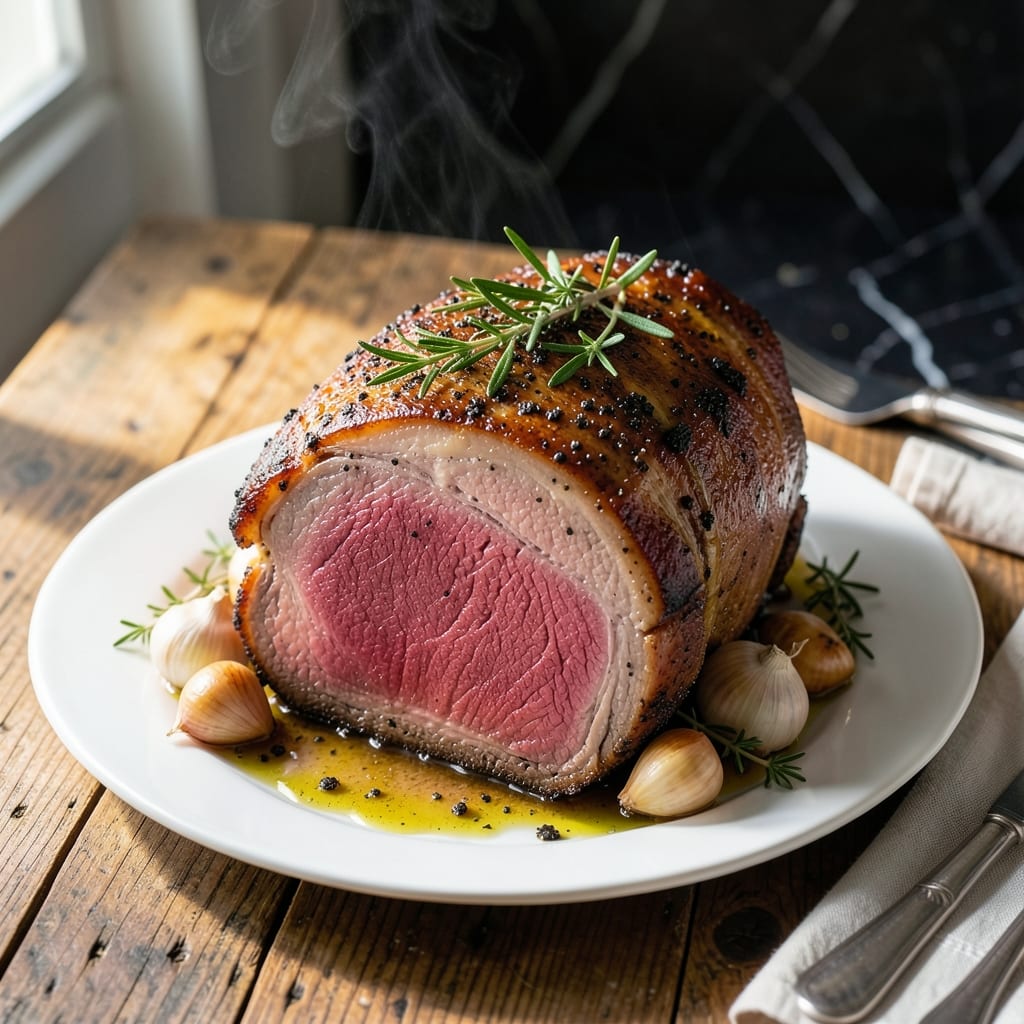
Mastering prime rib begins with precise temperature control and timing. This method guarantees a perfectly cooked roast with a tender, rosy center every time.
I developed this approach after years of testing, focusing on low-and-slow roasting followed by a high-heat finish. The result is a crust that’s deeply browned and flavorful, with meat so juicy it nearly melts on your fork.
The key is using a meat thermometer to monitor the internal temperature, ensuring you hit that ideal medium-rare mark. This technique works for any size roast, from a small holiday centerpiece to a large family dinner.
Pair with horseradish cream and roasted vegetables for a complete meal that impresses without stress. The process is straightforward, but the results are anything but ordinary.
Ingredients for Prime Rib Roast Recipe Temperature
Six pounds of beef, a handful of herbs, and a thermometer. That’s the foundation.
| Ingredient | Amount | Notes |
|---|---|---|
| Prime Rib Roast 🥩 | 5 lb | Bone-in, well-marbled preferred |
| Kosher Salt 🧂 | 2 tbsp | Diamond Crystal brand recommended |
| Freshly Ground Black Pepper 🌶️ | 2 tbsp | Coarse grind preferred |
| Garlic Cloves 🧄 | 6 cloves | Smashed, unpeeled for roasting |
| Fresh Rosemary Sprigs 🌿 | 4 whole | Woodsy stems, 6-inch length |
| Fresh Thyme Sprigs 🍃 | 4 whole | Stems removed before serving |
| Olive Oil 🫒 | 3 tbsp | Extra-virgin for richness |
| Unsalted Butter 🧈 | 4 tbsp | Softened for herb butter |
| Horse Radish Root 🌿 | ¼ cup | Freshly grated for cream |
| Sour Cream 🥛 | 1 cup | Full-fat for creaminess |
| Dijon Mustard 🟡 | 2 tbsp | Smooth, not whole grain |
| Red Wine 🍷 | 1 cup | Dry variety like Cabernet |
| Beef Broth 🥩 | 2 cups | Low-sodium preferred |
The roast is everything here. Look for USDA Prime or Choice grade with thick marbling—Costco and Whole Foods have great options. Ask the butcher for bone-in (it adds flavor and helps cook evenly). I always go for the ribeye end of the primal cut—more fat, more flavor. If you see a roast with the fat cap already trimmed, walk away. You need that fat for a proper crust.
No fresh herbs? Dried at one-third the amount works in a pinch, but fresh is ideal. Swap rosemary for sage if that’s what’s in your garden. The horseradish cream can be made with prepared horseradish (about half the amount), but fresh is brighter. For the wine, any dry red works—Cabernet Sauvignon or Merlot. No alcohol? Extra beef broth with a splash of apple cider vinegar mimics the acidity.
The roast can rest at room temperature for 2 hours before cooking (this ensures even cooking). Leftovers? Slice thin and pile onto sandwiches. Keeps 4-5 days in the fridge, freezes beautifully for 3 months (slice before freezing for easy portions).
Why You’ll Love This Recipe
- Set It and Forget: I just season, pop it in the oven, and let the temperature do the work—no babysitting required.
- Garlic-Rosemary Magic: The garlic and rosemary crust creates a flavor so deep, I catch myself sneaking bites straight from the cutting board.
- Holiday Hero: This is my go-to for Christmas dinner, but honestly, it’s impressive enough for any Sunday supper too.
- Leftovers for Days: One roast feeds us for two meals, and the sandwiches the next day? Even better than the first serving.
Step-by-Step Instructions for Prime Rib Roast
Here’s the method that guarantees a stunning medium-rare result with a perfect crust.
Step 1: Season and Prepare the Prime Rib Roast
Start by patting the 5 lb Prime Rib Roast completely dry with paper towels—this is non-negotiable for achieving that beautiful brown crust. I rub the entire surface with the 3 tbsp Olive Oil to create a base for the seasoning to adhere to.
Combine the 2 tbsp Kosher Salt and 2 tbsp Freshly Ground Black Pepper in a small bowl, then massage this mixture evenly over every surface of the roast. Don’t be shy—you want a visible layer of seasoning. Place the 6 cloves Garlic Cloves, 4 whole Fresh Rosemary Sprigs, and 4 whole Fresh Thyme Sprigs on a cutting board and give them a quick smash with the flat side of your knife to release their oils. Press these aromatics onto the top of the roast.
Step 2: Sear for a Flavorful Crust
Let the seasoned roast sit at room temperature for 1 hour while you preheat your oven to 450°F. This resting period allows the salt to penetrate the meat and the roast to cook more evenly.
Place the roast bone-side down in a roasting pan (the bones act as a natural rack). Slide it into the oven and sear for 30 minutes at this high temperature. You’re looking for a deep brown crust to form on the exterior—this is where all that incredible flavor develops. The kitchen will smell amazing, but resist the urge to baste or turn the roast during this time.
Step 3: Slow Roast to Medium-Rare Perfection
After the initial sear, reduce the oven temperature to 325°F. This gentle heat allows the center to cook slowly without overcooking the outer layers. Continue roasting until the internal temperature reaches 125-130°F for medium-rare, which should take about 1.5 to 2 hours for a 5 lb roast.
I use an instant-read thermometer to check the temperature in the thickest part of the meat, avoiding the bone. The roast is ready when it hits 125°F—it will continue cooking as it rests, rising to about 130°F for perfect medium-rare. The meat should feel slightly soft when pressed, like the base of your thumb when your hand is relaxed.
Step 4: Rest and Prepare the Au Jus
Transfer the roast to a cutting board and tent loosely with foil. Let it rest for 20 minutes—this is crucial for the juices to redistribute. Meanwhile, place the roasting pan on the stovetop over medium heat. Pour in the 1 cup Red Wine and 2 cups Beef Broth, scraping up all those delicious browned bits with a wooden spoon.
Simmer the liquid for 5-7 minutes until reduced by about half. Strain out the solids and pour the au jus into a gravy boat. This rich, flavorful liquid is the perfect accompaniment to your perfectly cooked prime rib.
Step 5: Carve and Serve
Remove the herbs and garlic from the top of the roast before carving. Slice between the bones to separate the roast into individual servings. For boneless roasts, carve against the grain into 1-inch thick slices.
Arrange the slices on a platter and serve with the warm au jus, prepared horseradish cream made with the 0.25 cup Horse Radish Root, 1 cup Sour Cream, and 2 tbsp Dijon Mustard, and any remaining pan juices. The meat should be rosy pink throughout with a crisp, flavorful crust.
Pro Tips For Making Prime Rib Roast Recipe Temperature
- Start High, Finish Low: Sear the prime rib at 450°F for 20 minutes to get that deep crust, then drop to 325°F to finish evenly—this gives you a perfect crunch without overcooking the center. I learned this the hard way after serving a grey, sad roast at my first holiday dinner.
- Salt the Night Before: Dry-brine the roast with kosher salt 12-24 hours ahead. It penetrates deep, seasons every bite, and draws out moisture that reabsorbs for a juicier result.
- Use a Meat Thermometer: Skip guessing and pull the roast at 120°F for medium-rare—it’ll rise to 125-130°F while resting. After burning three roasts by relying on time alone, I finally wised up.
- Let It Rest: Tent the roast with foil and rest it 15-20 minutes before slicing. Sounds tedious, but it redistributes the juices so they don’t all end up on the cutting board.
Creative Variations of These Flavors
Herb-Crusted Prime Rib
For a more aromatic crust, mix the 2 tbsp Kosher Salt and 2 tbsp Freshly Ground Black Pepper with 1 tbsp dried thyme and 1 tbsp dried rosemary. Press this blend onto the 5 lb Prime Rib Roast along with the 3 tbsp Olive Oil. The dried herbs create a more concentrated flavor profile. 🌿
Garlic-Studded Roast
Instead of placing garlic cloves on top, make small incisions in the roast and insert slivers of the 6 cloves Garlic Cloves directly into the meat. This infuses the interior with garlic flavor. I use a paring knife for precision. Combine with the 4 tbsp Unsalted Butter for extra richness.
Reverse Sear Method
Start with the oven at 250°F and cook the roast until it reaches 110°F internally. Then, sear in a 450°F oven for 15 minutes to develop the crust. This method ensures even cooking throughout. Use the Fresh Rosemary Sprigs and Fresh Thyme Sprigs as usual.
Coffee-Rubbed Prime Rib
Add 2 tbsp finely ground coffee to the salt and pepper rub. The coffee enhances the beef’s natural flavors without overpowering. Pair with the 3 tbsp Olive Oil for a robust crust. This variation adds depth and pairs well with the 1 cup Red Wine au jus.
Smoked Prime Rib
Use a smoker set to 225°F with hickory or oak wood. Smoke the roast until it reaches 120°F internally, then finish in the oven at 450°F for a crispy crust. The Fresh Rosemary Sprigs and Fresh Thyme Sprigs add herbal notes to the smoke. 🔥
Nutrition Facts
Frequently Asked Questions
What internal temperature should I pull the roast at for medium-rare?
Remove it at 125°F—it will rise to 130°F while resting. This ensures a perfect rosy center every time.
Can I cook it at a higher temperature to save time?
Not recommended. High heat can overcook the outer layers before the center reaches temp. Stick to 325°F after searing for even doneness.
How long should I let it rest before slicing?
20 minutes is ideal. This allows juices to redistribute, keeping the meat moist and flavorful. Skipping this step risks dry slices.
Does bone-in vs. boneless affect cooking time?
Bone-in cooks slightly faster because the bone conducts heat. Expect about 15 minutes less for a bone-in roast of the same weight.

- White Jello Shot Recipe: Creamy Vodka Magic in 30 Seconds - November 5, 2026
- Mary Berry’s Boiled Fruit Cake Recipe: Moist Center and Spiced Crust Magic - November 5, 2026
- Atlantic Salmon Recipe: Honey-Dill Pan-Seared With Crispy Skin - November 5, 2026