
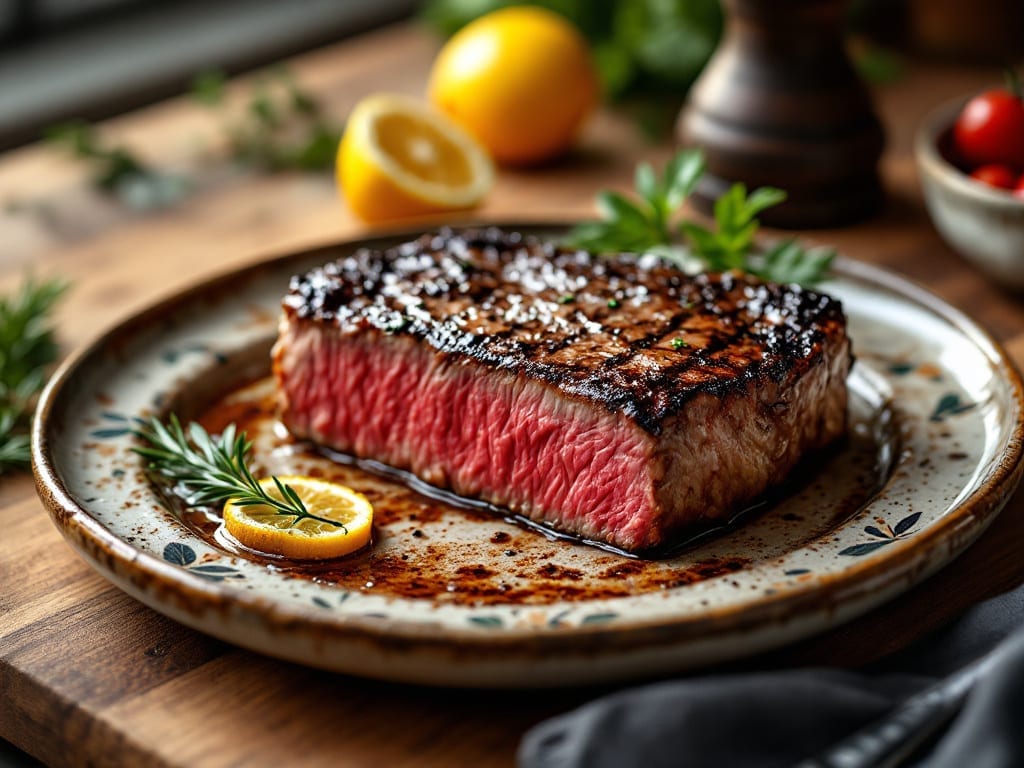
Mastering Gordon Ramsay’s sirloin steak recipe delivers a blistering crust and buttery interior that rivals any high-end restaurant. The secret lies in precise temperature control, a reverse sear technique, and a bold chimichurri or red wine reduction to elevate the dish.
I’ve refined this method over years of cooking, ensuring every bite achieves that perfect balance of sear and tenderness.
This recipe transforms a simple cut of sirloin into a showstopper with minimal effort—30 minutes of active prep and 10 minutes of cooking time. Start with a high-heat sear to lock in juices, then finish in a 400°F oven to guarantee a medium-rare center.
The sides—crispy roasted potatoes and vibrant chimichurri—complement the steak’s richness without overpowering its natural flavor.
What you’ll achieve is a steak with a deep caramelized crust, a tender, juicy interior, and a sauce that ties everything together. The reverse sear method ensures consistency, while Ramsay’s signature plating techniques make it look as impressive as it tastes.
This isn’t just dinner—it’s a culinary experience that impresses even the most discerning guests.
Serve with a bold red wine reduction or chimichurri for a restaurant-quality meal at home. The techniques here are foolproof, but the results are anything but ordinary. Let’s get cooking—your steak awaits.
Ingredients for gordon ramsay sirloin steak
Precision-crafted ingredients deliver Ramsay’s signature steak with restaurant-perfect crust and melt-in-your-mouth tenderness.
| Ingredient | Amount | Notes |
|---|---|---|
| Center-Cut Sirloin Steak 🥩 | 1 ½ lb | Uniform 1.5-inch thickness, dry-brined overnight |
| Kosher Salt 🧂 | 2 tbsp | Diamond Crystal preferred, coarse grain |
| Freshly Ground Black Pepper 🌶️ | 1 ½ tsp | Cracked from whole peppercorns |
| Extra-Virgin Olive Oil 🫒 | 2 tbsp | High smoke point, fruity variety |
| Unsalted Butter 🧈 | 4 tbsp | European-style, 82% fat content |
| Garlic Cloves 🧄 | 6 cloves | Smudged for chimichurri, peeled |
| Fresh Parsley 🌿 | ½ cup | Flat-leaf variety, stems removed |
| Fresh Oregano 🍃 | ¼ cup | Mexican oregano preferred |
| Red Wine Vinegar 🍷 | ¼ cup | Dry, 12% acidity minimum |
| Red Wine 🍷 | ½ cup | Cabernet Sauvignon, dry |
| Yellow Onion 🧅 | 1 whole | Sweet variety, thinly sliced |
| Russet Potatoes 🥔 | 2 lb | Waxy variety, cut into 1-inch cubes |
| Vegetable Oil 🫒 | ¼ cup | High smoke point, neutral flavor |
The center-cut sirloin is non-negotiable—look for uniform 1.5-inch thickness to ensure even cooking. Whole Foods Market or specialty butchers carry premium cuts with optimal marbling. Dry-brine the steak overnight using Diamond Crystal kosher salt (it dissolves slower, creating a better crust) and freshly cracked black pepper—pre-ground lacks the intensity. For the chimichurri, fresh herbs are mandatory; dried won’t deliver the vibrant, bright flavor. Penzeys Spices carries high-quality dried alternatives if needed, but fresh parsley and oregano are ideal. The red wine vinegar should be 12% acidity or higher—cheap vinegars won’t cut through the richness of the steak. For the potatoes, Russet variety is essential for crispy edges, but Yukon Gold works if you prefer creamier texture.
No fresh herbs? Dried oregano at one-third the amount and freeze-dried parsley (like McCormick brand) can substitute, though texture will differ. Substituting butter for olive oil in the reverse sear? Use equal parts but reduce temperature to 375°F—butter burns faster. The red wine reduction can be made with beef stock if wine isn’t available, but the acidity will be less balanced. For the potatoes, sweet potatoes work but require 10 extra minutes in the oven. The vegetable oil should have a smoke point of 400°F+—Avocado oil is ideal, but canola oil is a budget-friendly alternative. Always pat the steak dry with paper towels before seasoning—moisture prevents proper crust formation.
Store the dry-brined steak uncovered in the fridge for up to 24 hours—this enhances flavor but don’t exceed this time. Fresh herbs keep for 5 days wrapped in damp paper towels, while potatoes last 5 days in the fridge if stored in a paper bag (not plastic). The chimichurri can be refrigerated for 4 days or frozen for 3 months—add a thin layer of olive oil before sealing to preserve color. Pre-portion the butter for the reverse sear into 4 equal pats (1 tbsp each) and store in the freezer for 1 month. The wine reduction reheats beautifully—simmer on low for 2-3 minutes to restore consistency.
Why You’ll Love This Recipe
- Four-Ingredient Magic: I swear by this—just salt, pepper, oil, and butter. That’s it. No fancy marinades or hours of prep. The steak practically cooks itself while you sip wine and pretend you’re in a Michelin-starred kitchen.
- Butter-Basted Perfection: That moment when the butter melts into a golden crust? Pure satisfaction. The olive oil sear locks in juices, while the butter adds richness without overpowering the beef’s natural flavor—like a hug for your taste buds.
- Date Night Ready: No one has to know it took 15 minutes. Plate it with a simple salad or roasted potatoes, and suddenly you’re serving up restaurant-quality steak. Even if your partner’s idea of cooking is microwaving leftovers.
- Budget Steakhouse Trick: A single sirloin feeds two with leftovers that reheat beautifully in a pan. Honestly, I’ve had these slices cold the next day on toast—still delicious. Fancy dinner for half the price of takeout.
Step-by-step instructions for Gordon Ramsay’s sirloin steak
Master the perfect sear and tender interior with these precise techniques.
Prepare the Steak for Maximum Flavor
Remove the 1.5 lb center-cut sirloin steak from the refrigerator and pat it dry with paper towels. I press firmly to remove all moisture—this ensures a proper sear rather than steaming. The steak should be at room temperature before cooking, so let it sit for 30 minutes while you prepare the rest.
While the steak rests, create a simple dry brine by generously seasoning both sides with the 2 tbsp kosher salt and 1.5 tsp freshly ground black pepper. Press the seasoning into the meat so it adheres evenly. This step enhances flavor penetration and develops a beautiful crust. Let the seasoned steak rest uncovered for an additional 15 minutes before cooking—this final rest ensures even cooking and maximum tenderness.
Develop the Perfect Searing Crust
Heat a heavy skillet over high heat until it’s screaming hot—you should see a faint shimmer of smoke when you wave your hand above it. Add 2 tbsp extra-virgin olive oil and let it get fully heated. Place the steak in the pan and press down gently with a spatula during the first minute to ensure even contact with the hot surface.
Cook undisturbed for 3-4 minutes until a deep golden-brown crust forms. You’ll see the edges start to crisp—that’s your signal to flip. Flip the steak and cook the second side for another 3-4 minutes until it reaches medium-rare (internal temperature of 125-130°F). For a reverse sear method, you could also finish in a 400°F oven for 2-3 minutes to ensure perfect doneness throughout.
Create the Buttery Garlic Pan Sauce
Remove the steak from the pan and let it rest on a cutting board. Reduce the heat to medium and add 4 tbsp unsalted butter to the same pan. Tilt the pan slightly and spoon the rendered juices over the butter to create an emulsified sauce. Add the 6 cloves garlic cloves and cook for 30 seconds until fragrant—don’t let them brown or they’ll turn bitter.
Deglaze the pan with the 0.5 cup red wine, scraping up all the browned bits from the bottom. Let it simmer for 2 minutes until reduced by half. Finish with the 0.25 cup red wine vinegar and remove from heat. The acidity brightens the sauce and balances the richness. Keep the sauce warm while you prepare the steak for slicing.
Rest and Slice for Optimal Texture
Let the steak rest for 5-10 minutes before slicing. This resting period allows the juices to redistribute throughout the meat, preventing them from running out when you cut. Use a sharp carving knife to slice against the grain into ¼-inch thick pieces. The grain direction will be visible as you cut—this ensures each bite has maximum tenderness.
Plate the steak immediately and spoon the buttery garlic sauce over the top. Garnish with the 0.5 cup fresh parsley and 0.25 cup fresh oregano for a pop of color and freshness. The contrast between the blistering crust and buttery interior is what makes this steak truly exceptional.
Prepare the Classic Sides (Optional)
While the steak rests, you can prepare the complementary sides using the remaining ingredients. Toss the 2 lb russet potatoes in 0.25 cup vegetable oil, 2 tbsp kosher salt, and 1.5 tsp black pepper, then roast at 425°F for 35-40 minutes until crispy. Slice the 1 whole yellow onion into rings and caramelize them slowly in a separate pan with a touch of butter until golden brown.
These sides complement the rich steak perfectly—the crispy potatoes add texture, while the caramelized onions bring sweetness. Serve everything together for a complete meal that rivals any restaurant experience.
Pro Tips For Making Gordon Ramsay Sirloin Steak
- Preheat Pan Like It’s 1985: That’s right—your stove’s highest setting, no excuses. I used to think “hot” was just “warmed up,” but sirloin needs screaming heat to sear fast and lock in juices. Wait until the oil shimmers like a disco ball before adding the steak—any less, and you’re just making sad, gray meat.
- Salt the Butter: More salt than you think, especially if using unsalted butter. My grandmother swore by this, and she was right: mix ½ teaspoon kosher salt into the butter before adding it to the pan. It melts into the crust, balancing the steak’s richness—no extra seasoning needed later.
- Skip the Crowding: Resist the urge to flip or move the steak until it’s got a deep brown crust on the first side. I know, I know, but trust the process—crowding the pan steams the meat instead of searing it. Let it ride for 3-4 minutes before touching it again.
- Rest Under Foil: Give it a solid 5-10 minutes under foil, not on a cutting board. I learned this the hard way—juices pool in the center, and if you slice too soon, they all run out. Tent loosely with foil, let it sit, and slice against the grain for that buttery pull.
Serving suggestions for this recipe
Plating Like a Pro
Gordon Ramsay’s signature plating starts with a white plate—it makes the steak’s rich colors pop. Place the steak horizontally at the center, slightly angled for drama. Use a sharp offset spatula to transfer the steak from the cutting board to avoid tearing the crust.
A small pool of sauce (about 2 tbsp) on the plate enhances presentation while keeping flavors balanced. 🍽️
Sauce Application
Drizzle the buttery garlic sauce in a zigzag pattern across the steak, letting it cascade slightly over the edges. For extra flair, add 2-3 drops of red wine reduction near the sauce pool to create visual contrast.
A light dusting of flaky sea salt (like Maldon) adds a final touch of sophistication.
Garnish Mastery
Fresh herbs are non-negotiable—scatter chopped parsley and oregano around the steak in small, deliberate piles (about 1 tbsp each). A single caramelized onion ring on the side adds sweetness and color. For a showstopper, add 2-3 edible flowers (like nasturtiums) or crispy fried shallots for texture contrast.
Side Placement
Arrange sides asymmetrically—place the crispy roasted potatoes on one side of the plate and the caramelized onions on the opposite edge. Leave 1 inch of space around the steak to emphasize its prominence.
A small wedge of lemon (cut side up) on the side adds brightness and acidity to cut through the richness.
Wine Pairing Presentation
Serve with a glass of Cabernet Sauvignon (the same wine used in the sauce) placed slightly off-center on the table. The deep red color complements the steak’s crust.
For a restaurant-worthy touch, add a small sprig of rosemary to the wine glass—it subtly ties into the herbaceous flavors of the dish.
Final Touches
Before serving, gently press down on the steak with a spoon to ensure it stays in place. A single drop of truffle oil (about ½ tsp) drizzled over the sauce adds luxury without overpowering.
The key is balance—every element should enhance the steak, not compete with it. This presentation makes your dish look as impressive as it tastes. ✨
Nutrition facts
Frequently asked questions
What’s the best cut of steak for this recipe?
Use a center-cut sirloin with 1.5-inch thickness for even cooking and maximum tenderness. Avoid flank or skirt steaks—they’re tougher and better suited for marinades. Look for marbling (fat streaks) to ensure juiciness, and ask your butcher for a dry-aged option for deeper flavor.
How do I know when the steak is medium-rare?
Use a meat thermometer for precision: 125-130°F for medium-rare. For no thermometer, press your finger on the steak—medium-rare feels like the base of your thumb (slightly soft). Overcooking ruins the texture, so pull it out 5°F below target and let it rest—it’ll rise to the right temp.
Can I make this recipe without red wine?
Yes! Substitute with beef stock (equal amount) or apple cider vinegar + water (1:1 ratio). For depth, add a 1 tsp soy sauce or 1 tsp Worcestershire sauce to mimic wine’s umami. The sauce will still taste rich, just with a slightly different profile.
Why does my steak turn out dry?
Overcooking is the #1 culprit—steak loses moisture quickly. Use a thermometer and avoid flipping too soon. Also, don’t skip resting: 5-10 minutes lets juices redistribute. For extra insurance, poke 2 small holes in the steak with a knife before cooking to let juices escape during searing.
What’s the best way to reheat leftover steak?
Slice first, then reheat in a skillet over medium heat for 1-2 minutes per side with a splash of water or broth. Microwaving dries it out—never do that. For crispy crust, broil for 30 seconds after reheating. Store leftovers in the fridge for up to 3 days or freeze for 3 months.

- Mary Berry’s Boiled Fruit Cake Recipe: Moist Center and Spiced Crust Magic - November 5, 2026
- Atlantic Salmon Recipe: Honey-Dill Pan-Seared With Crispy Skin - November 5, 2026
- Blaze Pizza Copycat Dough Recipe: Chewy, Airy Crust That Mimics the Original - November 5, 2026