
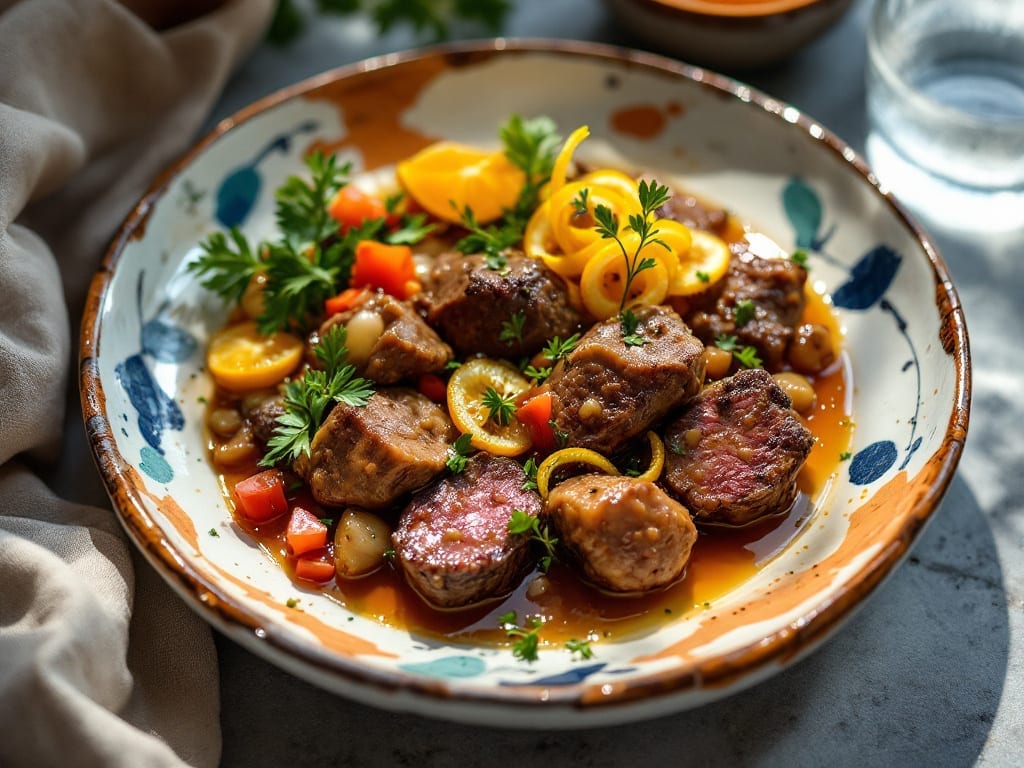
This steak and kidney pudding recipe delivers the kind of comforting, slow-braised richness that makes traditional British pub food unforgettable.
The secret lies in tenderizing the beef and kidneys overnight, then encasing them in a golden pastry crust that steams to perfection—creating a dish so satisfying it becomes the centerpiece of any meal.
I’ve perfected this method over years of testing, ensuring the filling stays moist while the pastry achieves that signature crispy edge.
The process begins with a deep, savory filling—beef and kidneys slow-cooked with onions, Worcestershire, and herbs until falling apart. This rich mixture is then wrapped in buttery pastry and steamed in a cloth-lined dish, a technique that guarantees a tender, juicy center.
The result is a pudding with layers of flavor: tender meat, caramelized onions, and a gravy-thick sauce that soaks into every bite.
What makes this recipe truly special is its versatility—serve it with classic mashed potatoes or Yorkshire pudding for a full English experience, or enjoy it on its own as a hearty centerpiece.
The slow cooking transforms tough cuts into melt-in-your-mouth perfection, while the pastry adds a satisfying crunch. This is comfort food at its finest, designed to impress even the most discerning diners.
Ready to master this timeless dish? The key is patience—letting the flavors develop over hours—and attention to the steaming process. Once you try it, you’ll understand why this pudding has been a pub staple for generations. Let’s get started on creating something truly memorable.
Ingredients for steak and kidney pudding
Six core ingredients transform into a legendary British pub masterpiece—nothing fancy, just slow-braised perfection.
| Ingredient | Amount | Notes |
|---|---|---|
| Beef Chuck Roast 🥩 | 2 lb | Cut into 1-inch cubes |
| Lamb Kidneys 🍖 | 1 lb | Trimmed, halved lengthwise |
| Yellow Onions 🧅 | 3 whole | Chopped into 1/2-inch pieces |
| Worcestershire Sauce 🍶 | 2 tbsp | Original, not vegetarian |
| Dry Sherry 🍷 | ½ cup | Substitute with red wine |
| Fresh Thyme 🌿 | 2 tbsp | Leaves only, finely chopped |
| Fresh Parsley 🌿 | 1 tbsp | Chopped for garnish |
| Beef Stock 🍲 | 2 cups | Homemade or high-quality |
| All-Purpose Flour 🌾 | 2 cups | For pastry, sifted |
| Cold Unsalted Butter 🧈 | ½ cup | Cubed, for pastry |
| Ice Water 💧 | ½ cup | For pastry dough |
| Salt 🧂 | 1 ½ tsp | Diamond Crystal kosher |
| Ground Black Pepper 🌶️ | ½ tsp | Freshly ground |
| Baking Powder 🍞 | 1 tsp | For pastry lift |
The beef and kidneys are the stars here. Chuck roast is non-negotiable for that melt-in-your-mouth texture—sirloin or ribeye won’t cut it. Grab lamb kidneys from the seafood counter (yes, really) or the butcher section. They should be firm, not slimy, and bright red. Costco or Whole Foods often carry pre-trimmed ones, but if you’re feeling ambitious, ask the butcher to do it for you. The onions? Yellow, not red—they caramelize better. Chop them while you’re waiting for the meat to soak up the marinade, because that’s where the deep, sweet base flavor comes from.
No sherry? Dry red wine works perfectly, but skip the sweet stuff. Worcestershire sauce is a must—Lea & Perrins is the gold standard, but any quality brand will do. Fresh thyme and parsley make all the difference here. Dried herbs won’t cut it for this dish. If you’re prepping ahead, chop the herbs and store them in an airtight container in the fridge for up to 3 days. The beef stock? Homemade is ideal, but Knox or Swanson cubes in a pinch. Just don’t use bouillon powder—it’s a flavor crime.
This dish is all about patience. The filling keeps in the fridge for 2 days before assembly, and the assembled pudding reheats beautifully—350°F for 30-40 minutes until golden. For leftovers, wrap tightly in foil and freeze for up to 3 months. Pro tip: Double the pastry dough—you’ll want extra for the top crust. The secret to that perfect golden crust? Chill the dough for 30 minutes before rolling, and don’t overwork it. This isn’t pie dough—handle it gently.
Why You’ll Love This Recipe
- One-Pot Magic: I swear by this for lazy Sundays—just brown the beef and kidneys, toss in onions, cover with gravy, and let the oven do the work. No flipping, no fussing, and the rich flavors meld into something that tastes like it simmered all day (even though it didn’t).
- Sherry-Kissed Depth: That splash of dry sherry? It’s the secret weapon—brightens the meat’s richness while the Worcestershire adds a tangy punch. Between us, the kidneys stay tender, not rubbery, and the onions caramelize into something sweet and sticky. Chef’s kiss.
- Leftovers That Beg: This dish actually improves the next day. The gravy thickens into a glossy blanket, and the beef gets fork-tender. I’ve reheated slices straight from the fridge for sandwiches—no one ever suspects how easy they were.
- Budget Feast: You’re feeding a crowd for less than takeout. Chuck roast stretches far, kidneys add luxury without breaking the bank, and onions/sauces cost pennies. Honestly, it’s the kind of meal that makes you feel like you’re hosting a dinner party when really, you’re just stretching a Sunday roast into a week’s worth of lunches.
Step-by-step instructions for steak and kidney pudding
Here’s how to transform tough cuts into a decadent, slow-braised masterpiece.
Prepare the Filling with Perfect Texture
In a large Dutch oven, combine the 2 lb beef chuck roast cut into 1-inch cubes with the 1 lb lamb kidneys halved lengthwise and trimmed. Add the 3 whole yellow onions chopped into ½-inch pieces, 2 tbsp Worcestershire sauce, 0.5 cup dry sherry, 2 tbsp fresh thyme, 0.5 tsp ground black pepper, and 1.5 tsp salt. Stir gently to coat everything evenly.
Here’s the thing—this isn’t just about throwing ingredients together. The sherry and Worcestershire work together to tenderize the beef while adding depth. Let the mixture sit at room temperature for 15 minutes before cooking. This allows the flavors to meld slightly and prevents the meat from seizing when it hits the pan.
Once the filling rests, place the Dutch oven over medium-high heat. Let it cook undisturbed for 8-10 minutes, stirring occasionally, until the onions soften and the beef begins to brown. You’ll see the edges of the meat develop a rich, caramelized crust—that’s your signal to add the 2 cups beef stock. Bring to a gentle simmer, then reduce heat to low and cover partially. Let it braise for 2 hours, stirring occasionally, until the beef is fork-tender and the liquid reduces by half.
Craft the Pastry Wrapping for Golden Crispness
While the filling braises, prepare the pastry by combining the 2 cups all-purpose flour, 1 tsp baking powder, and 1.5 tsp salt in a large bowl. Cut in the 0.5 cup cold unsalted butter using a pastry cutter or your fingers until the mixture resembles coarse crumbs with pea-sized butter pieces. This texture is crucial—it ensures a flaky, crisp pastry that won’t turn soggy.
Gradually add the 0.5 cup ice water, mixing just until the dough comes together. Avoid overworking it; you’re aiming for a smooth but slightly rough texture. Turn the dough onto a lightly floured surface and knead gently for 2-3 minutes until it forms a cohesive ball. Wrap it in plastic and refrigerate for 30 minutes to firm up. Cold dough is easier to roll and less likely to shrink.
Roll the chilled dough into a ¼-inch thick rectangle large enough to wrap the Dutch oven contents. Here’s a pro tip: if the dough resists rolling, let it rest for another 10 minutes at room temperature. Brush the top with a little water to help it seal when you fold it around the filling.
Assemble and Bake the Pudding
Preheat your oven to 375°F. Remove the braised filling from the heat and let it cool slightly for 10 minutes. Spoon the filling into a 9×5-inch loaf pan or similar baking dish, mounding it slightly in the center. This shape ensures even baking and a perfect rise.
Fold the rolled pastry over the filling, sealing the edges tightly to create an airtight seal. Trim any excess dough and crimp the edges with a fork to prevent them from unsealing during baking. Brush the top with a little ice water or beef stock for extra shine and crispness. Place the pudding on a baking sheet lined with parchment paper to catch any drips.
Bake for 45-50 minutes until the pastry is golden brown and the filling is bubbling through the cracks. The internal temperature should reach 190°F when measured in the center of the pudding. If the pastry browns too quickly, tent it loosely with foil to prevent over-browning while the center finishes cooking.
Rest and Serve for Maximum Flavor Impact
Remove the pudding from the oven and let it rest for 15-20 minutes before serving. This resting period is critical—it allows the filling to set slightly and the juices to redistribute, ensuring each bite is rich and cohesive. The pastry will firm up as it cools, developing a delightful crispness that contrasts beautifully with the tender filling.
To serve, slice the pudding into ½-inch thick portions and garnish with the 1 tbsp fresh parsley, chopped finely. The parsley adds a bright, fresh note that cuts through the richness of the beef and kidneys. Pair with a robust red wine or a simple green salad to balance the meal. The pudding keeps well in the refrigerator for 3 days or can be frozen for up to 3 months—though I doubt it’ll last that long.
Pro Tips For Making Steak And Kidney Pudding
- Sear the Chuck First: The beef chuck roast needs a proper crust before it goes into the pudding—don’t skip this. Hit it hard with a hot pan (cast iron if you’ve got one) for 3-4 minutes per side until deep brown, or it’ll turn out bland and gray.
- Trim Kidneys Like a Pro: Lamb kidneys have a tough membrane—peel it off before slicing, or you’ll end up with rubbery bites. Run a knife along the seam, then flip and scrape the other side clean. (Yes, it’s messy, but worth it.)
- Deglaze with Sherry Early: Add the dry sherry before the Worcestershire sauce—it’ll dissolve the fond (those brown bits) better, giving the gravy depth. Let it bubble for a full minute so the alcohol cooks off properly.
- Don’t Overcrowd the Pudding: If you pack too much filling into the pudding cloth, it’ll steam instead of steam. Keep it loose—about 2/3 full—and tie it snugly so the suet crust forms evenly. (Trust me, tight = crispy.)
Best sauces and condiments for these flavors
Classic Gravy Perfection
No steak and kidney pudding is complete without its rich, velvety gravy—this is where the magic happens. After removing the pudding from the oven, strain the braised juices through a fine-mesh sieve into a saucepan.
Use a wooden spoon to press down on the meat and onions, extracting every last drop of flavor. Bring the juices to a gentle simmer over medium-low heat, then whisk in 1 tbsp all-purpose flour to thicken.
For extra depth, stir in 1 tsp Dijon mustard and ½ cup dry sherry (the same you used earlier). Simmer for 3-4 minutes until the gravy coats the back of a spoon.
This gravy should be thick enough to cling to the pudding but still pour gracefully—about 1 cup total. Serve it warm alongside each slice for dipping. 🍲
Mustard-Herb Sauce
For a tangy contrast, whip up a quick mustard-herb sauce that brightens the richness of the pudding.
In a small bowl, combine ¼ cup Dijon mustard, 2 tbsp whole-grain mustard, 2 tbsp red wine vinegar, 1 tbsp fresh parsley, 1 tsp fresh thyme, 1 tsp honey, and ¼ cup olive oil.
Whisk vigorously until emulsified, then adjust the balance of sweet and tang to your taste. Drizzle this sauce over the sliced pudding or serve it on the side for dipping. It cuts through the fat beautifully and adds a restaurant-quality finish. 💛
Red Wine Reduction
If you love wine, elevate your pudding with a bold red wine reduction that mirrors the flavors of the dish. Deglaze the Dutch oven with ½ cup dry red wine (like Cabernet Sauvignon) after removing the filling, scraping up all the browned bits.
Simmer the wine until reduced by half, then strain and whisk in 1 tbsp cold butter to finish. This reduction is perfect for drizzling over the pudding or using as a sauce for accompanying sides like mashed potatoes. The wine’s acidity balances the richness, making every bite more vibrant. 🍷
Yorkshire Pudding Dip
For a playful twist, serve the pudding with mini Yorkshire puddings on the side as a dipping companion. These crispy, airy bites soak up the gravy and filling beautifully.
To make them, whisk 2 eggs, ½ cup milk, ¼ cup flour, ¼ tsp salt, and 2 tbsp melted butter until smooth. Pour into a greased mini muffin tin and bake at 425°F for 15-18 minutes until puffed and golden.
The contrast of the pudding’s savory depth with the Yorkshire’s light crispiness is pure genius. 🌟
Horse Radish Cream
Add a sharp, creamy element to balance the richness with a simple horse radish cream. Mix ½ cup sour cream, 1 tbsp prepared horse radish, 1 tsp lemon juice, and ½ tsp salt until smooth.
Adjust the horse radish to taste—start with 1 tsp if you’re sensitive to spice. This cream is fantastic for dolloping alongside the pudding or spreading on toasted bread for a savory appetizer. The heat and creaminess create a perfect counterpoint to the dish’s heartiness. 🌶️
Nutrition facts
Frequently asked questions
Why do I need to marinate the beef and kidneys overnight?
The overnight marinade is essential for breaking down tough fibers and infusing the meat with deep, savory flavors. The combination of sherry, Worcestershire, and thyme tenderizes the beef and kidneys while creating a rich, aromatic base. Skipping this step can result in a less tender texture and weaker flavor development.
Can I substitute beef chuck roast with another cut?
While chuck roast is ideal for its marbling and tenderness, you can use beef short ribs or chuck shoulder in a pinch. Avoid lean cuts like sirloin—they won’t become as tender during braising. If using ribs, trim excess fat to prevent greasiness in the pudding.
How do I fix a soggy pastry after baking?
A soggy pastry usually means the filling was too wet or the edges weren’t sealed properly. To salvage it, preheat the oven to 375°F and place the pudding on a baking sheet. Brush the top with beef stock or egg wash, then bake for 10-15 minutes to crisp it up. For next time, ensure the dough is fully chilled before rolling and seal the edges tightly with a fork.
What’s the best way to reheat leftovers?
Steak and kidney pudding reheats beautifully! Wrap slices in foil and warm in a 350°F oven for 15-20 minutes or until heated through. For extra crispiness, broil for 2-3 minutes at the end. Avoid microwaving—it makes the pastry rubbery. Leftovers keep well in the fridge for 3 days or frozen for 3 months.
Can I make this pudding ahead of time?
The filling can be prepped 2 days ahead and stored in the fridge. Assemble the pudding up to 12 hours before baking—just refrigerate it uncovered to dry the pastry slightly. For a truly make-ahead option, bake the pudding, cool completely, wrap tightly in foil, and freeze. Reheat from frozen at 325°F for 45-50 minutes until warmed through.

- Mary Berry’s Boiled Fruit Cake Recipe: Moist Center and Spiced Crust Magic - November 5, 2026
- Atlantic Salmon Recipe: Honey-Dill Pan-Seared With Crispy Skin - November 5, 2026
- Blaze Pizza Copycat Dough Recipe: Chewy, Airy Crust That Mimics the Original - November 5, 2026