
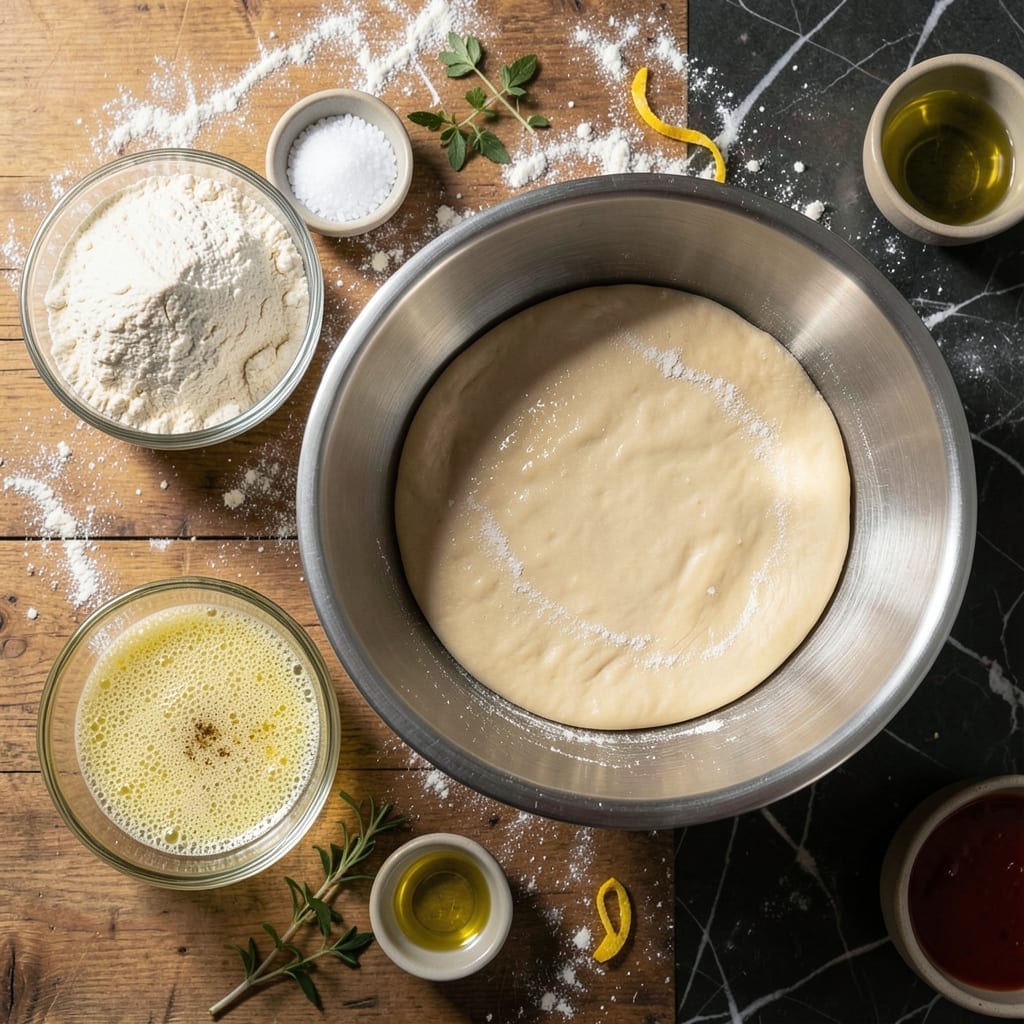
There’s nothing like the smell of fresh pizza dough rising in your kitchen, promising a crisp, chewy crust that will make your homemade pizza unforgettable.
This recipe delivers professional results with simple ingredients and a straightforward method that anyone can master. The dough comes together quickly, then rests to develop its signature texture.
After just 60 minutes, you’ll have a smooth, elastic dough ready to shape and top with your favorite ingredients. The baking process creates a golden crust with the perfect balance of crispness and chew.
Whether you prefer classic Margherita or loaded with toppings, this foundation ensures a perfect pizza every time.
Ingredients for Pizza Dough Recipe Jo Cooks
Eight simple ingredients. One perfect chewy crust. Ready in an hour.
| Ingredient | Amount | Notes |
|---|---|---|
| Bread Flour 🌾 | 3 ½ cups | High protein for chewy texture |
| Active Dry Yeast 🍞 | 2 ¼ tsp | One packet, proofed in warm water |
| Granulated Sugar 🍚 | 1 tsp | Feeds the yeast for activation |
| Kosher Salt 🧂 | 1 ½ tsp | Diamond Crystal preferred for balance |
| Extra-Virgin Olive Oil 🫒 | 2 tbsp | For richness and elasticity |
| Warm Water 💧 | 1 ¼ cups | 110-115°F for yeast activation |
| Semolina Flour 🌾 | ¼ cup | For dusting work surface |
| Cornmeal 🌽 | 2 tbsp | For pizza peel dusting |
The flour is non-negotiable here. Bread flour with its higher protein content gives you that signature chew—all-purpose works in a pinch but the texture won’t be as good. King Arthur is my go-to brand for consistency. The yeast needs to be fresh (check the expiration date) and proofed in water that’s warm but not hot enough to kill it. 110-115°F is the sweet spot.
No bread flour? All-purpose with 1 tbsp vital wheat gluten per cup gets you close. Out of semolina? Extra flour works for dusting. Sugar substitutes like honey work too, but stick to the same amount. The olive oil adds tenderness—don’t skip it, but any neutral oil (vegetable, canola) works if that’s what you’ve got.
Dough rises best in a warm, draft-free spot. Cover it tightly with plastic wrap or a damp towel. Unused dough keeps in the fridge for 2 days or freezes for 3 months. Thaw overnight before using.
Why You’ll Love This Recipe
- No-Fuss Mixing: I just dump the bread flour, yeast, sugar, salt, and olive oil in a bowl—no fancy steps, no stress.
- Chewy Perfection: That hint of sugar and olive oil gives it the ideal chew with a crispy edge.
- Weeknight Hero: Honestly, it’s my go-to for last-minute dinners or when the kids demand pizza.
- Budget Friendly: A bag of bread flour and a packet of yeast make enough for two pizzas—cheaper than delivery.
Step-by-Step Instructions for Pizza Dough
Here’s my trusted method for achieving a chewy, elastic dough that bakes up perfectly every time.
Step 1: Activate the Yeast
In a small bowl, combine the 1.25 cups Warm Water with the 1 tsp Granulated Sugar and 2.25 tsp Active Dry Yeast. Stir gently and let it sit for 5-10 minutes until the mixture becomes frothy and doubled in volume. You’ll see tiny bubbles forming on the surface—that’s how you know the yeast is alive and active.
This proofing step is crucial. If the yeast doesn’t foam, it might be expired or the water was too hot or cold. Ideal water temperature is 110-115°F—warm to the touch but not scalding. Cold water slows activation, while too-hot water kills the yeast.
Step 2: Mix and Knead the Dough
In a large mixing bowl, combine the 3.5 cups Bread Flour and 1.5 tsp Kosher Salt. Create a well in the center and pour in the proofed yeast mixture along with the 2 tbsp Extra-Virgin Olive Oil. Use a wooden spoon to stir until a shaggy dough forms and most of the flour is incorporated.
Turn the dough out onto a surface lightly dusted with the 0.25 cup Semolina Flour. Knead for 8-10 minutes by hand until smooth and elastic. The dough should spring back when pressed lightly with a finger. Bread flour’s high protein content gives it that desirable chew, so don’t skip the full kneading time.
Step 3: First Rise for Optimal Texture
Shape the dough into a ball and place it in a lightly oiled bowl, turning once to coat all sides. Cover with a damp kitchen towel and let rise in a warm, draft-free spot for 30-45 minutes or until doubled in size. I like to place mine near (but not on) a preheating oven for consistent warmth.
Proper rising develops the gluten structure and flavor. If your kitchen is cool, the rise might take closer to 1 hour. Don’t rush this step—underproofed dough results in a dense, tough crust. The dough is ready when it holds an indentation when gently pressed with a finger.
Step 4: Shape and Prepare for Baking
Punch down the risen dough to release air bubbles, then divide it into 4 equal portions for individual pizzas. Roll each portion on a surface dusted with the remaining semolina flour into a 12-inch round, working from the center outward. For a thicker crust, leave the dough slightly larger; for thin crust, roll it thinner.
Place each round on a pizza peel or inverted baking sheet dusted with the 2 tbsp Cornmeal. This prevents sticking and adds a pleasant crunch to the bottom crust. Let the shaped dough rest for 10-15 minutes before adding toppings to prevent shrinking during baking.
Step 5: Bake to Golden Perfection
Preheat your oven to 475°F with a baking stone or inverted baking sheet inside for at least 30 minutes. Transfer the topped pizza onto the hot stone and bake for 12-15 minutes until the crust is golden brown and the cheese is bubbly.
For extra crispiness, bake directly on the oven rack for the last 2 minutes. The cornmeal and semolina create a beautiful textured bottom that holds up to saucy toppings. Let the pizza cool for 2 minutes before slicing to allow the cheese to set.
Pro Tips For Making Pizza Dough Recipe Jo Cooks
- Proof the Yeast: Always activate your yeast in warm water (110°F) with a pinch of sugar first—I learned this the hard way after wasting flour on dough that never rose.
- Use Bread Flour: Skip all-purpose flour; bread flour’s higher protein content gives that chewy, restaurant-style crust every time.
- Don’t Over-Knead: Mix just until the dough comes together, then stop—overworking it makes the pizza tough, and nobody wants a dense crust.
- Olive Oil the Bowl: Coat your rising bowl with about 1 tablespoon of extra-virgin olive oil to prevent sticking and add a subtle richness to the dough.
Perfect Pairings for This Dish
Classic Wine Pairings
Italian wines are natural partners for this dough. A crisp Pinot Grigio from Friuli cuts through the richness with citrus notes. For red lovers, try a light Chianti Classico—its acidity complements tomato-based toppings beautifully. 🍷
Beer Options
An ice-cold Peroni or Moretti offers a refreshing contrast to the warm, chewy crust. Craft beer fans should try a Belgian witbier with its subtle orange and coriander notes. Avoid heavy IPAs that can overpower the dish.
Simple Salad Pairings
Balance the richness with a baby arugula salad tossed with lemon vinaigrette. The peppery greens cleanse your palate between bites. Add shaved Parmesan and toasted pine nuts for extra texture and flavor.
Dipping Sauces
Serve warm marinara sauce for dipping the crust—it’s a must for any pizza night. For something different, try garlic butter or pesto. These add extra flavor and make the experience more interactive.
Dessert Follow-Up
End your meal with tiramisu or panna cotta to keep the Italian theme going. The light, creamy textures provide a perfect contrast after the hearty pizza. I always find room for a small serving. ✨
Nutrition Facts
Frequently Asked Questions
Why use bread flour instead of all-purpose?
Bread flour has higher protein content, creating more gluten for that signature chewy texture. All-purpose works but yields a less elastic crust. For best results, stick with bread flour or add 1 tbsp vital wheat gluten per cup of all-purpose.
Can I make this without a stand mixer?
Knead by hand for 8-10 minutes on a floured surface until smooth. The dough should spring back when pressed. Hand-kneading gives you great control over the texture.
How do I know when the dough is done rising?
It should double in size and hold an indentation when pressed with a finger. In a warm kitchen, this takes 30-45 minutes. If it’s cool, it may need up to 1 hour.
What if my yeast doesn’t bubble?
Check the expiration date first. If fresh, your water might be too hot or cold. Ideal temperature is 110-115°F. If it still doesn’t foam, start over with fresh yeast.

- Potato Candy Recipe 1933: Vintage Peanut Butter Roll Delight - October 30, 2026
- Potato Chip Cookie Recipe With Pecans: Buttery Crunch Meets Nutty Richness - October 30, 2026
- Potato Patty Recipe No Egg: Crispy Edges Without the Binder - October 30, 2026