
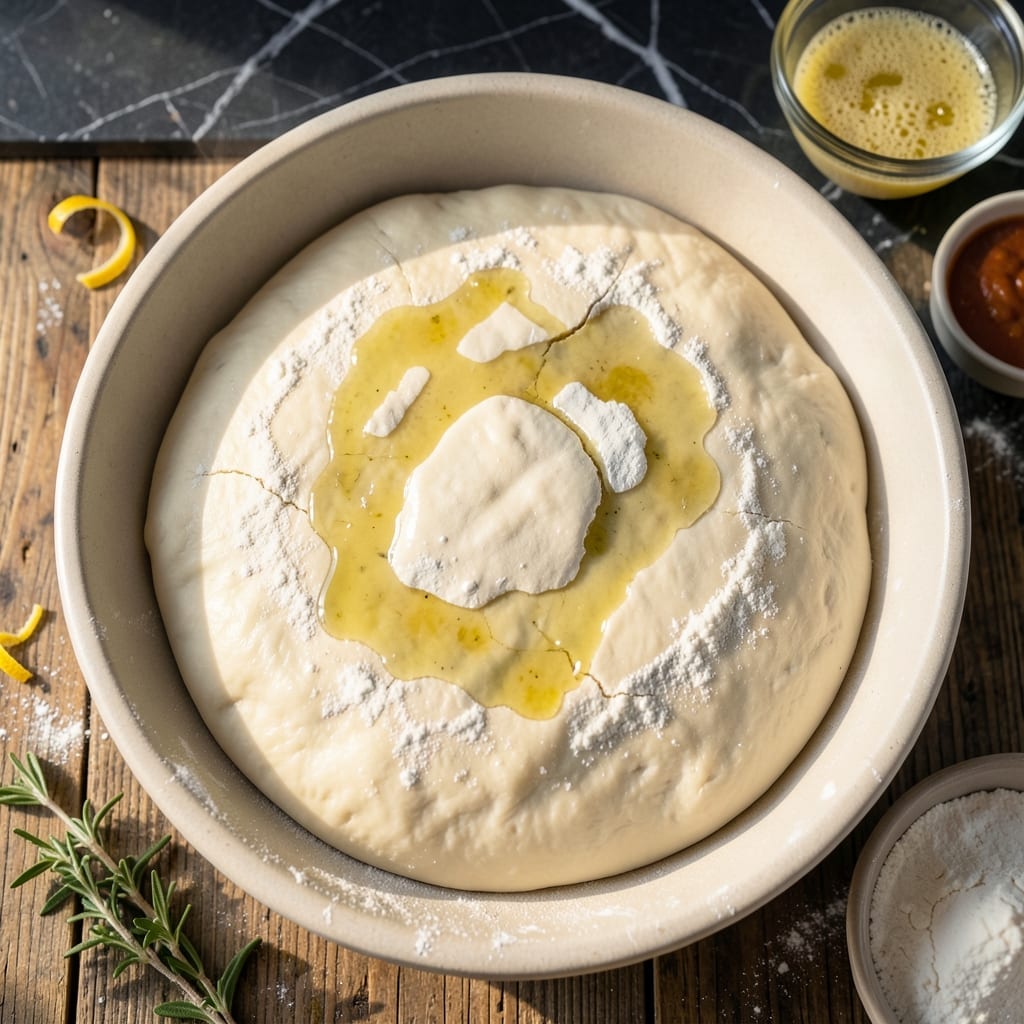
Creating perfect pizza dough without eggs is simpler than you might think. This recipe delivers a chewy crust with that coveted airy bite every time.
The secret lies in the slow fermentation process, allowing the dough to develop complex flavors naturally. With just a handful of basic ingredients and minimal effort, you’ll achieve professional-quality results.
What you’ll get is a versatile dough that bakes up golden and crisp on the outside, while staying soft and elastic inside. It’s ideal for any pizza style, from thin crust to deep dish.
Best of all, this method requires no special equipment and works perfectly for vegan diets. The dough comes together quickly and rewards patience with exceptional texture.
Ingredients for Pizza Dough Recipe No Eggs
Seven basic ingredients create this versatile dough with professional results every time.
| Ingredient | Amount | Notes |
|---|---|---|
| All-Purpose Flour 🌾 | 3 ½ cups | Bread flour works too for chewier texture |
| Active Dry Yeast 🍞 | 2 ¼ tsp | One standard packet, check expiration date |
| Warm Water 💧 | 1 ¼ cups | 105-110°F for yeast activation |
| Extra-Virgin Olive Oil 🫒 | 2 tbsp | High quality for flavor depth |
| Sea Salt 🧂 | 1 ½ tsp | Fine grain for even distribution |
| Granulated Sugar 🍚 | 1 tsp | Feeds the yeast for proper rise |
| Cornmeal 🌽 | ¼ cup | For dusting, prevents sticking |
The flour is the foundation here. King Arthur all-purpose is my go-to—consistent quality, perfect protein content for chewy yet tender crust. Bread flour gives slightly more chew if that’s your preference. The yeast must be fresh and active—test it in warm water with sugar first. If it doesn’t bubble within 5-10 minutes, start over. Most grocery stores carry Fleischmann’s or Red Star brands, both reliable.
No all-purpose flour? Bread flour at a 1:1 ratio works, though you may need a touch more water. Out of yeast? This isn’t a quick-rise recipe, so substitutions won’t work well—plan for the full fermentation. For the olive oil, any neutral oil works in a pinch, but extra-virgin adds depth. Skip the sugar if using instant yeast, but active dry needs it to wake up properly.
The dough ferments best at room temperature—about 70-75°F. Store unused portions wrapped tightly in the fridge for up to 3 days, or freeze for 1 month. Bring to room temperature before shaping for best results.
Why You’ll Love This Recipe
- I’ll be real: it’s just flour, yeast, water, oil, and salt—things I already have, so I can make pizza whenever the mood hits.
- No-Fuss Mixing: I just stir the flour, yeast, water, olive oil, and salt—no eggs, no fuss, and it still rises beautifully every time.
- Rich Olive Oil Taste: The extra-virgin olive oil gives the crust this warm, buttery depth that makes even a plain cheese pizza feel gourmet.
- Endless Topping Canvas: Honestly, it’s my blank slate for whatever I’m craving—thick, thin, stuffed, or even garlic knots the next day.
Step-by-Step Instructions for Pizza Dough No Eggs
Here’s the method. Straightforward, tested, works every time.
Step 1: Activate the Yeast Mixture
In a small bowl, combine the 1.25 cups Warm Water with the 1 tsp Granulated Sugar and 2.25 tsp Active Dry Yeast. Stir gently and let it sit for 5-10 minutes until the mixture becomes frothy and cloudy.
This step is crucial—you’re confirming the yeast is alive and active. If it doesn’t bubble, your yeast may be expired. The sugar feeds the yeast, creating the bubbles that indicate it’s ready to do its work. The water temperature should feel warm but not hot to the touch.
Step 2: Combine Wet and Dry Ingredients
In a large mixing bowl, whisk together the 3.5 cups All-Purpose Flour and 1.5 tsp Sea Salt. Create a well in the center and pour in the yeast mixture and 2 tbsp Extra-Virgin Olive Oil.
Using a wooden spoon, gradually incorporate the flour into the wet ingredients until a shaggy dough forms. The olive oil adds richness and helps create a tender crumb, while the salt enhances flavor and regulates yeast activity.
Step 3: Knead Until Smooth and Elastic
Turn the dough out onto a lightly floured surface and knead for 8-10 minutes by hand. Push the dough away with the heels of your hands, then fold it back over itself, rotating a quarter turn each time.
You’ll know it’s ready when the dough is smooth, elastic, and springs back when poked. If it feels too sticky, add a small amount of flour, one tablespoon at a time. The dough should be slightly tacky but not stick to your hands.
Step 4: Let the Dough Rise Until Doubled
Lightly oil a clean bowl, place the dough inside, and turn it to coat all sides with oil. Cover with a damp kitchen towel and let it rise in a warm, draft-free place for 1-2 hours, or until doubled in size.
The ideal rising environment is about 75-80°F. I place mine in an oven with the light turned on. The dough should puff up significantly—this is the yeast creating air pockets that will give your crust that coveted airy texture.
Step 5: Shape and Prepare for Baking
Punch down the risen dough to release air, then divide it into 4 equal portions for individual pizzas. On a surface dusted with 0.25 cup Cornmeal, roll out each portion to your desired thickness.
The cornmeal prevents sticking while adding a subtle crunch to the crust. Let the shaped dough rest for 10-15 minutes before adding toppings and baking. This final rest makes the dough easier to stretch and shape without springing back.
Pro Tips For Making Pizza Dough Recipe No Eggs
- Activate Yeast Properly: Proof your yeast in 110°F water for 5-10 minutes until foamy—I learned this the hard way after killing three batches with water that was too hot.
- Use High-Quality Flour: Skip the bargain bin all-purpose flour; a good brand with 11-12% protein makes a real difference in texture.
- Don’t Overwork the Dough: Knead just until smooth, about 5-7 minutes by hand, or you’ll end up with a tough crust that cracks when stretched.
- Add Oil Last: Mix your flour, water, yeast, and salt first, then drizzle in the olive oil near the end—it helps the dough come together more evenly.
Regional Styles of This pizza dough recipe no eggs
New York Style
For a classic thin crust, roll the dough paper-thin and bake at 475°F for 10-12 minutes. I use a pizza stone to mimic commercial ovens—preheat it for 1 hour for best results. The crust will be crispy yet foldable, just like from your favorite Brooklyn joint. 🗺️
Neapolitan Tradition
This version requires high heat—550°F or higher if possible. Shape the dough by hand without rolling for an irregular, rustic edge. Bake for just 60-90 seconds until charred in spots. San Marzano tomatoes and fresh mozzarella are traditional toppings.
Sicilian Thick Crust
Press the dough into an oiled 9×13-inch pan and let it rise for 30 minutes before baking. The result is a thick, airy crust perfect for hearty toppings. I like to add a layer of ricotta cheese before the sauce for extra richness.
Chicago Deep Dish
Use a 9-inch round pan and press the dough up the sides to create a deep well. Par-bake the crust for 10 minutes before adding toppings. Layer cheese directly on the dough, then sauce on top. Bake at 425°F for 25-30 minutes.
California Artisan
This style focuses on creative toppings over a thin, crispy base. Roll the dough as thin as possible and bake at 500°F for 8-10 minutes. Top with unconventional ingredients like goat cheese, arugula, or fig jam after baking. 💡
Detroit-Style
Use a 9×13-inch steel pan and press the dough to the edges. The high sides create a thick, caramelized crust. Bake at 550°F for 12-15 minutes. The cheese goes all the way to the edges, creating those signature crispy cheese bits.
Nutrition Facts
Frequently Asked Questions
Why skip eggs in pizza dough?
Eggs add richness but aren’t necessary for great texture. This recipe relies on yeast and proper kneading for a chewy, airy crust. It also makes the dough vegan-friendly.
Can I make this dough ahead?
Yes! Prepare the dough and refrigerate it for up to 3 days. Let it come to room temperature before shaping for best results.
What if my dough doesn’t rise?
Check your yeast freshness first. Ensure water is 105-110°F and the environment is warm (75-80°F). Old yeast or cold temps are common culprits.
How thin should I roll the dough?
For New York-style, aim for 1/4-inch thickness. Thinner for crispier crusts, thicker for deep dish. Adjust based on your preferred style.

- Potato Candy Recipe 1933: Vintage Peanut Butter Roll Delight - October 30, 2026
- Potato Chip Cookie Recipe With Pecans: Buttery Crunch Meets Nutty Richness - October 30, 2026
- Potato Patty Recipe No Egg: Crispy Edges Without the Binder - October 30, 2026